
About Charles Groves
Lived 1915 – 1992 (aged 77). Charles Groves was a British conductor, choir director, music director and musician.
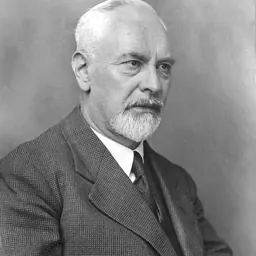
Sir Charles Barnard Groves CBE (10 March 191520 June 1992) was an English conductor. He was known for the breadth of his repertoire and for encouraging contemporary composers and young conductors.
After accompanying positions and conducting various orchestras and studio work for the BBC, Groves spent a decade as conductor of the Bournemouth Symphony Orchestra. His best-known musical directorship was of the Royal Liverpool Philharmonic Orchestra, beginning in 1963, with which he made most of his recordings. From 1967 until his death, Groves was associate conductor of the Royal Philharmonic Orchestra, and in the 1970s he was one of the regular conductors of the Last Night of the Proms. He also served as president of the National Youth Orchestra from 1977, and, during the last decade of his life, as guest conductor for orchestras around the world.
Life and career
Early years Groves was born in London, the only child of Frederick Groves and Annie (née Whitehead). He was a pupil at St Paul's Cathedral School (where a house is now named after him), singing in the Cathedral choir and, from the age of 13, studying the piano and organ. Music was already important to him as a solace, as he was orphaned at the age of ten – his father having died in 1921 from injuries received in World War I and his mother having died four years later. From 1930 until 1932 he was a pupil at Sutton Valence School, in Kent, where Groves Hall is named in honour of him. After leaving Sutton Valence School he attended the Royal College of Music. There, his main studies were in lieder and accompanying, but he became involved in student opera productions as a répétiteur. He was naturally gifted with great fluency and the ability to sight read almost any music, but confessed, years later, to having been lazy about his piano studies, and he abandoned his ambitions to become a concert pianist.
Groves began his professional career as a freelance accompanist, including work for the BBC. In 1938, he was appointed chorus master of the BBC Music Productions Unit under the direction of Stanford Robinson, where he worked on broadcast opera productions. While in Manchester he met a BBC colleague, Hilary Barchard, whom he married in 1948. At one seminar Groves noted the presence in the orchestra, as an extra percussion player, of a teenager named Simon Rattle. In the 1970s he was one of the regular conductors of the Last Night of the Proms (others being Norman Del Mar and James Loughran).
Groves was music director of the English National Opera in 1978–1979, but in spite of a well-received and rare revival of Weber's Euryanthe the appointment did not prove a success, and he relinquished the post the following year.
Groves was noted for adding adventurous new works to the repertory of his orchestras. Groves's premières included works by Lennox Berkeley, David Blake, Justin Connolly. Arnold Cooke, Gordon Crosse, Jonathan Harvey, Robin Holloway, Daniel Jones, John McCabe, Priaulx Rainier, Edwin Roxburgh, Edmund Rubbra, Giles Swayne and Hugh Wood. is a national award, named in his honour, given to an individual or organisation making an outstanding contribution to British music. Peter Maxwell Davies wrote Sir Charles: his Pavane as a tribute to Groves's memory.
Away from the concert hall, Groves was a connoisseur of English literature and also a keen sports fan. When young he played rugby "in the Wasps F team", as he self-deprecatingly put it, and as a cricketer was "a wily slow bowler". Charles and Hilary Groves had three children, Sally, Mary and Jonathan, the first and last of whom entered the musical profession. Charles Groves suffered a heart attack early in 1992 and died in London, four months later, at the age of 77. A memorial stone to his memory was placed in St Paul's Cathedral.
Recordings Although the record companies tended to regard Groves as a specialist in British music, he made recordings of German, French and Russian music including Beethoven (Symphony No 4 and Symphony No 6); Fauré (Masques et bergamasques and Pavane); Haydn (Symphony No 92, Oxford, Symphony No 104, London); Ravel (Pavane pour une infante défunte); Satie (Gymnopédies) and Tchaikovsky (Variations on a Rococo Theme (with Paul Tortelier, cello)). He also recorded Dvorak's Sixth Symphony and Sibelius's incidental music to The Tempest.
British music recorded by Groves includes Arnold (Symphony No 2); Bliss (A Colour Symphony, Morning Heroes); Brian (Symphonies 8 & 9); Bridge (Enter Spring, The Sea, Summer); Britten (Variations on a Theme of Frank Bridge); Butterworth (The Banks of Green Willow ); Delius (Koanga, A Mass of Life, On hearing the first cuckoo in Spring); Elgar (Caractacus, Cello Concerto (Paul Tortelier, cello), Chanson de matin, Chanson de nuit, Crown of India Suite, Enigma Variations, The Light of Life, Nursery Suite, Serenade for Strings, Severn Suite, Violin Concerto (Hugh Bean, violin)); Holst (Choral Symphony, The Planets, St. Paul's Suite); Sullivan (Overture Di Ballo, Overtures to Savoy Operas, Symphony in E (Irish)); Tippett (Fantasia concertante on a Theme of Corelli); Vaughan Williams (Fantasia on a Theme by Thomas Tallis, Hugh the Drover); Walton (Capriccio burlesco, Crown Imperial, Hamlet Funeral March, Johannesburg Festival Overture, Orb and Sceptre, Richard III Prelude and Suite, Scapino, Spitfire Prelude & Fugue); and Warlock (Capriol Suite).
Don’t just read it —
keep it.
Full-length biographies made to live with: read them, listen on the way to work, watch them tonight.
- E-book
- Audio
- Video
Instant download · yours to keep · every purchase keeps this site free
Important facts
People in Charles Groves's life
Named in this biography and alive at the same time

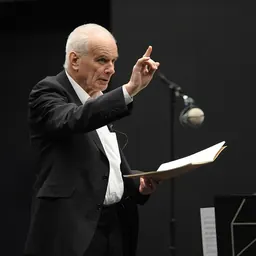


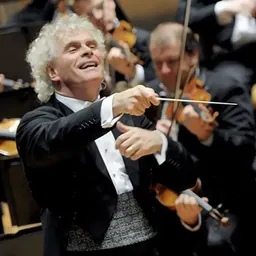

Related people
Same field, nearest in time



Contemporaries
People whose lives overlapped Charles Groves's



Frequently asked questions
Who was Charles Groves?
British conductor (1915–1992)
When was Charles Groves born?
Charles Groves was born on 10 March 1915 in London.
When did Charles Groves die?
Charles Groves died on 20 June 1992 in London.
What was Charles Groves's occupation?
Charles Groves was a conductor, choir director, music director and musician.
What nationality was Charles Groves?
Charles Groves was British.
Sources & further reading
Cite this page
APA: Biography.guide. (2026). Charles Groves. https://biography.guide/charles-groves/
MLA: "Charles Groves." Biography.guide, https://biography.guide/charles-groves/.
Chicago: "Charles Groves." Biography.guide. https://biography.guide/charles-groves/.
Data last updated: 2026-09-20 · Spot an error? Report a correction.
Page generated 2026-09-27 05:02 UTC