
About Charles Green
Lived 1735 – 1771 (aged 35). Charles Green was a British astronomer and explorer.
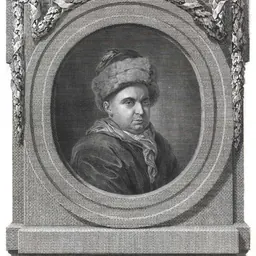
Charles Green (baptised 26 December 1734 – 29 January 1771) was a British astronomer, noted for his assignment by the Royal Society in 1768 to the expedition sent to the Pacific Ocean in order to observe the transit of Venus aboard James Cook's Endeavour.
Early life and education Born sometime in December 1734, Green was the youngest son of Joshua Green, a prosperous farmer who lived near Swinton in South Yorkshire. His education, according to his future brother-in-law William Wales, was chiefly at a school near Denmark Street in Soho, London. This school was run by his eldest brother, the clergyman Rev. John Green, and the younger Green went on to become an assistant teacher there, continuing his studies in astronomy until he joined the staff of the Royal Greenwich Observatory in 1760.
Career in astronomy Green was appointed as Assistant to the Astronomer Royal, James Bradley, succeeding the astronomer Charles Mason who left to join the expedition to the Cape of Good Hope to observe the 1761 transit of Venus. Following Bradley's death in 1762, Green continued in the role of assistant for Bradley's successor Nathaniel Bliss. Due to the ill-health of Bliss, much of the work of practical observational astronomy devolved upon Green at this time.
In 1763, Green, along with the astronomer Nevil Maskelyne, was instructed by the Board of Longitude to make the voyage to Barbados to act as monitors of the test of John Harrison's H4 chronometer, which was in the running for the Longitude Prize, the prize offered by the British Government for the devisor of an accurate method of determining the longitude of a ship at sea. Their duties, after they arrived in Barbados and were awaiting the chronometer's arrival on another ship, involved observation of the Galilean moons of Jupiter to determine the local longitude, and after the arrival of the mechanism which was in the care of Harrison's son William, the comparison of the results of the chronometer with their astronomical observations to judge the mechanism's accuracy. On the voyage to Barbados, the pair were also using their observations to determine the accuracy of the lunar distance method, Maskelyne's own method of calculating the longitude of a ship at sea. An argument ensued between Maskelyne and William Harrison, which dragged in Green, as Harrison was of the opinion that Maskelyne was not an impartial observer and was a rival of his father in the pursuit of the Longitude Prize. A compromise was reached in which the monitoring of the Harrison mechanism was undertaken by Maskelyne and Green on alternate days. The new Astronomer Royal proved to be Nevil Maskelyne. Green briefly served under him as assistant, but left Greenwich after a disagreement with his new superior. Wales' account says that Green was involved in a survey to determine the feasibility of transporting water from the River Colne to provide water to Marylebone in London, although Green's survey confirmed the fears of mill owners downstream that the canal would result in a failure of the water supply needed for their operations and led to the scheme being dropped. Green was to receive 200 guineas from the Society for the appointment. (Cook was to receive 100 guineas for his role in making the observations.) The Society provided instruments for the expedition, including two reflector telescopes built by James Short, two clocks and an astronomical quadrant; these were supplemented by a telescope in the possession of Daniel Solander and another provided by the Navy.
It has been noted that although the times for the contacts given by the three observers (Green, Cook and Solander) present at Fort Venus vary, they show no pattern of inconsistency attributable to one observer alone.
Subsequent voyage of the Endeavour and the death of Green Following the departure from Tahiti, the Endeavour continued south-westwards as Cook carried out his orders to further explore the Southern Ocean. The expedition reached New Zealand in October 1769, giving Green an opportunity to observe the transit of Mercury from land. A landing was made at an inlet that would be subsequently called Mercury Bay on 3 November; the transit was successfully observed by Green on November 9.
On reaching Australia, and during Cook's voyage along the coast, he named an island, Green Island, after the astronomer in June 1770. Green, by this time had contracted scurvy.
The Endeavour was forced to make for Batavia (present-day Jakarta) for repairs. Diseases were rife in the Dutch-controlled city, including malaria and dysentery; Green contracted the latter, dying on 29 January 1771, twelve days after the ship's departure from the port. An account published in a London newspaper described his final hours: "He had been ill some time, and was directed by the surgeon to keep himself warm, but in a fit of phrensy he got up in the night and put his legs out of the portholes, which was the occasion of his death."
Personal life Green married Elizabeth Long in March 1768 in London;
Don’t just read it —
keep it.
Full-length biographies made to live with: read them, listen on the way to work, watch them tonight.
- E-book
- Audio
- Video
Instant download · yours to keep · every purchase keeps this site free
Important facts
People in Charles Green's life
Named in this biography and alive at the same time


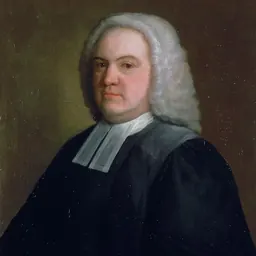

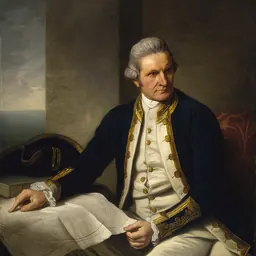
Related people
Same field, nearest in time



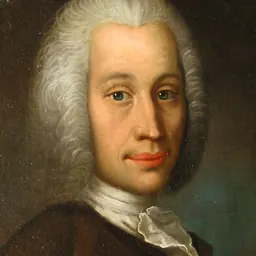
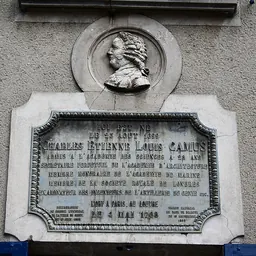

Contemporaries
People whose lives overlapped Charles Green's


Frequently asked questions
Who was Charles Green?
18th-century British astronomer
When was Charles Green born?
Charles Green was born on 1 December 1735 in Rotherham.
When did Charles Green die?
Charles Green died on 29 January 1771 in Jakarta.
What was Charles Green's occupation?
Charles Green was an astronomer and explorer.
What nationality was Charles Green?
Charles Green was British.
Sources & further reading
· DBpedia: Charles Green (astronomer)
Cite this page
APA: Biography.guide. (2026). Charles Green. https://biography.guide/charles-green-astronomer/
MLA: "Charles Green." Biography.guide, https://biography.guide/charles-green-astronomer/.
Chicago: "Charles Green." Biography.guide. https://biography.guide/charles-green-astronomer/.
Data last updated: 2026-09-20 · Spot an error? Report a correction.
Page generated 2026-09-27 05:06 UTC