
Charles George Nurse
Naturalist, ornithologists and British army officer
About Charles George Nurse
Lived 1862 – 1933 (aged 71). Charles George Nurse was an ornithologist, lepidopterist and entomologist, known for Natural History Museum, London and Wildlife of India.
Charles George Nurse FES (22 March 1862 in Barnham, Suffolk – 5 November 1933 in Tunbridge Wells, Kent) was an English military officer, naturalist, ornithologist and entomologist. He was one of many British military officers who made significant contributions to knowledge of the natural history of India. Among his discoveries were a snake, a butterfly, an ant, and a neuropteran. About 50 species of moths that he collected were described by entomologists G. Hampson and Lord Walsingham. Entomologists P. Cameron and Col. C. T. Bingham described 200 species of Hymenoptera from his collections. Nurse also discovered the species of mosquito, Anopheles nursei, later shown to carry the malarial parasite that affected the army campaigns in Mesopotamia.
Life and career Charles George Nurse was born on 22 March 1862 in Barnham, Suffolk, the eldest son of Rev. George Thompson Nurse, of Barnham and Euston, and Martha Aspland Nurse (née Johnson). 1881-1884 served with the regiment in India as an interpreter and station staff officer, Kolapore. 1884 served with the 2nd Battalion Royal Irish Fusiliers in the Sudan Expedition seeing action at the battles of El-Teb and Tamai. He served under Gerald Graham and received a medal with clasp and the Khedive's Bronze Star. 10 March 1885 promoted to lieutenant while serving in the Bombay Staff Corps. 1890 served with the Zaila Field Force in Somalia and commanded the base at Zaila. His book A Journey in Somaliland was published by the Royal Geographical Society in 1891 and led to his being elected a fellow of the society. In 1893 he had a fall from his horse resulting in a crack in his skull. 23 January 1909 by then commander of the 33rd Punjabi Regiment and retired from the Indian Army. 12 May 1915 re-appointed from retirement and attached to the 3rd Battalion Bedfordshire Regiment in Flanders.
He lived at "Redcote", Rustwick, Rusthall Park after retirement and was a member of the Tunbridge Wells and Counties Clubs. He died of acute pneumonia on 5 November 1933 in Tunbridge Wells, Kent, and was buried at Rusthall New Cemetery.
Natural history
Nurse had a lifelong interest in birds and, as many naturalists did, collected butterflies and moths. His interest deepened after Lord Walsingham and George Hampson published "On Moths Collected at Aden and in Somaliland" in the Proceedings of the Zoological Society of London in 1896. This article was based on Nurse's specimens and species new to science were described. Nurse later widened his interest to other orders of insects, especially Hymenoptera. At this time, Indian Hymenoptera were neglected. Nurse described many new species and added greatly to knowledge of the group. Many Nurse Hymenoptera specimens were described by Charles Thomas Bingham, Peter Cameron, and Claude Morley in The Fauna of British India, Including Ceylon and Burma.
At Quetta, Nurse discovered the species of mosquito, Anopheles nursei, which was later shown to carry the malarial parasite.
He presented his entire collection of over 10,000 Indian Hymenoptera specimens to the Natural History Museum, London, in 1920.
Societies Nurse was a member of the Bombay Natural History Society (Managing Committee). He was elected a fellow of the Entomological Society of London in 1895 and a special life fellow in 1932.
Eponyms A species of snake, Myriopholis nursii, was named in his honour, as were the following insects:
Elis nursei (Tiphiidae), Glypta nursei (Ichneumonidae), Melcha nursei (Ichneumonidae), Xylota nursei (Syrphidae), Chrysis nursei (Chrysididae).
Works Partial list illustrating the diversity of Nurse's natural history interests: Nurse, C. G. 1891. A Journey Through Part of Somali-Land, Between Zeila and Bulhar. Proceedings of the Royal Geographical Society and Monthly Record of Geography. 13 (11): 657–663 Nurse, C. G. 1899. Food of the Indian Grey Shrike. Journal of the Bombay Natural History Society. XII (3): 572 Nurse, C. G. 1899. Birds Flying Against Window-panes. Journal of the Bombay Natural History Society. XII (3): 572 Nurse, C. G. 1901. Sport and Natural History in Northern Gujarat. Journal of the Bombay Natural History Society. XIII: 337–342 Nurse, C. G. 1902. New Species of Indian Hymenoptera. Journal of the Asiatic Society of Bengal. 70 (2): 146–154 Nurse, C. G. 1902. Sandgrouse in Northern Gujarat. Journal of the Bombay Natural History Society. XIV (2): 387–388 Nurse, C. G. 1902. Occurrence of the Red-breasted Merganser (Merganser serrator) near Quetta. Journal of the Bombay Natural History Society. XIV (2): 400–401 Nurse, C. G. 1902. Unusual abundance of Sandgrouse at Deesa. Journal of the Bombay Natural History Society. XIV (1): 172–173 Nurse, C. G. 1902. Merops apiaster Breeding in Baluchistan. Journal of the Bombay Natural History Society. XIV (3): 627 Nurse, C. G. 1903. The Enemies of Butterflies. Journal of the Bombay Natural History Society. XV (2): 349–350 Nurse, C. G. 1903. On New Indian Aculeate Hymenoptera. Annals and Magazine of Natural History. Series 7. 11: 393–403, 511–526, 529–549 Nurse, C. G. 1904. Occurrence of the Common Indian Bee-eater Merops viridis in Baluchistan. Journal of the Bombay Natural History Society. 15 (3): 530–531 Nurse, C. G. 1904. New species of Indian Hymenoptera Apidae. Journal of the Bombay Natural History Society. 15 (4): 557–585 Nurse, C. G. 1906. Food of Monopis rusticella. Entomologist 9:160 Nurse, C. G. 1910. Notes regarding the breeding of Cheilosia grossa. Entomologist 43: 313–314 Nurse, C. G. 1922. New and Little Known Indian Bombyliidae. Journal of the Bombay Natural History Society. 28: 630–641 Nurse, C. G. 1922. New and Little Known Indian Bombyliidae. Part II. Journal of the Bombay Natural History Society. 28: 883–888
Don’t just read it —
keep it.
Full-length biographies made to live with: read them, listen on the way to work, watch them tonight.
- E-book
- Audio
- Video
Instant download · yours to keep · every purchase keeps this site free
Important facts
People in Charles George Nurse's life
Named in this biography and alive at the same time


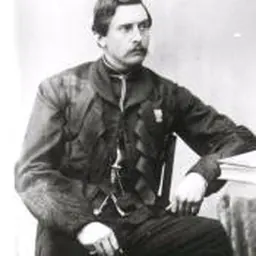
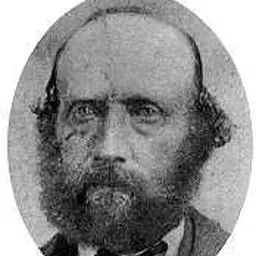
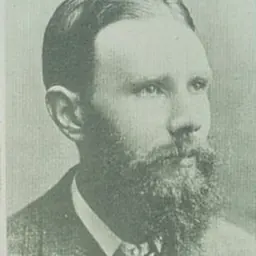
Related people
Same field, nearest in time

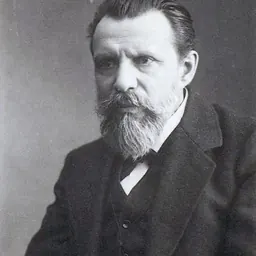


Contemporaries
People whose lives overlapped Charles George Nurse's



Frequently asked questions
Who was Charles George Nurse?
Naturalist, ornithologists and British army officer
When was Charles George Nurse born?
Charles George Nurse was born on 22 March 1862 in Barnham.
When did Charles George Nurse die?
Charles George Nurse died on 5 November 1933 in Royal Tunbridge Wells.
What was Charles George Nurse's occupation?
Charles George Nurse was an ornithologist, lepidopterist and entomologist.
What was Charles George Nurse known for?
Charles George Nurse was known for Natural History Museum, London and Wildlife of India.
Sources & further reading
· Wikipedia: Charles George Nurse
· DBpedia: Charles George Nurse
Cite this page
APA: Biography.guide. (2026). Charles George Nurse. https://biography.guide/charles-george-nurse/
MLA: "Charles George Nurse." Biography.guide, https://biography.guide/charles-george-nurse/.
Chicago: "Charles George Nurse." Biography.guide. https://biography.guide/charles-george-nurse/.
Data last updated: 2026-09-22 · Spot an error? Report a correction.
Page generated 2026-09-27 05:05 UTC