
About Charles Fried
Lived 1935 – 2024 (aged 88). Charles Fried was an American lawyer, university teacher, judge and jurist.
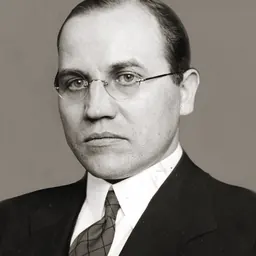
Charles Anthony Fried (born Karel Fried; April 15, 1935 – January 23, 2024) was an American jurist and lawyer. He served as Solicitor General of the United States under President Ronald Reagan from 1985 to 1989. He was a professor at Harvard Law School and a visiting professor at Columbia Law School. He also served on the board of the nonpartisan, nonprofit, Campaign Legal Center.
Fried was the author of more than ten books and over 30 journal articles, and his work appeared in over a dozen collections.
Early life and education Fried was born on April 15, 1935, in Prague, Czechoslovakia, to Marta and Anthony Fried. They were a Jewish family. His father was a Czech industrialist who served as a vice-president of the arms and automotive conglomerate Škoda Works. Fried described him as a "Czech patriot" and the family as having "always looked to the United States and to American democracy for inspiration". The family settled in New York City. Fried then attended the University of Oxford, where he earned a Bachelor of Arts and Master of Arts degree in jurisprudence in 1958 and 1960, respectively, and was awarded the Ordronnaux Prize in Law (1958). In 1961, Fried received his Bachelor of Laws (LL.B.) degree from Columbia Law School, where he was an editor of the Columbia Law Review and a Stone Scholar. From 1960 to 1961, he served as law clerk to United States Supreme Court justice John Marshall Harlan II. In 1961, he began teaching at Harvard Law School.
Legal career Fried argued 25 cases in front of the Supreme Court during his tenure as Solicitor General. He served as counsel to numerous major law firms and clients, arguing several major cases, one of the most notable being Daubert v. Merrell Dow Pharmaceuticals, both in the Supreme Court and in the Ninth Circuit on remand.
Prior to his appointment as Solicitor General, Fried was Special Assistant to the Attorney General of the United States from 1984 to 1985, which was preceded by a consulting relationship to that office. In 1989, when Reagan left office, Fried returned to Harvard Law School. On September 27, 2010, he and Gregory Fried discussed their book Because It Is Wrong: Torture, Privacy, and Presidential Power in the Age of Terror at the American Academy of Arts and Sciences. Fried was Orgain Lecturer at the University of Texas (1982), Tanner Lecturer on Human Values at Stanford University (1981), and Harris Lecturer on Medical Ethics at the Harvard Medical School (1974–75). He was conferred a Guggenheim Fellowship in 1971–72. He was a member of the National Academy of Sciences's Institute of Medicine, the American Academy of Arts and Sciences, and the American Law Institute. Fried testified before the Senate Judiciary Committee and wrote a New York Times op-ed in support of Alito, who had served under him in the Solicitor General's office.
On October 24, 2008, despite his previous support for the presidential aspirations of Senator John McCain, Fried announced that he had voted for Senator Barack Obama for president by absentee ballot. Fried cited McCain's selection of Governor of Alaska Sarah Palin as his running mate as the principal reason for his decision to vote for Obama. As president of the Harvard Law Review in 1990, Obama had published an article Fried wrote criticizing the effects of race-based affirmative action. Fried later told The Wall Street Journal:
I admire Senator McCain and was glad to help in his campaign, and to be listed as doing so; but when I concluded that I must vote for Obama for the reason stated in my letter, I felt it wrong to appear to be recommending to others a vote that I was not prepared to cast myself. So it was more of an erasure than a public affirmation—although obviously my vote meant that I thought that Obama was preferable to McCain–Palin. I do not consider abstention a proper option.
In February 2011, Fried testified before the Senate Judiciary Committee in support of the Patient Protection and Affordable Care Act. When asked by Illinois Senator Richard Durbin to respond to critics of the law's individual mandate who ask: "f the government can require me to buy health insurance, can it require me to have a membership in a gym, or eat vegetables?," Fried replied:
Yes. We hear that quite a lot. It was put by Judge Vinson, and I think it was put by Professor Barnett in terms of eating your vegetables, and for reasons I set out in my testimony, that would be a violation of the 5th and the 14th Amendment, to force you to eat something. But to force you to pay for something? I don't see why not. It may not be a good idea, but I don't see why it's unconstitutional.
Fried was an adviser to the Harvard chapter of the Federalist Society.
Having supported Jon Huntsman for the Republican nomination in 2012 and John Kasich for the Republican nomination in 2016, Fried opposed the election of Donald Trump and voted for Hillary Clinton. He endorsed Joe Biden's presidential candidacy in 2020.
While working for the Reagan administration Fried argued that the case Roe v. Wade should be overturned in Webster v. Reproductive Health Services. In an op-ed for The New York Times in 2021, Fried said that Roe should not be overturned, believing that 1992 case Planned Parenthood v. Casey put Roe on firmer constitutional grounds.
Personal life Fried married Anne Summerscale, an art history scholar, in 1959. They remained married for 65 years until his death. Together, they had two children: Gregory and Antonia.
Works Because It Is Wrong: Torture, Privacy and Presidential Power in the Age of Terror, by Charles Fried and Gregory Fried (2010, W. W. Norton) Modern Liberty and the Limits of Government (2006) (Trad. esp.: La libertad moderna y los límites del gobierno, Buenos Aires/Madrid, Katz editores S.A, 2009, ) Saying What the Law Is: The Constitution in the Supreme Court (2004) Making Tort Law: What Should Be Done and Who Should Do It (with David Rosenberg; 2003) Order and Law: Arguing the Reagan Revolution – A Firsthand Account (1991) Contract as Promise: A Theory of Contractual Obligation (2nd edition, 2015)
Medical Experimentation: Personal Integrity and Social Policy (2nd edition, 2016), An Anatomy of Values: Problems of Personal and Social Choice (1970)
Don’t just read it —
keep it.
Full-length biographies made to live with: read them, listen on the way to work, watch them tonight.
- E-book
- Audio
- Video
Instant download · yours to keep · every purchase keeps this site free
Important facts
People in Charles Fried's life
Named in this biography and alive at the same time





Related people
Same field, nearest in time


Contemporaries
People whose lives overlapped Charles Fried's


Frequently asked questions
Who was Charles Fried?
American judge (1935–2024)
When was Charles Fried born?
Charles Fried was born on 15 April 1935 in Prague.
When did Charles Fried die?
Charles Fried died on 23 January 2024 in Cambridge.
What was Charles Fried's occupation?
Charles Fried was a lawyer, university teacher, judge and jurist.
What nationality was Charles Fried?
Charles Fried was American.
Sources & further reading
Cite this page
APA: Biography.guide. (2026). Charles Fried. https://biography.guide/charles-fried/
MLA: "Charles Fried." Biography.guide, https://biography.guide/charles-fried/.
Chicago: "Charles Fried." Biography.guide. https://biography.guide/charles-fried/.
Data last updated: 2026-09-20 · Spot an error? Report a correction.
Page generated 2026-09-27 05:33 UTC