
About Charles Floyd
Lived 1782 – 1804 (aged 21–22). Charles Floyd was an American explorer and quartermaster, known for Lewis and Clark Expedition.
Charles Floyd (June 20, 1782 – August 20, 1804) was an American explorer who served as Quartermaster in the Corps of Discovery during the Lewis and Clark Expedition, but died within the first four months of the 28-month expedition. He was one of the expedition's "Nine Young Men from Kentucky" and was the only member of the mission to die on it.
Early life Charles Floyd was born on June 20, 1782, to Lillian and Robert Floyd at Floyd Station, a frontier fort near the Beargrass Creek in the Kentucky County of Virginia. Robert was a Virginian who served in the Revolutionary War under the command of George Rogers Clark and came to the Kentucky District where he established Floyd Station with his brother James John Floyd in 1780.
In 1799 the family moved into the Northwest Territory in what is now southern Indiana where they operated a ferry business across the Ohio River. After the formation of Clark County in 1801, Charles was named first constable when he was 19–20 years old.
Floyd's journal entries from early June note the beauty his saw in the landscape along the Missouri River and on July 31, he wrote "I am very sick and have been for sometime but have recovered my health again." However, this apparent recovery was soon followed by a severe turn for the worse with Clark noting that he was "very unwell." The expedition had no dedicated doctors and Floyd was attended to by York while the captains negotiated with representatives of the Otoe people. Floyds last journal entry on August 18 noted that "the Grand Chief of the Otoes" had arrived at camp and that same day, Clark noted that Floyd was seriously ill. On August 20 after the expedition had reached the site of present-day Sioux City, Iowa, Floyd died shortly after noon from peritonitis. Clark said that Floyd had died "with a great deal of composure" and that his final words were, "I am going away. Please write me a letter." was published in 1894, new interest was taken in him and his grave-marker was stolen. He was re-buried once more on August 20, 1895, with a monument. A marble cornerstone three feet wide and seven feet long was placed in 1900. When the obelisk of white sandstone standing high was completed on May 30, 1901, Floyd's grave was moved for the fourth time to rest nearby. It was designated a National Historic Landmark on June 30, 1960.
Charles Floyd is the namesake of Floyd County, Iowa. The town of Sergeant Bluff is named in honor of Floyd. The Interstate 129 bridge between Sioux City and South Sioux City, Nebraska is named the Sergeant Floyd Memorial Bridge in his honor.
Don’t just read it —
keep it.
Full-length biographies made to live with: read them, listen on the way to work, watch them tonight.
- E-book
- Audio
- Video
Instant download · yours to keep · every purchase keeps this site free
Important facts
People in Charles Floyd's life
Named in this biography and alive at the same time
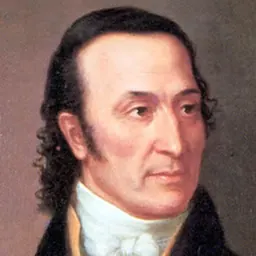
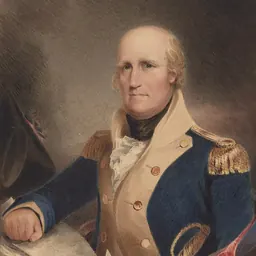
Related people
Same field, nearest in time


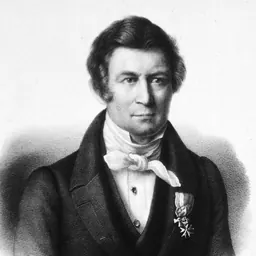
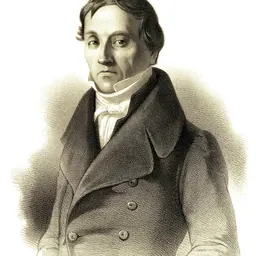

Contemporaries
People whose lives overlapped Charles Floyd's



Frequently asked questions
Who was Charles Floyd?
American explorer
When was Charles Floyd born?
Charles Floyd was born in 1782 in Kentucky.
When did Charles Floyd die?
Charles Floyd died on 20 August 1804 in Missouri River.
What was Charles Floyd's occupation?
Charles Floyd was an explorer and quartermaster.
What was Charles Floyd known for?
Charles Floyd was known for Lewis and Clark Expedition.
What nationality was Charles Floyd?
Charles Floyd was American.
Sources & further reading
· DBpedia: Charles Floyd (explorer)
Cite this page
APA: Biography.guide. (2026). Charles Floyd. https://biography.guide/charles-floyd/
MLA: "Charles Floyd." Biography.guide, https://biography.guide/charles-floyd/.
Chicago: "Charles Floyd." Biography.guide. https://biography.guide/charles-floyd/.
Data last updated: 2026-09-22 · Spot an error? Report a correction.
Page generated 2026-09-27 05:18 UTC