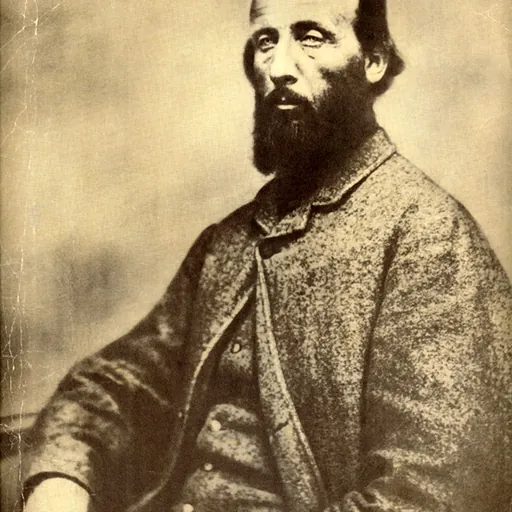
About Charles Fenerty
Lived 1821 – 1892 (aged 70–71). Charles Fenerty was a Canadian writer, poet, census, health warden and lumber mill, known for Wood pulp.
Charles Fenerty ( January 1821 – 10 June 1892) was a Canadian inventor who invented the wood pulp process for papermaking, which was first adapted into the production of newsprint. Fenerty was also a poet, writing over 32 known poems.
Early life Fenerty was born in Upper Falmouth, Nova Scotia. He was the youngest of three boys, all of whom worked for their father, a lumberman and farmer. During the winter months, the Fenertys would clear-cut the local forests for lumber, which they then transported to the family's lumber mill at Springfield Lake. The Fenertys shipped their lumber to the Halifax dockyards, where it was exported or used locally. The Fenertys had around of farmland; they shipped most of their produce to the markets in Halifax.
As a young man, Fenerty began writing poetry; his first (known) poem, written when he was 17 years old, was titled "The Prince's Lodge" (later retitled as "Passing Away" and published in 1888). It described an abandoned, decaying home overlooking the Bedford Basin near Halifax. The lodge had been built decades prior by Prince Edward, Duke of Kent and Strathearn, who later returned to England.
Invention of paper from wood pulp Each time Fenerty hauled lumber and produce to Halifax, he would pass the local paper mills, and sometimes stopped by to watch the process, since there were many similarities between lumber and paper mills. In those days paper was made from pulped rags, cotton and other plant fibres, a technique used for nearly 2000 years (see History of paper). Demand for paper was outstripping the supply of rags, and Europe started cutting down their shipments of cotton to North America.
Fenerty had learned that trees have fibres too, through discussions with the naturalist Titus Smith. At the age of 17 (in c.1838) he began his experiments of making paper from wood. By 1844, he had perfected the process (including bleaching the pulp to a white colour). In a letter written by a family member circa 1915 it is mentioned that Charles Fenerty had shown a crude sample of his paper to a friend named Charles Hamilton in 1840 (a relative of his future wife), though the family member in question would have been around 8 at the time. On 26 October 1844 Charles Fenerty took a sample of his paper to Halifax's top newspaper, the Acadian Recorder, where he had written a letter on his newly invented paper saying:
Other inventors had used wood to make paper; in the 18th century a French scientist by the name of René Antoine Ferchault de Réaumur suggested that paper could be made from trees. His theory caught the interest of Matthias Koops, who in 1800 experimented with papermaking by compressing and adhering straw and wood shavings.
In about 1838 German weaver Friedrich Gottlob Keller read Réaumur's report. Unaware of Fenerty across the ocean, he experimented for a few years and, in 1845, a year after Fenerty's letter to the newspaper, filed for a patent in Germany for the ground wood pulp process for making modern paper. and "The Prince's Lodge" (about Prince Edward Augustus, Duke of Kent and Strathearn, written around 1838 and published in 1888). In October 1854, he won first prize for "Betula Nigra" at the Nova Scotia Industrial Exhibition.
Fenerty did extensive travelling throughout Australia between the years 1858 to 1865, living through the Australian gold rushes, and then returned to Halifax. He became involved with the Church and held several positions in Halifax: Wood Measurer, Census Taker, Health Warden, Tax Collector for his community, and Overseer of the Poor.
Death and legacy Little attention was given to Fenerty's invention, and he himself never developed his process or took out a patent on it. It did mark the beginning to a new industry; today most people attribute F. G. Keller as the original inventor.
Pulped wood paper slowly began to be adopted by paper mills. German newspapers were the first to adopt the new paper, then other newspapers made the switch from rags to wood pulp. Soon there were mills throughout Canada, the U.S., and Europe, and later the rest of the world. A wood pulp paper mill was erected near Fenerty's home town. By the end of the 19th century almost all newspapers in the western world were using pulp wood newsprint.
Fenerty died on 10 June 1892 in his home in Lower Sackville, Nova Scotia, from a flu.
Passing Away (aka, The Prince's Lodge), c.1838, by Charles Fenerty (which appeared in the Rockingham Sentinel (Halifax, NS), March 1888).
Poems by Charles Fenerty The Prince's Lodge (His first known poem, written in c.1837) Betula Nigra (His award-winning poem) Battle of the Alma In Memoriam of James Montgomery The Relic Hid Treasure: Canto I Hid Treasure: Canto II Hid Treasure: Canto III To a Rich Miser The Saxon's Sentimental Journey The Tao-Aspiring Poet A Lilt of Skibbereen Reason and Faith Hymn The Man of God Farewell to Australia (1865) The Voyagers on Gennesaret Keep the Heart Young Essay on Progress The Decline of Spain Lex Talionis The Blind Lady's Request Early Piety Terra Nova To a Meteorite The Sentinel Rose In Memoriam The Wreck of the Atlantic Sir Provo Wallis (His last known poem, written in 1892) Passing On Eighteen Hundred and Two Howe
Recognition On Canada Day in 1987, Canada Post featured Fenerty on one of a set of four stamps commemorating Canadian inventors in Communications.
Don’t just read it —
keep it.
Full-length biographies made to live with: read them, listen on the way to work, watch them tonight.
- E-book
- Audio
- Video
Instant download · yours to keep · every purchase keeps this site free
Important facts
People in Charles Fenerty's life
Named in this biography and alive at the same time
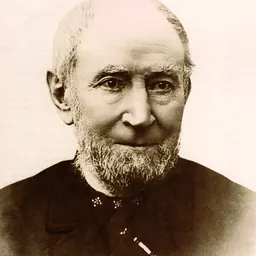
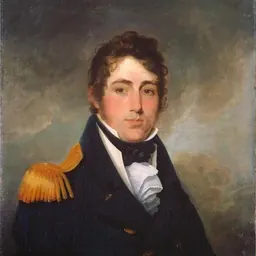

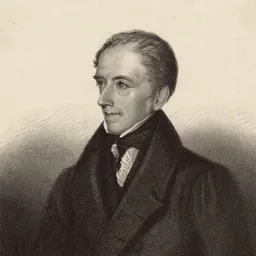
Related people
Same field, nearest in time

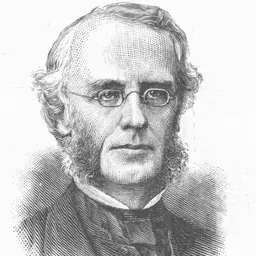
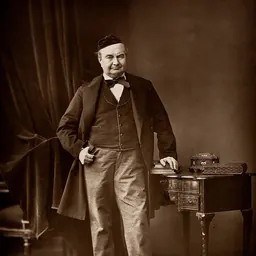
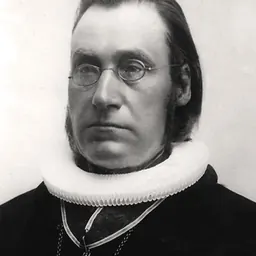
Contemporaries
People whose lives overlapped Charles Fenerty's



Frequently asked questions
Who was Charles Fenerty?
Canadian poet (1821–1892)
When was Charles Fenerty born?
Charles Fenerty was born in 1821 in Upper Sackville.
When did Charles Fenerty die?
Charles Fenerty died on 10 June 1892 in Lower Sackville.
What was Charles Fenerty's occupation?
Charles Fenerty was a writer, poet, census, health warden and lumber mill.
What was Charles Fenerty known for?
Charles Fenerty was known for Wood pulp.
What nationality was Charles Fenerty?
Charles Fenerty was Canadian.
Sources & further reading
Cite this page
APA: Biography.guide. (2026). Charles Fenerty. https://biography.guide/charles-fenerty/
MLA: "Charles Fenerty." Biography.guide, https://biography.guide/charles-fenerty/.
Chicago: "Charles Fenerty." Biography.guide. https://biography.guide/charles-fenerty/.
Data last updated: 2026-09-22 · Spot an error? Report a correction.
Portrait: Wikimedia Commons · author & licence
Page generated 2026-09-27 05:04 UTC