
About Charles Edward Russell
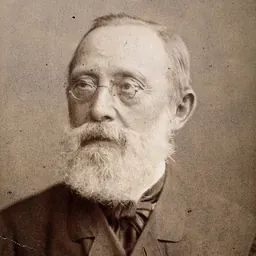
Lived 1860 – 1941 (aged 80). Charles Edward Russell was an American journalist, biographer and writer.
Charles Edward Russell (September 25, 1860 – April 23, 1941) was an American journalist, opinion columnist, newspaper editor, and political activist. In 1928, he won the Pulitzer Prize for Biography or Autobiography for The American Orchestra and Theodore Thomas.
Early life Russell was born in Davenport, Iowa, a transportation center on the Mississippi River on the far eastern border of the state. His father, Edward Russell, was editor of the Davenport Gazette and a noted abolitionist. The Russell family were staunchly religious Christian Evangelicals, with Charles' grandfather a Baptist minister and his father a Sunday school superintendent and a leader of the Iowa YMCA.
Russell attended St. Johnsbury Academy (Class of 1881), in St. Johnsbury, Vermont, for his high school education and also worked under his father at the newspaper.
Russell wrote for the Minneapolis Journal, the Detroit Tribune, the New York World, William Randolph Hearst's Cosmopolitan, and the New York Herald. He was employed as a newspaper writer and editor in New York and Chicago from 1894 to 1902, working successively for the New York World, the New York American, and the Chicago American. In 1912 he appeared as one of the editors of The Coming Nation, a socialist newspaper published by J. A. Wayland and Fred D. Warren in Girard, Kansas.
Muckraking
In his memoirs, Bare Hands and Stone Walls, Russell stated that "transforming the world... to a place where one can know some peace... some joy of living, some sense of the inexhaustible beauties of the universe in which he has been placed" was the purpose that inspired his work and his life. Russell felt strongly about the hardships of the working class, particularly unfair working and living conditions. Factories often had poor workplace conditions with long hours and low wages, in addition to inadequate safety measures which lead to high rates of serious injury. Workers and their families lived in slums with little to no sanitation, making the outbreak of infectious disease a common occurrence. These issues also disproportionally affected newly arrived immigrants, and served as key inspiration for Russel and his writing.
Russell was a high-profile muckraker, a progressive era movement in journalism, claiming to focus on exposing corruption and wrongdoing in established institutions. Muckrakers most commonly targeted the corporate monopolies or political machines of the era, claiming they perpetrated and profited off of unsafe working conditions, urban poverty, and child labor. The muckraker movement helped to jumpstart numerous reforms that included prison conditions, railroads and church-building conditions. Russell's participation in the founding of the NAACP stemmed from his experiences with violence and racism as a child, a particularly notable experience included his father nearly being hanged for opposing slavery.
Russell would ultimately be expelled from the Socialist Party in 1917 for supporting American intervention in the First World War.
After the February Revolution, Russell was named by Wilson to join a mission led by Elihu Root that was intended to keep the Russian Provisional Government of Alexander Kerensky in the war. The mission report recommended for George Creel's Committee on Public Information to conduct pro-war propaganda efforts in Russia. Russell personally lobbied Wilson to use the relatively-new medium of film to influence the Russian public. Wilson was receptive, and the Committee on Public Information then developed film and distribution networks in Russia over the next few months. Russell appears as himself in the 1917 film The Fall of the Romanoffs, directed by Herbert Brenon, which may have been a product of those efforts.
Participation in the Root Mission cut his ties with the Socialist Party, which remained solidly opposed to the war. Russell left it to join the Social Democratic League of America. He also worked with the American Federation of Labor to help found the patriotic American Alliance for Labor and Democracy, an organization that agitated on behalf of American participation in the war among the country's workers.
Later life Russell subsequently became an editorial writer for social democratic magazine The New Leader.
Death and legacy Russel died on April 23, 1941, in Washington, D.C., at the age of 80.
Russell's papers are housed at the Library of Congress in Washington, D.C.
Works
Books and pamphlets
Such Stuff as Dreams. Indianapolis, IN: Bowen-Merrill, 1901. The Twin Immoralities and Other Poems. Chicago: Hammersmark, 1904. The Greatest Trust in the World. New York: Ridgeway-Thayer, 1905. The Uprising of the Many. New York: Doubleday, Page & Co., 1907. Lawless Wealth: The Origin of Some Great American Fortunes. New York: B.W. Dodge, 1908. Songs of Democracy and Other Themes. New York: Moffat, Yard & Co., 1909. Thomas Chatterton: The Marvelous Boy: The Story of a Strange Life, 1752-1770. London: Richards, 1909. Why I Am a Socialist. New York: Hodder and Stoughton, 1910. Business: The Heart of the Nation. New York: John Lane, 1911. Socialism the Only Remedy. Chicago: Socialist Party, 1912. The Passing Show of Capitalism. Girard, KS: Appeal to Reason, 1912. Stories of the Great Railroads. Chicago: Charles H. Kerr & Co., 1912. Doing Us Good and Plenty. Chicago: Charles H. Kerr & Co., 1914. These Shifting Scenes. New York: Hodder and Stoughton, 1914. The Story of Wendell Phillips: Soldier of the Common Good. Chicago: Charles H. Kerr & Co., 1914. Unchained Russia. New York: D. Appleton & Co., 1918. After the Whirlwind: A Book of Reconstruction and Profitable Thanksgiving. New York: George H. Doran, 1919. Bolshevism and the United States. Indianapolis, IN: Bobbs-Merrill, 1919. The Story of the Nonpartisan League: A Chapter in American Evolution. New York: Harper & Bros., 1920. Railroad Melons, Rates and Wages: A Handbook of Railroad Information. Chicago: Charles H. Kerr & Co., 1922. The Outlook for the Philippines. New York: The Century Co., 1922. The Hero of the Filipinos: The Story of Jose Rizal, Poet, Patriot and Martyr. With E.B. Rodriguez. New York: The Century Co., 1923. Julia Marlowe: Her Life and Art. New York: Appleton & Co., 1926. The American Orchestra and Theodore Thomas. Garden City, NY: Doubleday, Page & Co., 1927. A-rafting on the Mississipp'. New York: The Century Co., 1928. An Hour of American Poetry. New York: J.B. Lippincott, 1929. From Sandy Hook to 62°; Being Some Account of the Adventures, Exploits and Services of the Old New York Pilot-Boat., The Century Co., New York, 1929. Haym Salomon and the Revolution. New York: Cosmopolitan Book Co., 1930. Charlemagne: First of the Moderns. New York: Houghton Mifflin Co., 1930. Blaine of Maine: His Life and Times. New York: Cosmopolitan Book Co., 1931. Bare Hands and Stone Walls: Some Recollections of a Sideline Reformer. New York: Charles Scribner's Sons, 1933. —Autobiography. A Pioneer Editor in Early Iowa: A Sketch of the Life of Edward Russell. Washington, DC: Randsdell, 1941.
Selected articles
"The Clergyman's Daughter," Waverly, March 1897, pg. 48. "The Greatest of World's Fairs," Munsey's, Nov. 1900, pp. 161–184. "The Story of the Nineteenth Century," Munsey's, Jan. 1901, pp. 551–559. "Are There Two Rudyard Kiplings?" Cosmopolitan, Oct. 1901, pp. 653–660. "William Randolph Hearst," Harper's Weekly, pp. 790–792. "Marshall Field, A Great Commercial Genius," Everybody's Magazine, March 1906, pp. 291–302. "Mr. Hearst As I Knew Him," Ridgway's, Oct. 1906, pp. 279–291. "Caste — The Curse of India," Cosmopolitan, Dec. 1906, pp. 124–135. "The Growth of Caste in America," Cosmopolitan, March 1907, pp. 524–534. "The Haymarket and Afterwards," Appleton's, Oct. 1907, pp. 399–412. "Tenements of Trinity Church," Everybody's Magazine, June 1908, pp. 47–57. "The Growing Menace of Socialism," Hampton's, Jan. 1909, pp. 119–126. "Robert Marion La Follette". Human Life, July 1909, pp. 7–8, 24. "The Press and the Public" La Follette's Magazine, June 4, 1910, pp. 7–8. "The Remedy of the Law," Hampton's, Aug. 1910, pp. 217–230. "Railroad Revolution," Pearson's Magazine, Feb. to May, 1913. "The Keeping of the Kept Press," Pearson's Magazine, Jan. 1914, pp. 33–43. "How Business Controls News," Pearson's Magazine, May 1914, pp. 546–557. "The Revolt of the Farmers: A Lesson in Constructive Radicalism," Pearson's Magazine, April 1915, pp. 417–427. "Why England Falls Down," Pearson's Magazine, Aug. 1915, pp. 201–219. "The New Socialist Alignment," Harper's Magazine, March 1918, pp. 563–570. "Radical Press in America," Bookman, July 1919, pp. 513–518. "Collective Bargaining in the President's First Industrial Conference," Annals of the American Academy of Political and Social Science, vol. 90 (July 1920), pp. 68–69. "About a 'Tolerable Autocracy,'" Young India, Aug. 1920. "Is Woman Suffrage a Failure?" The Century, March 1924, pp. 724–730. "Take Them or Leave Them," The Century, June 1926. "An Old Reporter Looks at the Mad-House World," Scribner's Magazine, Oct. 1933, pp. 225–230. "Toward the American Commonwealth: Social Democracy: Constant Gradualism as the Technique for Social Advance," Social Frontier, Oct. 1938, pp. 22–24.
Film Russell played himself in the 1917 film The Fall of the Romanoffs, a dramatization of the Russian revolution and the influence of Rasputin on the Russian royal family.
Don’t just read it —
keep it.
Full-length biographies made to live with: read them, listen on the way to work, watch them tonight.
- E-book
- Audio
- Video
Instant download · yours to keep · every purchase keeps this site free
Important facts
People in Charles Edward Russell's life
Named in this biography and alive at the same time




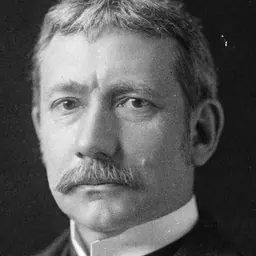

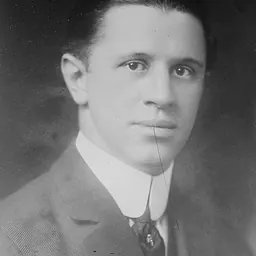
Related people
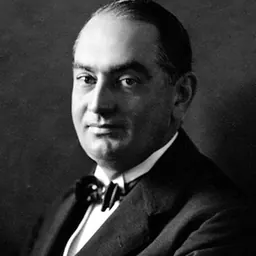
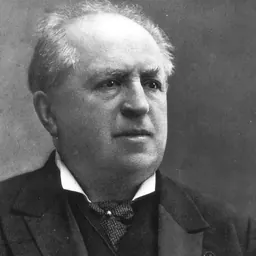
Same field, nearest in time
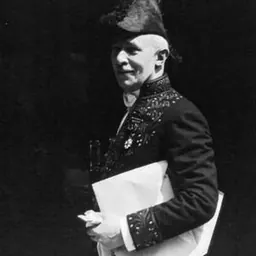
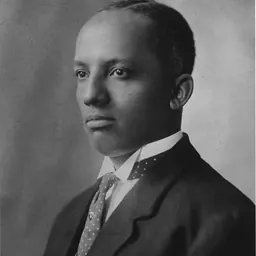
Contemporaries
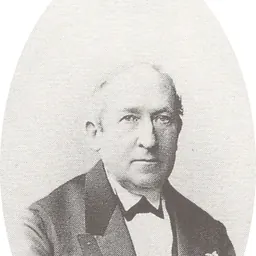
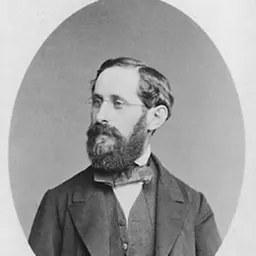
People whose lives overlapped Charles Edward Russell's



Frequently asked questions
Who was Charles Edward Russell?
American journalist (1860-1941)
When was Charles Edward Russell born?
Charles Edward Russell was born on 25 September 1860 in Davenport.
When did Charles Edward Russell die?
Charles Edward Russell died on 23 April 1941 in Washington, D.C..
What was Charles Edward Russell's occupation?
Charles Edward Russell was a journalist, biographer and writer.
What nationality was Charles Edward Russell?
Charles Edward Russell was American.
Sources & further reading
· Wikipedia: Charles Edward Russell
· DBpedia: Charles Edward Russell
Cite this page
APA: Biography.guide. (2026). Charles Edward Russell. https://biography.guide/charles-edward-russell/
MLA: "Charles Edward Russell." Biography.guide, https://biography.guide/charles-edward-russell/.
Chicago: "Charles Edward Russell." Biography.guide. https://biography.guide/charles-edward-russell/.
Data last updated: 2026-09-20 · Spot an error? Report a correction.
Page generated 2026-09-27 05:22 UTC