
About Charles Edge
Lived 1800 – 1867 (aged 66). Charles Edge was a British architect.
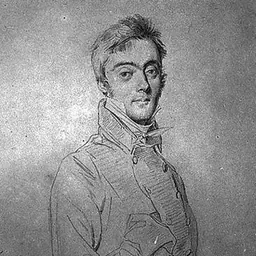
Charles Edge (13 October 1800 – 21 July 1867) was a British architect based in Birmingham.
Career Edge was born on 13 October 1800. He studied architecture in London for 5 years, and set himself up in practice in Bennetts Hill, Birmingham in 1826. He became one of the leading architects in Birmingham. After the failure of the contractors building Birmingham Town Hall, Edge was employed to complete the building. For many years he worked in partnership with Avery. His son, Charles Allerton Edge became an architect working with his father. Edge also employed Yeoville Thomason.
He died on 21 July 1867 at Edgbaston.
Works 5 Bennetts Hill, Birmingham, 1827 6 Bennetts Hill, Birmingham, 1827 Wesleyan Methodist Church, Constitution Hill, Birmingham, 1827–28 112 Colmore Row, Birmingham, c.1829 (probable) The Public Office, Moor Street, Birmingham, 1829–30 Birmingham Market Hall, High Street, Birmingham, 1832–35 (destroyed in the Birmingham Blitz, 1940; remains demolished 1963) Bank of Birmingham, Bennetts Hill, Birmingham 1833 (afterwards Branch Bank of England) Scottish Presbyterian Church, Broad Street, Birmingham, 1834 (rebuilt 1848–49 by J. R. Botham) St Peter's Church, Dale End, Birmingham, 1834–37 (rebuilding after fire damage. Demolished 1899) Birmingham Town Hall, 1835 alterations Key Hill Cemetery, 1835–36 The Crescent, Filey, Yorkshire, 1835–38 Birmingham and Midland Bank, Union Street, Birmingham, 1836 Aspley House, 39 Wellington Road, Birmingham, 1836 Regent Works, Vittoria Street/Regent Street, Birmingham, 1837–38 Birmingham Town Hall, 1837 extension 15 Chad Road, Birmingham, 1838 The Independent Chapel, King Street, Dudley, 1839 Victoria Works, Vittoria Street/Frederick Street, Birmingham 1839–40 National Provincial Bank, Bennett Hill, Birmingham, 1840 Block, Temple Street/New Street, Birmingham, 1842 (demolished c.1950) St Paul's School, Warstone Lane, Birmingham, 1844 Norwich Union Fire Engine House, Temple Street, Birmingham, 1846 (with Avery) Coade stone fountain, Birmingham Botanical Gardens, 1850 Savings Bank, 31 Cannon Hill, Birmingham, 1850 Birmingham Town Hall, 1850 extension Aston Waterworks Engine House, Birmingham, 1851 Lily House, Birmingham Botanical Gardens, 1852 St George's Church, Edgbaston, 1855–57 chancel Birmingham Gun Barrel Proof House, 1860 alterations Powell's Gun Shop, 35–37 Carrs Lane, Birmingham, 1861
Personal life Edge married Ellen Allerton (1810–1871), second daughter of Thomas Allarton of Lozells, Birmingham, on 30 October 1833 in Aston, Birmingham. Their children were: Frances May Edge (1836–1920) Ellen Edge (1843–1917) Charles Allerton Edge (1844–1907) (also an architect and father of sculptor and anthropologist Marguerite Milward ) Sarah Margaret Edge (1847–1898) John Quarrendon Edge (b.1848) Hall Travers Edge (1850–1915)
Don’t just read it —
keep it.
Full-length biographies made to live with: read them, listen on the way to work, watch them tonight.
- E-book
- Audio
- Video
Instant download · yours to keep · every purchase keeps this site free
Important facts
People in Charles Edge's life
Named in this biography and alive at the same time


Related people
Same field, nearest in time




Contemporaries
People whose lives overlapped Charles Edge's





Frequently asked questions
Who was Charles Edge?
English architect
When was Charles Edge born?
Charles Edge was born on 13 October 1800.
When did Charles Edge die?
Charles Edge died on 21 July 1867 in Edgbaston.
What was Charles Edge's occupation?
Charles Edge was an architect.
What nationality was Charles Edge?
Charles Edge was British.
Sources & further reading
· DBpedia: Charles Edge (architect)
Cite this page
APA: Biography.guide. (2026). Charles Edge. https://biography.guide/charles-edge-architect/
MLA: "Charles Edge." Biography.guide, https://biography.guide/charles-edge-architect/.
Chicago: "Charles Edge." Biography.guide. https://biography.guide/charles-edge-architect/.
Data last updated: 2026-09-20 · Spot an error? Report a correction.
Page generated 2026-09-27 05:02 UTC