
Charles E. Lindblom
American political scientist
About Charles E. Lindblom
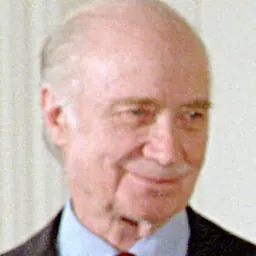
Lived 1917 – 2018 (aged 100). Charles E. Lindblom was an American political scientist, economist and university teacher.
Academic work Lindblom was one of the early developers and advocates of the theory of incrementalism in policy and decision-making. That view (also called gradualism) takes a "baby-steps," "muddling through," or "Echternach-theory" approach to decision-making processes. In it, policy change is, under most circumstances, evolutionary, rather than revolutionary. He came to that view through his extensive studies of welfare policies and trade unions throughout the industrialized world. Those views are set out in two articles separated by 20 years: "The Science Of 'Muddling Through'" (1959) and “Still Muddling, Not yet through” (1979), both of which were published in Public Administration Review.
Together with his friend, colleague, and fellow Yale Professor Robert A. Dahl, Lindblom was a champion of the polyarchy (or pluralistic) view of political elites and governance in the late 1950s and the early 1960s. According to that view, no single monolithic elite controls government and society but rather a series of specialized elites competing and bargaining with one another for control. It is this peaceful competition and compromise between elites in politics and the marketplace that drives free-market democracy and allows it to thrive.
However, Lindblom soon began to see the shortcomings of polyarchy with regard to democratic governance. When certain groups of elites gain crucial advantages, become too successful and begin to collude with one another instead of compete, polyarchy can easily turn into corporatism or oligarchy.
Lindblom died on January 30, 2018, at the age of 100. According to Lindblom, it is difficult for politicians to implement change when those changes adversely affect those who control capital, who also create the conditions that determine the success of society. Unlike other actors, who must proactively advocate for and against policies, the owners of capital can, by virtue of their importance for society, shape public policy decisions.
In The Market System: What It Is, How It Works, and What to Make of It (2001), Lindblom echoed and expanded upon many of his concerns raised in Politics And Markets. The most important of them is that the market system is the best mechanism yet devised for creating and fostering wealth and innovation, but it is not very efficient at assigning non-economic values and distributing social or economic justice.
Select bibliography
Lindblom, Charles E. (1959), The science of 'muddling through'. Public Administration Review, 19, pp. 79–88. Lindblom, Charles E.; Braybrooke, David (1963), A strategy of decision: policy evaluation as a social process. Free Press. Lindblom, Charles E. (1965), The intelligence of democracy, Free Press. Lindblom, Charles E.; Dahl, Robert A. (1976), Politics, economics, and welfare: planning and politico-economic systems resolved into basic social processes, with a new preface by the authors. Chicago: University of Chicago Press. Lindblom, Charles E. (1977), Politics and markets: the world's political-economic systems, New York: Basic Books. Lindblom, Charles E. (1979), Still muddling, not yet through "Public Administration Review", 39, pp. 517–526. Lindblom, Charles E.; Cohen, David K. (1979), Usable knowledge: social science and social problem solving, New Haven : Yale University Press Lindblom, Charles E. (1984), The policy-making process (2nd edition), Englewood Cliffs, New Jersey: Prentice-Hall. Lindblom, Charles E. (1990), "Inquiry and change: the troubled attempt to understand and shape society", Yale University Press Lindblom, Charles E.; Woodhouse, Edward J. (1993), The policy-making process, 3rd. ed. Englewood Cliffs, New Jersey: Prentice Hall. Lindblom, Charles E. (2001), The market system: what it is, how it works, and what to make of it, Yale University Press. Blockland, Hans; Rune Premfors, and Ross Zucker (2018), "In Memoriam: Charles Edward Lindblom, APSA President (1980–1981)" PS: Political Science & Politics (Vol. 51, No.2, April 2018).
Don’t just read it —
keep it.
Full-length biographies made to live with: read them, listen on the way to work, watch them tonight.
- E-book
- Audio
- Video
Instant download · yours to keep · every purchase keeps this site free
Important facts
Related people
Same field, nearest in time





Contemporaries
People whose lives overlapped Charles E. Lindblom's

Frequently asked questions
Who was Charles E. Lindblom?
American political scientist (1917–2018)
When was Charles E. Lindblom born?
Charles E. Lindblom was born on 21 March 1917 in Stanislaus County.
When did Charles E. Lindblom die?
Charles E. Lindblom died on 30 January 2018 in Santa Fe.
What was Charles E. Lindblom's occupation?
Charles E. Lindblom was a political scientist, economist and university teacher.
What nationality was Charles E. Lindblom?
Charles E. Lindblom was American.
Sources & further reading
· Wikipedia: Charles E. Lindblom
· DBpedia: Charles E. Lindblom
Cite this page
APA: Biography.guide. (2026). Charles E. Lindblom. https://biography.guide/charles-e-lindblom/
MLA: "Charles E. Lindblom." Biography.guide, https://biography.guide/charles-e-lindblom/.
Chicago: "Charles E. Lindblom." Biography.guide. https://biography.guide/charles-e-lindblom/.
Data last updated: 2026-09-20 · Spot an error? Report a correction.
Page generated 2026-09-27 05:25 UTC