
Charles Duguid
Australian doctor and Aboriginal rights campaigner
About Charles Duguid
Lived 1884 – 1986 (aged 102). Charles Duguid was a British and Australian physician, politician, medical doctor and surgeon.
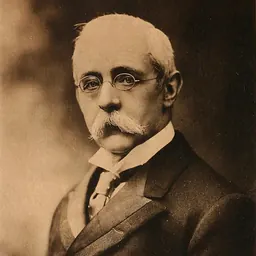
Charles Duguid (6 April 1884 – 5 December 1986) was a Scottish-born Australian medical practitioner, social reformer, Presbyterian lay leader and Aboriginal rights campaigner who lived in Adelaide, South Australia for most of his adult life, and recorded his experience working among the Aboriginal Australians in a number of books. He founded the Ernabella mission station in the far north of South Australia. The Pitjantjatjara people gave him the honorific Tjilpi, meaning "respected old man". He and his wife Phyllis Duguid, also an Aboriginal rights campaigner as well as women's rights activist, led much of the work on improving the lives of Aboriginal people in South Australia in the mid-twentieth century.
The Duguids' legacies include the Duguid Indigenous Endowment Fund at The Australian National University and the Biennial Duguid Memorial Lecture series (held in alternate years at the University of South Australia and Flinders University).
Early life and education Duguid was born at Eglinton Street in Saltcoats, Ayrshire, the son of Charles Duguid, a teacher, sister of Captain Douglas Reid Kinnier. He attended Ardrossan Academy, where his father was Headmaster between 1882 and 1889, and the High School in Glasgow, before studying medicine at the University of Glasgow, where he gained MA in 1905 and MBChB (Bachelor of Medicine and Bachelor of Surgery) in 1909.
Duguid retired from his surgical and general medical practice in 1956, but later developed an interest in geriatric medicine.
Aboriginal rights The murder of a white man by Aboriginal people at Brooks Soak, in the former Territory of Central Australia (now the Northern Territory), leading to what became known as the Coniston massacre, when police shot between 31 and 200 Aboriginal people in punitive raids in 1928, sparked Duguid's interest in Aboriginal rights.
In 1934 he headed to Darwin, but missed his connection from Alice Springs after responding to a request to perform some emergency surgery there and stayed on for three weeks. He was appalled at the way Aboriginal people were treated there and by their poor living conditions. He visited Pastor Friedrich Albrecht and met Albert Namatjira, with whom he became friends, at Hermannsburg Mission.
Duguid was active in several organisations concerned with the advancement of Aboriginal rights, such as the Victorian Council for Aboriginal Rights (CAR), which was founded at a meeting in Melbourne on 16 March 1951, addressed by Duguid, and also the Association for the Protection of Native Races, relating to the Northern Territory. He was also involved with the Anti-Slavery Society, which in 1909 merged with the Aborigines' Protection Society.
Aborigines Protection Board Duguid was appointed a founding member of the South Australian Government's Aborigines Protection Board in 1940, Other board members included J. B. Cleland and Constance Cooke. As part of his duties, Duguid inspected Aboriginal reserves throughout the State, noting abuses against Aboriginal people on pastoral properties and discrimination in education. He and Phyllis, with their two children and their fostered Aboriginal son, Sydney James Cook, visited Ernabella in 1946.
The Aborigines Protection Board promoted assimilation, but by the 1950s, human rights ideas had changed, and in 1963 the Aboriginal Affairs Advisory Board, which focused on attaining full citizenship, was created as a replacement body. Duguid was president from 1951 to 1961 (and Phyllis held this role from 1966 to 1971
Minutes of the Aborigines Advancement League from 1950 to 2008 exist in the SLSA, and there is a typescript entitled History of the Aborigines Advancement League of South Australia by Phyllis Duguid, dated 1969. The AALSA published a Newsletter from 1959 to at least 1978; from 1997 to 2008, the publication was given the name Advancement.
Note about names The Libraries Australia authority record for the organisation gives this information: "Formed in 1953, the Aborigines Advancement League of South Australia (also known as the Aborigines Advancement League Inc. S.A. and often referred to as the Aboriginal Advancement League of South Australia) was deregistered as a company in 1995. It was revived by 1998 as the Aborigines Advancement League South Australia, which by 2001 had changed its name to Aboriginal Advancement League South Australia which was incorporated on 15 Apr. 2002.".
Wiltja One outcome of the meeting in the Town Hall was the establishment of the Wiltja Hostel in November 1956, at 17 East Avenue in the Adelaide suburb of Millswood. (Wiltja is a Pitjantjatjara word for a type of open shelter, built for protection from the sun.) Also known as the Aborigines Advancement League Hostel and the Millswood Girls' Home, it provided accommodation for Aboriginal girls who were attending secondary school in Adelaide, and often for a year beyond school, until 1978. From 1978 to 1980 it became a boarding house for adult Aboriginal visitors to the city, after which it was leased to and later purchase by the Education Department.
In 1980, the first Wiltja students attended Ingle Farm High School. In 1990 they moved to Woodville High School, accommodated in various hostels around Adelaide. In 1997, Wiltja Boarding was set up in Northgate, and in 2010, the first Wiltja students began studying at Windsor Gardens Vocational College, which included a transition programme for the students. In 2020, the college became Avenues College, located on the same site but amalgamated with Gilles Plains Primary School and Children's Centre.
Federal Council for Aboriginal Advancement
On 14 February 1958, a three-day conference began in Willard Hall, in Wakefield Street, Adelaide, attended by 12 delegates from nine Aboriginal rights and welfare leagues and 12 observers, hosted by the AALSA. The meeting culminated in the foundation of the Federal Council for Aboriginal Advancement, designed to unite existing lobby groups, with a goal to help "the Aboriginal people of Australia to become self-reliant, self-supporting members of the community". This was the first national body representing Aboriginal interests. Duguid, one of the oldest members and then president of AALSA, was elected as the first president. Only groups which had "earned themselves the right to be considered seriously as organisations fighting on behalf of Aborigines" and some newer groups which had proven worthy were invited. Different lobby groups focused on different aspects of Aboriginal welfare or rights and members varied in composition, but they all desired to effect change. It was hard to measure success, but all contributed to changing public opinion to an acceptance that Aboriginal people deserved rights. (APA) was a breakaway group from AALSA, assisted in its formation by Laurie Bryan, a non-Aboriginal man who wanted to form an "all-Aboriginal" group, in 1964. while co-founder John Moriarty became vice-president of the organisation. Other founding members were Winnie Branson and her brother The APA established the Aboriginal Education Foundation, which helped to support Aboriginal students through secondary school and tertiary education, including Lois O'Donoghue, Margaret Lawrie and Maude Tongerie, who also engaged in political activism. CAWSA worked closely with and received substantial support from the Department of Aboriginal Affairs.
Other activities Duguid helped to found the Australian branch of the English-Speaking Union, and was chairman from 1932 to 1935.
In 1935, he was elected first lay Moderator of the Presbyterian Church of South Australia. He acted as president from c.1946–1948.
Awards In 1971, Duguid was awarded the OBE for his work with Aboriginal people. In 1972, he received a letter from the people at Ernabella requesting that after his death, his body be buried at the mission, so that they would "always remember that he was one of us and that he faithfully helped us". He considered this his greatest honour. The Pitjantjatjara people gave him the name Tjilpi, meaning "respected old man". The Duguid Travelling Scholarship is enabled by an endowment made in 2002 to the ANU's Endowment for Excellence by Andrew Duguid and Rosemary Douglas in recognition of their parents' contribution. In 1994, the AALSA made a large donation to the University of South Australia and Flinders University, to provide study grants for Aboriginal graduates and to conduct a memorial lecture every two years. The Biennial Duguid Memorial Lecture (held alternate years at the University of South Australia and Flinders University) is held in honour of Charles and Phyllis Duguid.
List of works
(about Scottish neurosurgeon William Macewen)
(ebook available here)
Interview transcripts and recordings
Photographs 66 photographs available for online perusal, here
Don’t just read it —
keep it.
Full-length biographies made to live with: read them, listen on the way to work, watch them tonight.
- E-book
- Audio
- Video
Instant download · yours to keep · every purchase keeps this site free
Important facts
Family & relationships
People in Charles Duguid's life
Named in this biography and alive at the same time





Related people
Same field, nearest in time

Contemporaries
People whose lives overlapped Charles Duguid's

Frequently asked questions
Who was Charles Duguid?
Australian doctor and Aboriginal rights campaigner (1884-1986)
When was Charles Duguid born?
Charles Duguid was born on 6 April 1884 in Saltcoats.
When did Charles Duguid die?
Charles Duguid died on 5 December 1986 in Adelaide.
What was Charles Duguid's occupation?
Charles Duguid was a physician, politician, medical doctor and surgeon.
What nationality was Charles Duguid?
Charles Duguid was British and Australian.
Sources & further reading
Cite this page
APA: Biography.guide. (2026). Charles Duguid. https://biography.guide/charles-duguid/
MLA: "Charles Duguid." Biography.guide, https://biography.guide/charles-duguid/.
Chicago: "Charles Duguid." Biography.guide. https://biography.guide/charles-duguid/.
Data last updated: 2026-09-22 · Spot an error? Report a correction.
Page generated 2026-09-27 05:23 UTC