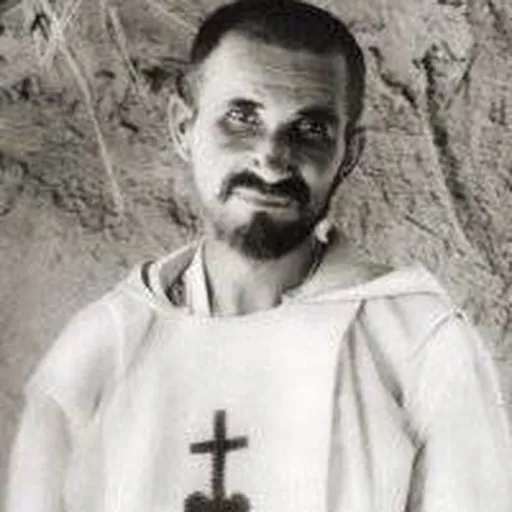
Charles de Foucauld
French Catholic religious man, explorer and scholar
About Charles de Foucauld
Lived 1858 – 1916 (aged 58). Charles de Foucauld was a French catholic priest, explorer, military officer, philologist, missionary and geographer.
Charles de Foucauld, born as Charles Eugène, vicomte de Foucauld de Pontbriand (15 September 1858 – 1 December 1916), in religion Charles of Jesus, was a French monk, Catholic priest and hermit who lived among the Tuareg people in the Sahara in Algeria. He was also an explorer, geographer, ethnographer. Before joining the Trappists as a monk, he was a soldier in the 2nd Hussar Regiment. He was murdered by Bedouin bandits in 1916. His inspiration and writings led to the founding of a number of religious congregations inspired by his example. He was canonized in 2022.
Orphaned at the age of six, de Foucauld was brought up by his maternal grandfather, Colonel Beaudet de Morlet. He undertook officer training at the Saint-Cyr Military Academy. Upon graduating from the academy, he opted to join the cavalry. Ordained in Viviers in 1901, he decided to settle in the Algerian Sahara at Béni Abbès. His ambition was to form a new congregation, but nobody joined him. Taking the religious name Charles of Jesus, he later moved to Tamanghasset and lived with the Berbers, adopting a new apostolic approach, preaching not through sermons, but through his example.
On 1 December 1916, de Foucauld was killed by a bandit at his hermitage. He was quickly considered to be a martyr of faith and was the object of veneration following the success of the biography written by René Bazin. The foundation of newer religious congregations, spiritual families, and a renewal of eremitic life are inspired by Charles de Foucauld's life and writings. His beatification process started in 1927, eleven years after his death. He was declared venerable on 24 April 2001 by Pope John Paul II, then beatified on 13 November 2005 by Pope Benedict XVI. On 27 May 2020, the Vatican announced that a miracle had been attributed to de Foucauld's intercession. De Foucauld was canonized by Pope Francis on 15 May 2022.
Biography Childhood
De Foucauld's family was originally from the Périgord region of France and part of the old French nobility; their motto being Jamais arrière ("Never behind"). Several of his ancestors took part in the crusades, a source of prestige within the French nobility. His great-great-uncle, Armand de Foucauld de Pontbriand, a vicar general and first cousin of the archbishop of Arles, Monseigneur Jean Marie du Lau d'Allemans, as well as the archbishop himself, were victims of the September massacres that took place during the French Revolution. Élisabeth de Morlet married the viscount Édouard de Foucauld de Pontbriand, a forest inspector, in 1855.
On 17 July 1857, their first child, Charles, was born and died one month later. This loss of the faith was accompanied by uneasiness; Charles found himself to be "all selfishness, all impiousness, all evil desire, I was as though distraught". in March 1876.
The death of de Foucauld's grandfather and the receipt of a substantial inheritance, was followed by his entry into the French cavalry school at Saumur. Continuing to lead an extravagant life style, de Foucauld was posted to the 4th Regiment of Chasseurs d'Afrique in Algeria. Bored with garrison service he travelled in Morocco (1883–84), the Sahara (1885), and Palestine (1888–89). While reverting to being a wealthy young socialite when in Paris, de Foucauld became an increasingly serious student of the geography and culture of Algeria and Morocco. In 1885, the Societe de Geographie de Paris awarded him its gold medal in recognition of his exploration and research.
Religious life
On 14 January 1890, de Foucauld entered the Trappist monastery of Notre-Dame des Neiges, where he received, as a novice, the religious name Marie-Albéric on the feast of St. Alberic, 26 January. According to a plea which he sent to the abbot prior to his entrance in Notre-Dame des Neiges, after some months of novitiate Br. Marie-Albéric was sent to the abbey of La Trappe at Akbès on the Syrian-Turkish border. But despite the strict life of the Trappists according to their vow of poverty, de Foucauld considered the life of the residents in the surrounding villages to be more miserable.
In 1897, after seven years, he therefore left the order and began to lead a life of prayer near a convent of Poor Clares in Nazareth where he worked as a porter and servant. After some time, it was suggested to him that he be ordained, so he returned to Akbès for some time in order to prepare for the ordination to the priesthood. On 9 June 1901, at the age of 43, he received the ordination.
After that, he went to the Sahara in French Algeria and continued to live an eremitical lifestyle. At that time he adopted the religious name Charles of Jesus. He first settled in Béni Abbès, near the Moroccan border, building a small hermitage for "adoration and hospitality", which he soon referred to as the "fraternity" and both himself and the future members as "Little Brothers of Jesus".
De Foucauld moved to be with the Tuareg people, in Tamanghasset in southern Algeria. This region is the central part of the Sahara with the Ahaggar Mountains (the Hoggar) immediately to the west. De Foucauld used the highest point in the region, the Assekrem, as a place of retreat. Living close to the Tuareg and sharing their life and hardships, he made a ten-year study of their language and cultural traditions. He learned the Tuareg language and worked on a dictionary and grammar. His dictionary manuscript was published posthumously in four volumes. It has become known among Berberologists for its rich and apt descriptions.
Death
On 1 December 1916, de Foucauld was dragged from the bordj of Tamanrasset by a group of tribal bandits, led by El Madani ag Soba, who was connected with the Senussi Bedouin. They intended to kidnap de Foucauld. However, they were interrupted by two Méharistes of the French Camel Corps. One startled bandit (15-year-old Sermi ag Thora) shot de Foucauld through the head, killing him instantly. The Méharistes were also shot dead. The murder was witnessed by sacristan and servant Paul Embarek, an African Arab former slave liberated and instructed by de Foucauld. The Islamic Tuareg people buried him the morning after his death, which was evidence of de Foucauld's friendship with them.
The French authorities continued for years searching for the bandits involved. In 1943, El Madani fled French forces in Libya to the remote South Fezzan. Sermi ag Thora was apprehended and executed at Djanet in 1944.
After his assassination, de Foucauld's naked body was hastily buried at the scene of the event. Only in April 1929, the mortal remains of Charles de Foucauld were transferred to the oasis of El Meniaa to a dignified tomb in the cemetery near the local parish of St. Joseph.
Veneration Charles de Foucauld was beatified by Cardinal José Saraiva Martins on 13 November 2005, on behalf of Pope Benedict XVI.
On 27 May 2020, Pope Francis issued a decree which approved a second miracle, clearing the way for de Foucauld to be canonized. On 4 March 2022, a papal consistory opened the way for the canonization which took place on 15 May 2022, together with a number of others including Titus Brandsma.
Pope Leo XIV sees de Foucauld as one of several saints who, during their lives, "discovered that the poorest are not only objects of our compassion, but teachers of the Gospel. It is not a question of 'bringing' God to them, but of encountering [God] among them."
His feast is on 1 December.
Religious communities inspired by de Foucauld
De Foucauld inspired and helped to organize a confraternity within France in support of his ideas. This organization, the Association of the Brothers and Sisters of the Sacred Heart of Jesus, consisted of 48 lay and ordained members at the time of his death. Members of this group, notably Louis Massignon, a scholar of Islam, and René Bazin, author of a biography, La Vie de Charles de Foucauld Explorateur en Maroc, Ermite du Sahara (1923), kept his memory alive and inspired the family of lay and religious fraternities. Though French in origin, these groups have expanded to include many cultures and their languages on every populated continent. The Charles de Foucauld Spiritual Family Association brings together the Little Brothers of Jesus, the Little Sisters of Jesus, founded by Madeline Hutin and 18 other religious congregations and associations for priests, religious and laypeople which were inspired by de Foucauld. De Foucauld also inspired individuals such as Albert Peyriguère and André Poissonnier (the founder of the monastery of Tazert) to live as hermits among the Berbers. +List of religious communities inspired by Charles de Foucauld
Mixed For men For women Associations of the faithful Sodality Union (1909) Charles de Foucauld Group Little Brothers of the Heart of Jesus (2000) Societies of apostolic life Jesus Caritas Priestly Fraternity
The 1941-42 class (128th) of the Saint-Cyr military academy in France was named after him.
In 1950, the colonial Algerian government issued a postage stamp with his image. The French government did the same in 1959. The Vatican also released a stamp in his honour in late 2025.
Antonello Padovano wrote and directed the film "The Four Doors of the Desert" based on Charles de Foucauld's life and his friendship with the Tuareg Amenokal Moussa Ag Amastan.
Charles de Foucauld is honored in the Church of England and in the Episcopal Church on 1 December.
Works
Reconnaissance au Maroc, 1883–1884. 4 vols. Paris: Challamel, 1888. Dictionnaire Touareg–Français, Dialecte de l'Ahaggar. 4 vols. Paris: Imprimerie nationale de France, 1951–1952. Poésies Touarègues. Dialecte de l'Ahaggar. 2 vols. Paris: Leroux, 1925–1930. Meditations of a Hermit Hope in the Gospels Écrits spirituels de Charles de Foucauld: ermite au Sahara, apôtre des Touregs The Spiritual Autobiography of Charles De Foucauld
Don’t just read it —
keep it.
Full-length biographies made to live with: read them, listen on the way to work, watch them tonight.
- E-book
- Audio
- Video
Instant download · yours to keep · every purchase keeps this site free
Important facts
People in Charles de Foucauld's life
Named in this biography and alive at the same time





Related people
Same field, nearest in time
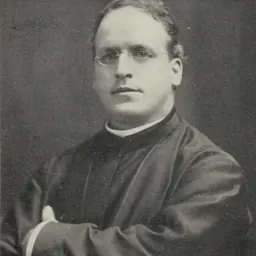

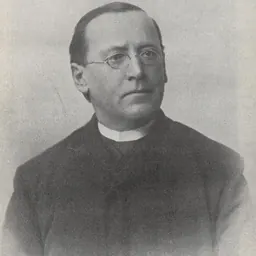
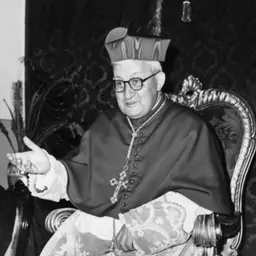
Contemporaries
People whose lives overlapped Charles de Foucauld's

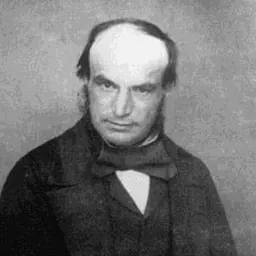
Frequently asked questions
Who was Charles de Foucauld?
French Catholic religious man, explorer and scholar (1858–1916)
When was Charles de Foucauld born?
Charles de Foucauld was born on 15 September 1858 in Strasbourg.
When did Charles de Foucauld die?
Charles de Foucauld died on 1 December 1916 in Tamanrasset.
What was Charles de Foucauld's occupation?
Charles de Foucauld was a catholic priest, explorer, military officer, philologist, missionary and geographer.
What nationality was Charles de Foucauld?
Charles de Foucauld was French.
Sources & further reading
· Wikipedia: Charles de Foucauld
· DBpedia: Charles de Foucauld
Cite this page
APA: Biography.guide. (2026). Charles de Foucauld. https://biography.guide/charles-de-foucauld/
MLA: "Charles de Foucauld." Biography.guide, https://biography.guide/charles-de-foucauld/.
Chicago: "Charles de Foucauld." Biography.guide. https://biography.guide/charles-de-foucauld/.
Data last updated: 2026-09-23 · Spot an error? Report a correction.
Portrait: Wikimedia Commons · author & licence
Page generated 2026-09-27 05:05 UTC