
About Charles Cooper II
Born 1967. Charles Cooper II is an American military officer.
Charles Bradford Cooper II (born 1967) is an American admiral who has served as the commander of the United States Central Command since 2025 and has led forces during the 2026 Iran war.
Cooper was born in North Carolina and raised in Alabama. He graduated from the United States Naval Academy in 1989 and became a career surface warfare officer. His commands included a destroyer, a cruiser, U.S. Naval Forces Korea, and Expeditionary Strike Group 7. Cooper has been deployed during combat operations in the Gulf War and the lead-up to the Iraq War; the Yugoslav Wars; and the war in Afghanistan. In the latter, Cooper served in the Combined Security Transition Command, Afghanistan, while an advisor to the Afghan government. He also served in the White House, the Office of the Secretary of Defense, the U.S. Africa Command, and the U.S. Pacific Fleet. His senior posts included as Chief of Legislative Affairs of the United States Navy from 2019 to 2020 and as Commander, Naval Surface Force Atlantic, from 2020 to 2021.
He served as the commander of the U.S. Naval Forces Central Command, U.S. Fifth Fleet, and Combined Maritime Forces from 2021 to 2024. He became the deputy commander of Central Command in 2024. Cooper helped oversee the response to the attacks against U.S. forces in the region during the Gaza war, following the October 7 attacks in Israel. He also led forces in the naval and air operations during the Red Sea crisis, and expanded partnerships with regional navies, particularly to counter the Houthi attacks on commercial vessels. In June 2025, Secretary of Defense Pete Hegseth announced that Cooper was President Donald Trump's nominee for commander of the United States Central Command. When Cooper took over the role on 8 August 2025, he became the first Navy admiral to hold the post since William J. Fallon in 2008.
As the commander of Central Command, Cooper prepared for and commanded operations during the war against Iran that began on 28 February 2026, in coordination with the Israel Defense Forces. He said throughout the war that Iran's conventional military capabilities have been significantly degraded, while acknowledging that it still has the ability to threaten shipping in the Strait of Hormuz. Cooper also expanded cooperation with the Syrian transitional government in the war against the Islamic State, and included Syria and Lebanon in the Central Command's regional security dialogue for the first time.
Early life and education
Charles Bradford Cooper II in 1967, and is the son of a United States Army officer. He grew up in a military family; his father and grandfather both served in the Army. where he obtained a bachelor of science degree in economics. and also studied national security policy and international relations at Harvard and Tufts universities.
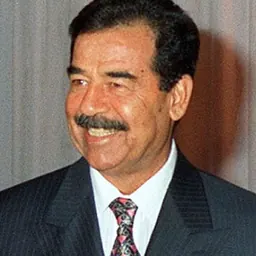
Cooper took part in at least 13 named operations. His deployments included the Gulf War; three counter-narcotics operations off the coast of South America; Haitian migrant operations; the enforcement of the no-fly zone over Bosnia and Herzegovina and operations in the buildup to the Kosovo War; three maritime interdiction operations in the Persian Gulf against Saddam Hussein's Iraq; a deployment to the Arabian Sea after the 9/11 attacks; a deployment in the Western Pacific; and the war in Afghanistan. He also served as both Deputy Director During this tour, his sailors were honored with the Republic of Korea Presidential Unit Citation, the first such recognition of a Navy unit since the Korean War, He relinquished command in January 2018,
In April 2021, he was nominated for promotion to vice admiral and the position in Bahrain of commander of U.S. Naval Forces Central Command; commander of U.S. Fifth Fleet; and commander of Combined Maritime Forces. Cooper took command on 5 May 2021. During the violent period following the October 7 attacks and the start of the Gaza war in 2023, Cooper worked closely with General Michael Kurilla, the head of United States Central Command, for the response to attacks on U.S. forces in Iraq, Syria, Jordan, and the Red Sea. He was in command when the U.S. Navy began Operation Prosperity Guardian in December 2023 to defend merchant ships from attacks by the Houthis in Yemen, and played a central role in the operation. He assumed command in February 2024. That same month, he told the media that the actions against the Houthis represent the largest and most intense operation of the U.S. Navy since World War II. Cooper organized the U.S. military's maritime corridor that briefly increased the delivery of humanitarian aid to Gaza in 2024, Cooper was selected by the Trump administration over Army general James Mingus, who had been expected to receive the position, Kurilla recommended him to Trump, who took that into consideration and chose Cooper over several other candidates. becoming the first naval officer to hold the post since William J. Fallon in 2008, as it was traditionally held by Army or Marine generals. In September 2025, Cooper visited Damascus, where he met with Syrian President Ahmed al-Sharaa and U.S. special envoy Tom Barrack to discuss cooperation on counter-Islamic State operations and future U.S.–Syrian engagement. On 21 January 2026, Cooper spoke by phone with al-Sharaa regarding the ceasefire with the Syrian Democratic Forces (SDF) amid the northeastern Syria offensive and coordination on the transfer of Islamic State detainees from Syria to Iraq. The next day, Cooper met with SDF commander-in-chief Mazloum Abdi, along with Tom Barrack, in Erbil to discuss implementation, integration, and ongoing U.S. support for the ceasefire.
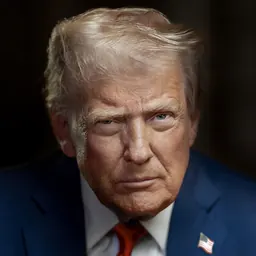
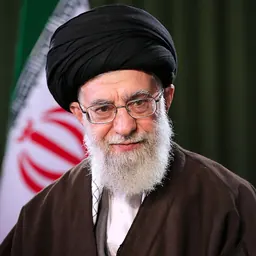
Cooper also continued developing the partnerships in regional air defense that Kurilla had started, and conducted his own debriefing of Israeli–U.S. actions during the Twelve-Day War. He began preparations for a possible second conflict. Zamir was critical in convincing Cooper that a war with Iran would be viable, and Cooper gave his support to the first two steps of the proposed Israeli plan: the assassination of Ali Khamenei and strikes against Iran's ballistic missile and drone programs. In his talks with Trump, Cooper focused on the military aspects of such an operation rather than on whether or not it would be a good decision to go to war. He did not emphasize to Trump the risk from the potential closure of the Strait of Hormuz.
On 6 February 2026, Cooper took part in the indirect negotiations between Iran and the United States that were held in Muscat, Oman, along with Steve Witkoff and Jared Kushner. The following day, Witkoff and Kushner visited Cooper aboard at his invitation. Cooper began the U.S. airstrikes on Iran on 28 February on the order of Trump. On the first day, he stated that the goal of CENTCOM's operation was to dismantle the Islamic Revolutionary Guard Corps. Cooper also wrote a letter addressed to U.S. troops in the Middle East, telling them that they will "change the course of human history."
Cooper was the main American architect of the campaign. Since the war began, Cooper has been in almost daily contact with Lt. Gen. Eyal Zamir, and also coordinating with almost a dozen Arab countries. On 5 March he said that the next phase of the war would be targeting Iran's missile production capacity. Cooper confirmed on 11 March that the military is using artificial intelligence tools in the war, but said that "humans will always make final decisions" on targeting. On 9 April, after the ceasefire went into effect, he claimed that U.S. and Israel inflicted a "generational military defeat" on Iran, and that its conventional military "has been eliminated."
Cooper in Bahrain with King Hamad bin Isa Al Khalifa, Crown Prince Salman bin Hamad Al Khalifa, and U.S. Ambassador Stephanie Hallett, 13 April 2026 Cooper and Fifth Fleet commander Curt Renshaw met King Hamad bin Isa Al Khalifa of Bahrain and his prime minister, Salman bin Hamad Al Khalifa, on 13 April in Manama. On 15 April, Cooper announced that the naval blockade of Iran has been "fully implemented" and all maritime traffic to and from Iran has been "completely halted." Central Command made plans to resume combat operations against Iran, and he reportedly briefed Trump on military options along with Dan Caine on 29 April. On 4 May, he said that the U.S. Navy has set up a "defense umbrella" for ships to pass the Strait of Hormuz, as part of Operation Project Freedom. He gave a testimony to Congress on 14 May, claiming that the war achieved all of its objectives to "significantly degrade" Iran's military capabilities, while also acknowledging the Iran still has the ability to threaten shipping in the Strait of Hormuz. Cooper also said that the U.S. has military options for reopening the strait.
In early July 2026, Cooper and CENTCOM hosted a regional security dialogue in Bahrain for Arab country military leaders, which for the first time included those from Syria and Lebanon, as the U.S. works to counter Iranian regional influence. In addition to defense cooperation, the meeting focused on ensuring freedom of navigation in the Strait of Hormuz. In late July, amidst the two-week bombing campaign in southern Iran, Cooper told the Pentagon, the Joint Chiefs of Staff, and the White House that most designated targets have been hit, degrading Iran's ability to threaten shipping in the Strait of Hormuz. His advice to stop the air campaign, along with that of Caine and others, influenced Trump's decision to halt the strikes on 24 July.
On 16 August CENTCOM posted a statement from Cooper that he had visited the USS Abraham Lincoln, wishing the crew good conditions on their journey home, and that "Of the U.S. Navy's 11 active aircraft carriers, the Lincoln currently has among the lowest number of cases related to mental health".
Awards and decorations Cooper has been described as one of the most decorated officers in the U.S. military.
Surface Warfare Officer PinDefense Distinguished Service Medal with one C deviceNavy Distinguished Service Medal with one gold award starDefense Superior Service Medal with one bronze oak leaf clusterLegion of Merit with four gold award starsBronze Star MedalDefense Meritorious Service MedalMeritorious Service Medal with four award starsJoint Service Commendation MedalNavy and Marine Corps Commendation Medal with four award starsJoint Service Achievement MedalNavy and Marine Corps Achievement MedalJoint Meritorious Unit Award with two oak leaf clustersNavy Unit CommendationNavy Meritorious Unit Commendation with one silver service starMeritorious Team Commendation with Operational Distinguishing DeviceNavy "E" Ribbon with wreathed Battle E deviceNational Defense Service Medal with service starArmed Forces Expeditionary MedalSouthwest Asia Service Medal with two service starsAfghanistan Campaign Medal with service starGlobal War on Terrorism Expeditionary MedalGlobal War on Terrorism Service MedalKorea Defense Service MedalArmed Forces Service Medal with service starHumanitarian Service Medal with two service starsMilitary Outstanding Volunteer Service MedalNavy Sea Service Deployment Ribbon with silver service starNavy and Marine Corps Overseas Service Ribbon with three service starsSpecial Operations Service RibbonDefence Cooperation Medal (Japan)Order of National Security Merit, Cheonsu Medal (Republic of Korea)NATO Medal for the former YugoslaviaKuwait Liberation Medal (Saudi Arabia)Kuwait Liberation Medal (Kuwait)Navy Expert Rifleman MedalNavy Expert Pistol Shot MedalCommand at Sea insigniaOffice of the Secretary of Defense Identification BadgePresidential Service BadgeUnited States Central Command Badge
Dates of promotion
Personal life He is married to Susan, who is a speech-language pathologist, and they have two children.
Cooper was briefly a fellow of the Asia Pacific Center for Security Studies.
Don’t just read it —
keep it.
Full-length biographies made to live with: read them, listen on the way to work, watch them tonight.
- E-book
- Audio
- Video
Instant download · yours to keep · every purchase keeps this site free
Important facts
People in Charles Cooper II's life
Named in this biography and alive at the same time





Related people
Same field, nearest in time



Contemporaries
People whose lives overlapped Charles Cooper II's


Frequently asked questions
Who is Charles Cooper II?
U.S. Navy admiral (born 1967)
When was Charles Cooper II born?
Charles Cooper II was born on 12 August 1967 in Winston-Salem.
What is Charles Cooper II's occupation?
Charles Cooper II is a military officer.
What nationality is Charles Cooper II?
Charles Cooper II is American.
Sources & further reading
· Wikipedia: Charles Cooper II
· DBpedia: Brad Cooper (admiral)
Cite this page
APA: Biography.guide. (2026). Charles Cooper II. https://biography.guide/charles-cooper-ii/
MLA: "Charles Cooper II." Biography.guide, https://biography.guide/charles-cooper-ii/.
Chicago: "Charles Cooper II." Biography.guide. https://biography.guide/charles-cooper-ii/.
Data last updated: 2026-09-20 · Spot an error? Report a correction.
Page generated 2026-09-27 05:17 UTC