
About Charles Carter of Ludlow
Lived 1732 – 1796 (aged 63). Charles Carter of Ludlow was an American politician.
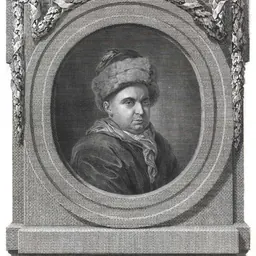
Charles Carter (October 15, 1732 – April 29, 1796) was a Virginia planter, patriot, and politician. He was sometimes nicknamed "Blaze" for his red face or reckless behavior, or "Nanzatico" or "Ludlow" for plantation houses he erected but was later forced to sell. He held several local offices in King George County and later in Stafford County, both of which he represented at various times in the Virginia House of Burgesses before the American Revolutionary War. This Charles Carter also represented Stafford County in four of Virginia's Revolutionary Conventions and during the conflict operated saltpeter factories and the important Chiswell lead mines in what became distant Wythe County, then won election to both houses of the Virginia General Assembly, although he may only have been seated (multiple times) as one of Stafford County's representatives in the Virginia House of Delegates before taking a seat on the Governor's Advisory Council shortly after his election to the Virginia senate.
Early life
The eldest son of prominent planter and burgess Charles Carter was born on October 15, 1732. The exact location of his birth is unknown, because his father owned several plantations in different counties of the region now known as Virginia's Northern Neck, and Cleve plantation (for which his father was known and resided for many years) was only built in 1754 (presumably after this boy's education in England was finished). This firstborn Charles Carter was baptized on November 15, 1732 at Christ Church in Lancaster County, Virginia. His mother, Mary Walker, was the daughter of Joseph Walker of York County, and died when this boy was ten years old, and also after having given birth to three daughters (his full sisters).
His father remarried, to Anne Byrd, the then 17-year old daughter of burgess William Byrd II (1674-1744), so this man gained two half-brothers and six half-sisters from that relationship, and another half sister from his father's third wife and widow, Lucy Taliaferro (daughter of Capt. William Taliaferro was at most seventeen years old at the time of her marriage in 1763, younger than her stepson). His paternal grandfather Robert Carter I was known as "King Carter" even during his lifetime for his political influence and great wealth based on landholdings and enslaved labor.
In King Carter's time, his family's parish church was in Middlesex County, Virginia and still is sometimes known as "King Carter's Church". This Charles Carter was closely related to the First Families of Virginia through his own ancestry and that of his stepmothers. His uncle John Carter (Virginia colonial secretary) was also on the governor's council, as was another uncle Robert Carter III and yet a third uncle Landon Carter was also like their father a planter and member of the House of Burgesses (and now also known as a writer). Although their son Charles Carter died as an infant, sons who reached adulthood included John Champe Carter (1775-1809), George Washington Carter (1777-1809), and Walker Randolph Carter (b. 1772, died after 1813).
Career Carter operated plantations using overseers and enslaved labor, first in King George County. As a young man, this Charles Carter became known for his profligate spending, so that in 1762 his father bequeathed his main plantation, Cleve in King George County, to his younger half brother, and required this man to acknowledge that he had received ample provision in land and slaves from his father and that his father had paid some of his large debts. Nonetheless, when his father died two years later, this Charles Carter successfully contested that will and caused the Virginia General Assembly to break the entail on several properties, which he then sold, as well as borrowed money from his wife's brother in law Speaker John Robinson to buy "Nanzatico", a 2,200 acre plantation also in King George County, on which be built a spacious new house, only to (according to tradition) tear it down and erect another. Carter favored adoption of the federal constitution, but did not win election to the Virginia Ratification Convention in 1788; instead local voters elected George Mason, whose family had long held property and represented Stafford County, but who lived in Fairfax County and was a leading (though unsuccessful) opponent of ratification. Carter's last major election victory was for the Virginia state senate seat in 1789, representing King George, Stafford and Westmoreland Counties, but he may not have actually been seated in Richmond, for a new election was called weeks later. However, such may also have been called because fellow delegates elected Carter to the Council of State (the executive branch of the state government, at the time dominated by the state legislature), for which service he received a salary and served uneventfully for fourteen months.
Don’t just read it —
keep it.
Full-length biographies made to live with: read them, listen on the way to work, watch them tonight.
- E-book
- Audio
- Video
Instant download · yours to keep · every purchase keeps this site free
Important facts
Family & relationships
People in Charles Carter of Ludlow's life
Named in this biography and alive at the same time




Related people
Same field, nearest in time




Contemporaries
People whose lives overlapped Charles Carter of Ludlow's





Frequently asked questions
Who was Charles Carter of Ludlow?
(1732–1796)
When was Charles Carter of Ludlow born?
Charles Carter of Ludlow was born on 15 October 1732 in Colony of Virginia, Middlesex County, Virginia.
When did Charles Carter of Ludlow die?
Charles Carter of Ludlow died on 29 April 1796 in Fredericksburg, Virginia, Virginia.
What was Charles Carter of Ludlow's occupation?
Charles Carter of Ludlow was a politician.
What nationality was Charles Carter of Ludlow?
Charles Carter of Ludlow was American.
Sources & further reading
· Wikipedia: Charles Carter of Ludlow
· DBpedia: Charles Carter (of Ludlow)
Cite this page
APA: Biography.guide. (2026). Charles Carter of Ludlow. https://biography.guide/charles-carter-of-ludlow/
MLA: "Charles Carter of Ludlow." Biography.guide, https://biography.guide/charles-carter-of-ludlow/.
Chicago: "Charles Carter of Ludlow." Biography.guide. https://biography.guide/charles-carter-of-ludlow/.
Data last updated: 2026-09-20 · Spot an error? Report a correction.
Page generated 2026-09-27 05:30 UTC