
About Charles Bird King
Lived 1785 – 1862 (aged 76). Charles Bird King was an American painter.
Charles Bird King (September 26, 1785 – March 18, 1862) was an American portrait artist, best known for his portrayals of significant Native American leaders and tribesmen. His style incorporated Dutch influences, which can be seen most prominently in his still-life and portrait paintings. Although King's artwork was appreciated by many, it has also been criticized for its inaccurate depictions of Native American culture.
Biography
Charles Bird King was born in Newport, Rhode Island, the only child of Deborah (née Bird) and Zebulon King, an American Revolutionary veteran and captain. The family traveled west after the war, but when King was four years old, his father was killed and scalped by Native Americans near Marietta, Ohio. Because of this, Deborah King took her young son and moved back to her parents' home in Newport.
When King was fifteen, he went to New York to study under the portrait painter Edward Savage. At age twenty he moved to London to study under Benjamin West at the Royal Academy. After a seven-year stay in London, King returned to the U.S. due to the War of 1812. He lived and worked in the major cities of Philadelphia, Pennsylvania; Baltimore, Maryland; and Richmond, Virginia.
He eventually settled in Washington, DC, due to the economic appeal of the burgeoning capital city. Here King developed a solid reputation as a portraitist among politicians, and earned enough to maintain his own studio and gallery. King's economic success in the art world, particularly in the field of portraiture, was in part dependent on his ability to socialize with the wealthy celebrities, and relate to the well-educated politicians of the time: "His industry and simple habits enabled him to acquire a handsome competence, and his amiable and exemplary character won him many friends". These patrons included such prominent leaders as John Quincy Adams and John C. Calhoun. King's popularity and steady stream of work left him with little reason or need to leave Washington. He also was able to study the works and learn from them. It is likely that through his schooling, he was able to study the British royal collection, as "Prince of Wales, and Regent, George IV collected Dutch art voraciously…" and the prints were the favored style at the time by other members of European royalty.
King took more than stylistic cues from these examples, as he also employed some of the techniques which he saw. As Nicholas Clark wrote in 1982, King "sometimes relied upon Dutch prints for formal solutions." The prints were sources of valued composition. Many of King's paintings include features that show the influence of Dutch art. As noted above, King incorporated the techniques of Dutch painting into his portraits, though he recognized that the United States was not yet as familiar with "references to the style as it would be in the sphere of "post-Civil War materialism… King especially used this technique in his still-life paintings.
King is known to have been especially committed to staying within the confines of the traditional style of painting which he learned in his youth: "it is apparent that the artist would adapt, time and again, traditional European mannerisms to his new and native subject matter".
Thomas McKenney, who served as the United States superintendent of Indian trade in Georgetown and later as the head of the Bureau of Indian Affairs, initiated the government's commissioning of the portraits. Like many others, at the time he believed that the indigenous people were nearing extinction, and he was seeking ways to preserve their history and culture. Some scholars have described this view of Native American culture as a product of "imperialist nostalgia," which the art historian Frances K. Pohl, building on the work of the cultural anthropologist Renato Rosaldo, defines as "a yearning for that which one has indirectly or directly participated in destroying." McKenney sought to preserve Native American culture while carrying out governmental policies that were responsible for its erasure. He first tried to collect artifacts from various tribes, then thought of having portraits painted for the government. About this time, he met King, whose talent he appreciated. "The arrival of Charles Bird King on the Washington scene inspired the imaginative McKenney to add portraits to his archives." Some art historians, however, have taken a more critical approach to King's representation of Native Americans in this work. The portrayal of the Native American men in the painting is, according to this more critical view, merely a stereotypical conglomerate of different Native American tribes. King has seemingly "sacrificed their individuality, creating a facial composite that he hoped would draw a sympathetic response from a white audience." King, these scholars suggest, structured his piece around the interests of his audience rather than portraying a true account of Native American tribes.
Although King tailored his piece to his audience, he has been praised for being the first white artist to "paint an Indian wearing a flowing-feather bonnet of eagle feathers" and "Plains Indian women."
After the administration changed and McKenney left the BIA, the agency donated the Native American portrait collection to the National Institute, but shoddy care and shoddy displays kept it from the public eye. Charles Bird King, Keokuk, Chief of the Sacs and Foxes, ca. 1838 King's depictions of Native American subjects have particularly been questioned. In some cases, King's portrayal of Native American men as "muscular" and having "large stature" has been seen as conforming to the stereotype of the "noble savage." However, others have argued the opposite. This particular piece has been praised for its representation of "ethnographic elements in its true sense" and is said to have portrayed an "accurate record of a Sauk or Fox chief." As an artist who only profited off of others buying his art, King became upset over the lack of art patronage in the academy's exhibitions in Philadelphia and turned his criticisms into art. Through the depiction of the cup of water and piece of bread that surrounds the flurry of news articles in the cupboard, King tries to send the message that artists are starving because of the lack of commissions being offered to artists.
Although King meant for The Poor Artist's Cupboard to be a criticism towards the general public, some art historians have praised his piece for being a gracious representation of "illusionism" and "effectively artistic in technique and design."
Gallery
Portraits
Lithographs of Native Americans Lithographs from Thomas L. McKenney & James Hall. History of the Indian Tribes of North America. Philadelphia: F.W. Greenough, 1838–1844
Still life
Exhibitions
The Annual Exhibition Record of the Pennsylvania Academy of the Fine Arts, Philadelphia, Pennsylvania, August 1813 Louisville Museum, Louisville, Kentucky, May 1834 Philadelphia Artists, Philadelphia, Pennsylvania, April 8, 1839 Artists' Fund Society, Philadelphia, Pennsylvania, The McKenney & Hall Lithographs of Charles Bird King's Portraits of American Indians, Smithsonian Institution Building, 1990–1996
Sampling of works
General George Izard (1813) Arkansas Museum of Fine Arts Foundation Collection William Pinkey (1815) Maryland Historical Society General John Stricker (1816) Maryland Historical Society The Poor Artist's Cupboard National Gallery of Art, formerly in the Corcoran Gallery of Art Grandfather's Hobby Winterthur Museum, Garden and Library Wicked Chief White House Library Vanity Of An Artist's Dream (1830) Fogg Art Museum, Harvard University Fruit Piece with Pineapples (1840) John S. H. Russell, Newport, Rhode Island Young Omahaw, War Eagle, Little Missouri, and Pawnees (c. 1821) Smithsonian American Art Museum, Smithsonian Institution Hoowaunneka [Little Elk], Winnebago, (1828), Peabody Museum, Harvard University. Wajechai [Crouching Eagle], (1824), Gulf States Paper Corporation, Tuscaloosa, Alabama. Pushmataha, The Sapling is Ready for Him, (1824), Gulf States Paper Corporation Collection, Tuscaloosa, Alabama. Joseph Porus [Polis], Penobscot, (1842), Thomas Gilcrease Institute of American History and Art, Tulsa, Oklahoma.
Don’t just read it —
keep it.
Full-length biographies made to live with: read them, listen on the way to work, watch them tonight.
- E-book
- Audio
- Video
Instant download · yours to keep · every purchase keeps this site free
Important facts
People in Charles Bird King's life
Named in this biography and alive at the same time

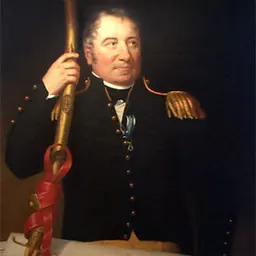
Related people
Same field, nearest in time
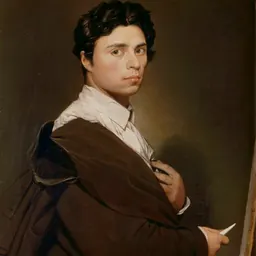



Contemporaries
People whose lives overlapped Charles Bird King's



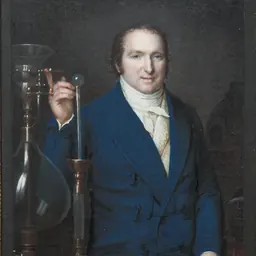
Frequently asked questions
Who was Charles Bird King?
American artist (1785-1862)
When was Charles Bird King born?
Charles Bird King was born on 26 September 1785 in Newport.
When did Charles Bird King die?
Charles Bird King died on 18 March 1862 in Washington, D.C..
What was Charles Bird King's occupation?
Charles Bird King was a painter.
What nationality was Charles Bird King?
Charles Bird King was American.
Sources & further reading
· Wikipedia: Charles Bird King
Cite this page
APA: Biography.guide. (2026). Charles Bird King. https://biography.guide/charles-bird-king/
MLA: "Charles Bird King." Biography.guide, https://biography.guide/charles-bird-king/.
Chicago: "Charles Bird King." Biography.guide. https://biography.guide/charles-bird-king/.
Data last updated: 2026-09-27 · Spot an error? Report a correction.
Page generated 2026-09-27 05:16 UTC