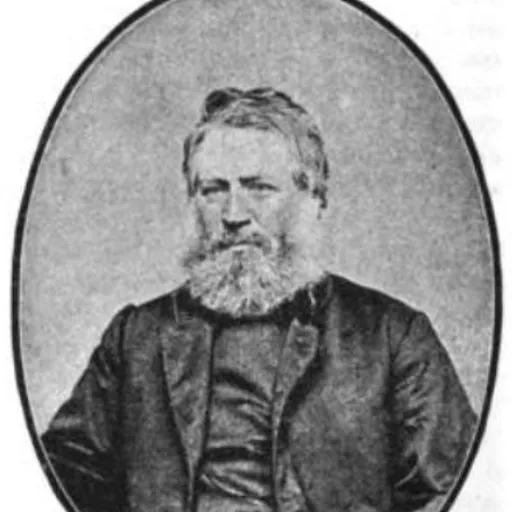
About Charles Baker
Lived 1805 – 1875 (aged 69). Charles Baker was a British missionary.
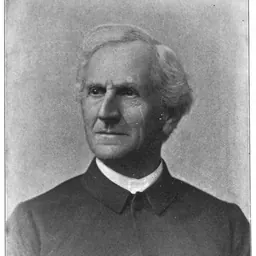
Charles Frederick Baker (5 August 1803 – 6 February 1875) was an English member of the Church Missionary Society (CMS) active as a missionary in New Zealand in the 19th century. He supervised the construction of the historic church at Russell and was involved in the Treaty of Waitangi proceedings, a collection consisting of his journals and papers was added to the UNESCO Memory of the World New Zealand register in 2018.
Biography Baker was born on 5 August 1803 at Packington. After an education at the CMS College at Islington he left England in June 1827 arriving in the Bay of Islands, New Zealand in June 1828.
Early days at Paihia Baker supervised the construction of Christ Church, Russell which, built in 1835 and 1836, is New Zealand's oldest surviving church. Charles Darwin along with Robert FitzRoy (later 2nd Governor of New Zealand) and the officers of HMS Beagle contributed £15 towards the construction. On Christmas day 1835 Darwin and FitzRoy attended a service held in Paihia by Baker, which FitzRoy records as being delivered in both English and Māori. FitzRoy remarked on Baker's seemingly fluent Māori, however, was critical of Baker's mixed delivery given the congregation consisted of predominantly European settlers.
Treaty of Waitangi In 1840, as a result of the absence of Henry Williams, Baker was responsible for overseeing the CMS Paihia headquarters. He was involved in the preparations for the Treaty of Waitangi and was present at the signing.
On 29 January William Hobson arrived in the Bay of Islands aboard HMS Herald, Baker along with British Resident James Busby met Hobson aboard the ship. After having left the Herald, Baker received two letters from Hobson. The first, requested Baker have invitations for a meeting printed and sent expeditiously to the Maori chiefs; it was at this meeting the following week that the Treaty of Waitangi was signed. In the second, Hobson requested to use Baker's church at Russell (then called Kororāreka) the following day to read his Proclamations. He also asks Baker to have drafts of the Proclamations printed, and that Baker use his influence to ensure attendance of the reading of the Proclamations. The following day, Baker witnessed Hobson's Proclamations at Christ Church, Russell.
On 6 February 1840 Baker was present at the signing of the Treaty of Waitangi. According to Colenso's 1890 account, Baker was challenged by the chief Moka regarding land holdings. Moka first addressed William Hobson in Māori, with Henry Williams acting as an interpreter, before addressing Baker directly. Moka's remarks (translated into English) are given by Colenso as follows: Moka rejoined, " That is good, O Governor! that is straight. But stay, let me see. Yes, yes, indeed! Where is Baker? where is the fellow? Ah, there he is – there, standing! Come, return to me my lands." This he addressed to Mr. Baker, coming forward as near as he could to the place where Mr. Baker was standing on the raised platform, and looking up, waiting for a reply. To which question Mr. Baker quietly replied, " E hoki, koia?" – equivalent in English to, "Will it, indeed, return?" On which Moka continued, " There! Yes, that is as I said. No, no, no; all false, all false alike. The lands will not return to me." (Lindsay Buick translates Baker's reply as "We shall see whether they will return." Colenso's relationship with his fellow CMS missionaries, in particular Baker, had deteriorated in 1852 following the revelation of Colenso's affair with his servant Rīpeka.) While at Tolaga Bay Baker benefited significantly from the support and protection of important chief Te Kani-a-Takirau. In 1851 Baker left Tolaga Bay to seek treatment for rheumatism at Auckland.
In 1854, sufficiently recovered from his period of ill health, Baker left Auckland to take charge of the Rangitukia mission station. There Baker was responsible for supervising the construction of a sequence of churches, notably St John’s Church at Rangitukia (1854–56). The construction of St John's Church was documented by Baker's son Joseph Goadby Baker, who described it as capable of supporting a Māori congregation of around 2000. The opening was attended by the Bishop George Selwyn, who estimated that in excess of 3000 Māori attended the opening. In his journals, Baker recorded the impacts of a measles outbreak at Rangitukia in 1954.
Later life and death He was appointed as a deacon in 1853, and in 1860 ordained priest. He retired to Auckland in 1865 where, until his health deteriorated, he was active preaching; regularly visiting the stockades and the hospital. Baker died on 6 February 1875 after a period of illness and is buried at St Stephen's Churchyard, Parnell, Auckland.
Marriages and issue Baker married firstly Sophia Riley (died 1826) by whom he had one child Dorcas Sophia Baker (1824–1875), who married Native Land Court Judge Thomas Henry Smith.
Baker married secondly Hannah Maria Bailey, daughter of William Bailey and Hannah Goadby, on 11 June 1827 by whom he had 13 children including: William Bailey Baker (1828–1865), resident Magistrate for Waiapū and civil servant. He served as Chief Translator to H.M. forces at Tauranga during the New Zealand Wars, and as resident magistrate there also . He produced a range of ethological works on Māori language and culture, and is also remembered for his first-hand account of the Treaty of Waitangi. Ebenezer Baker (1830–1905), resident Magistrate for Wairoa. Hannah Maria Baker (1831–1868) Charlotte Baker (1833–1838) Anne Gunn (1835–1918) Samuel Marsden Baker (1837–1915), civil servant and first interpreter to the New Zealand Legislative Council. Rev. Frederick Thomas Baker (1839–1896), married Emily Elizabeth Larkins daughter of the Rev. Frederick Larkins. Attended St John's College, Auckland 1871 – 1873, and was ordained priest in 1875. Joseph Goadby Baker (1840–1924) Mary Eliza King (1841–1860) Henry Williams Baker (1843–1927) Charlotte Elizabeth Baker (1844–1866) The collection is currently held at the Auckland War Memorial Museum.
Don’t just read it —
keep it.
Full-length biographies made to live with: read them, listen on the way to work, watch them tonight.
- E-book
- Audio
- Video
Instant download · yours to keep · every purchase keeps this site free
Important facts
People in Charles Baker's life
Named in this biography and alive at the same time





Related people
Same field, nearest in time


Contemporaries
People whose lives overlapped Charles Baker's





Frequently asked questions
Who was Charles Baker?
English missionary in New Zealand
When was Charles Baker born?
Charles Baker was born on 5 August 1805 in Packington.
When did Charles Baker die?
Charles Baker died on 6 February 1875 in Remuera.
What was Charles Baker's occupation?
Charles Baker was a missionary.
What nationality was Charles Baker?
Charles Baker was British.
Sources & further reading
· DBpedia: Charles Baker (missionary)
Cite this page
APA: Biography.guide. (2026). Charles Baker. https://biography.guide/charles-baker-missionary/
MLA: "Charles Baker." Biography.guide, https://biography.guide/charles-baker-missionary/.
Chicago: "Charles Baker." Biography.guide. https://biography.guide/charles-baker-missionary/.
Data last updated: 2026-09-23 · Spot an error? Report a correction.
Portrait: Wikimedia Commons · author & licence
Page generated 2026-09-27 05:07 UTC