
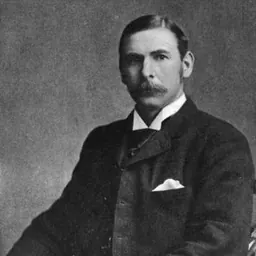
Charles Avery Dunning
Premier of Saskatchewan, federal Cabinet minister, businessman, Chancellor of Queen's University
About Charles Avery Dunning
Lived 1885 – 1958 (aged 73). Charles Avery Dunning was a Canadian politician, farmer and minister.
Charles Avery Dunning (July 31, 1885 – October 1, 1958) was the third premier of Saskatchewan. Born in England, he emigrated to Canada at the age of 16. By the age of 36, he was premier. He had a successful career as a farmer, businessman, and politician, both provincially and federally.
A Liberal, Dunning led his government in one general election, in 1925, winning a majority government. He was the third of six Liberal premiers to date. He resigned as Premier in 1926 to enter federal politics and was succeeded by James Gardiner. He served in the Cabinet of Prime Minister William Lyon Mackenzie King.
After leaving politics, Dunning served for many years as the Chancellor of Queen's University at Kingston.
Early life
Known throughout his life as "Charlie", Dunning was born in Croft, Leicestershire, England. As a teenager, he originally worked in an iron foundry in England, but in 1902, at age 16, he followed a friend's advice and travelled to Canada to work as a farm hand.
Penniless when he arrived, within a year Dunning filed for his own homestead under the Dominion Lands Act in the Beaver Dale district, west of Yorkton. Satisfied that a permanent move to Canada made sense, he convinced the remainder of his family to come to Saskatchewan, operating a farm in partnership with his father. He eventually married Ada Rowlatt from Saskatchewan, with whom he had two children.
In 1919, Dunning prepared a report on the grain elevator system, which led to the incorporation of the Saskatchewan Co-operative Elevator Company by the Saskatchewan government. A co-operative marketing system required physical assets. Dunning was appointed a provisional director of a board that had only a few months to raise the necessary capital to build a line of rural grain elevators. At age 25, the youngest man on the board, Dunning watched as each one of his seniors turned down the critical job of organizing the capital campaign. Dunning took the job and succeeded. The following year, in 1911, he was rewarded for his efforts by being named the first general manager of the company. Four years later, it was the largest grain handling company in the world. Under Dunning's management, the SCEC had built 230 elevators and had handled over 28 million bushels of grains. He also sat on two royal commissions, the Grain Market Commission and the Agricultural Credit Commission.
Provincial politics: 1916 – 1926 MLA and Cabinet Minister: 1916 – 1922 Dunning's interests turned to politics. The Liberal government of Walter Scott, Saskatchewan's first premier, was tainted with allegations of corruption. Scott resigned, and an outsider to provincial politics, William Melville Martin, succeeded him as Liberal leader and premier, with a mandate to clean up the government. Martin recruited Dunning to the new Liberal government. Dunning held the position of Provincial Treasurer continuously for his ten years as an MLA.
Traditional politics were being challenged, as farmer movements had become politically active, creating new political parties throughout Canada. Dunning's political astuteness, and his strong background in farmer organisations, were significant factors in the Saskatchewan Liberal Party retaining power. He also recruited another popular farm leader, John Archibald Maharg. Like Dunning, Maharg had ties to the farmer co-operative movement, being the president of the Saskatchewan Grain Growers Association and the Saskatchewan Co-operative Elevator Company. Maharg agreed to support the Martin government, although he stood for election as an independent member, not as a Liberal. By maintaining a close connection to the farmers with the support of Dunning and Maharg, the Martin government was re-elected in the 1921 provincial election with a substantial majority, although some Progressive candidates were also elected, forming the official opposition. Martin kept Dunning as Provincial Treasurer, and appointed Maharg as Minister of Agriculture. ) Farmers who bought shares in the SCEC for $7.50 in 1911 when Dunning was general manager would receive $155.84 per share in 1926. King was determined to rebuild the Liberals' farm support, particularly in western Canada.
In an effort to win back farmers, Mackenzie King began to court Dunning with his strong farm roots, encouraging him to enter federal politics. Campaigning in Saskatchewan at one point, with Dunning also on the speakers' platform, King spontaneously stated to the audience that he would like to see Dunning in the federal Cabinet. In 1926, Dunning accepted the invitation. Resigning as premier and leaving provincial politics, he was elected to the federal riding of Regina by acclamation in a by-election held in March, 1926, as a member of the federal Liberals.
Even though King brought Dunning to Ottawa, there was a risk for King, namely that Dunning could displace King as the leader of the Liberals. In the 1925 election, the Liberals had actually come in second in seats in the House of Commons, behind the Conservatives, and only held onto power through another minority government with Progressive support. King had also been personally defeated in his own riding in Ontario. He was only able to re-enter the Commons when the Liberal member for Prince Albert, Saskatchewan resigned his seat. King was elected in the Prince Albert by-election. King was able to stay in office as prime minister, but his position as party leader was not strong.
In light of the 1925 election results and King's personal defeat, some of the power brokers in the Liberal party began to consider whether Dunning would make a better leader than King. Quiet behind-the-scenes preparations started to be made, in case King stumbled badly and it was necessary to install Dunning as leader. Facing a vote of censure in the Commons which, if passed, would likely bring down his government, on June 28, 1926, King requested that the Governor General, Viscount Byng of Vimy, dissolve Parliament and call a general election. Byng refused, relying on the reserve power invested in him by the Imperial government. King immediately resigned, and Byng called on Meighen, now the Leader of the Opposition, to form a government.
The Liberals and Dunning were now in opposition. King's status as party leader was even more in doubt. The movement among leading Liberals to draft Dunning as a replacement as party leader grew stronger, now almost out in the open. Meighen in turn requested that the Governor General dissolve Parliament. This time Byng granted the dissolution, with the general election set for September.
King campaigned on the basis that Byng's refusal to grant him a dissolution, and then in turn granting a dissolution to his political opponent, was unwarranted Imperial interference in Canadian affairs. The controversy, known as the King-Byng Affair, was a winning platform for King and the Liberals. They were returned to power, although still with a minority government.
Doubts about King's status as party leader ended. Dunning was re-elected to his Regina seat by 900 votes and King again appointed him to Cabinet, no longer viewing him as a threat.
Minister of Railways and Canals: 1926 – 1929
When Dunning had been elected to the House of Commons in March 1926, King had immediately appointed him to the powerful position of Minister of Railways and Canals in the federal Cabinet. The opposition Conservatives criticised the tariff on the basis that the imperial preference was prejudicial to Canadian interests.
Defeat in the 1930 election Canadians went to the polls in the general election of July, 1930, at the beginning of the Great Depression. The Conservatives under their new leader, Richard Bennett, defeated King and the Liberals, winning a majority government. Although Bennett had opposed the Dunning tariff while in opposition, the Conservatives maintained the tariff, which stayed in effect until renegotiated in the late 1930s.
Dunning lost his Regina seat by over 3,500 votes (obtaining only two-thirds of the winner's total). Safe Liberal seats were offered to Dunning, but he turned them down, thinking that a business career would protect his family's financial future. He restarted his business career reorganizing an under-performing subsidiary of the Canadian Pacific Railway, thereafter establishing a reputation as a brilliant re-organizer of insolvent companies.
Minister of Finance: 1935 – 1939
King and the Liberals regained power in the 1935 general election. Now firmly in control of the Liberal party and the government, he immediately went to Dunning, pressing him to re-enter politics. the predecessor to the Canada Mortgage and Housing Corporation.
Dunning was still sometimes mentioned as a possible successor to King, but in 1938, Dunning had a heart attack.
Second business career: 1940 – 1958
In ill health, Dunning relocated to Montreal. In 1940, he was appointed as president and CEO of Ogilvie Flour Mills, a position he held until 1947, when he was appointed chairman of the board. In addition to his duties with Ogilvie, Dunning continued his business of corporate reorganization. He sat on a number of prestigious corporate and bank boards, including that of the Canadian Pacific Railway.
During World War II, Dunning was chair of the National War Loans Committee, raising money for the war effort. He was also chair of Allied Supplies Limited, a company created by the federal government to co-ordinate the production of munitions and explosives. The Chancellor Dunning Trust Lectureship was established by an anonymous donor, to "promote the understanding and appreciation of the supreme importance of the dignity, freedom, and responsibility of the individual person in human society". More recently, the university has established the Stauffer-Dunning Chair in Public Policy.
Death Dunning died in 1958, aged 74, following kidney surgery. He is buried in Mount Royal Cemetery in Montreal.
Honours
In 1985, Dunning was designated as a National Historic Person by the federal government's heritage registry.
In 2005, as part of Saskatchewan's centennial celebration, Dunning's memory was commemorated in two ways. First, the Provincial Revenue Building was renamed Dunning Place, recognising Dunning's long tenure as Provincial Treasurer. The Saskatchewan Cooperative Elevator Company also had its offices in the building when Dunning was general manager.
Second, on the initiative of Saskatchewan's Lieutenant-Governor, Dr. Gordon Barnhart, Dunning's gravesite in Montreal's Mount Royal Cemetery was commemorated by a bronze plaque, recognizing Dunning's contribution to the people of Saskatchewan.
Dunning Hall at Queen's University is named after Dunning. Queen's School of Business occupied Dunning Hall for many years. Since 2002, it has housed the Department of Economics.
Electoral record Summary
Dunning served the third-shortest term of the fifteen Premiers of Saskatchewan. As premier, Dunning won one majority government, in the general election of 1925. He served one continuous term, from April 5, 1922, to February 26, 1926, and was in office as premier for a total of .
Dunning was first elected as a member of the Legislative Assembly of Saskatchewan in 1916, and was re-elected in the general elections of 1917, 1921 and 1925. He was acclaimed in the 1916 by-election, and again in the 1921 general election. Dunning won two contested constituency elections (in 1917 and 1925) by significant margins. His total time as a member of the Legislative Assembly from 1916 to 1926 was .
Dunning entered federal politics in 1926, being elected to the House of Commons of Canada by acclamation in a by-election in March 1926. He was re-elected in the general election in the fall of 1926. He lost his seat in the general election of 1930, but was re-elected by acclamation in by-election in 1935, this time from the riding of Queen's in Prince Edward Island. He served in the Commons for a total of 8 years, 6 months, 10 days.
Dunning stood for election a total of nine times, provincial and federal. He was elected by acclamation five times, won contested elections three times, and was defeated once. His total time as an elected representative, provincial and federal, was 17 years, 200 days.
1925 General election
Dunning led the Liberal Party in one general election, in 1925, and won a majority government.
1 Premier when election was called; Premier after the election. 2 Co-Leader of the Opposition when the election was called; Co-Leader of the Opposition after the election.
Saskatchewan constituency elections
Dunning stood for election to the Legislative Assembly four times, once in a by-election and in three general elections, in two different ridings (Kinistino and Moose Jaw County). He was acclaimed twice, and won twice by substantial margins.
1916 By-election: Kinistino
+ Provincial By-Election, November 13, 1916: KinistinoPartyCandidatePopular Vote % E Charles Avery Dunning Acclaimed –Total – –Source: Saskatchewan Archives – Election Results by Electoral Division – Kinistino
The by-election was called on the resignation of the sitting Liberal member, Edward Haywood Devline, to give Dunning, who had been appointed Provincial Treasurer, an opportunity to win a seat in the Legislation Assembly.
E Elected.
1917 General election: Moose Jaw County
+ Saskatchewan General Election, June 26, 1917: Moose Jaw CountyPartyCandidatePopular Vote % E Charles Avery Dunning 3,316 64.6% X John Edwin Chisholm 1,815 35.4%Total 5,131 100.0%Source: Saskatchewan Archives – Election Results by Electoral Division – Moose Jaw County
E Elected. X Incumbent.
1921 General election: Moose Jaw County
+ Saskatchewan General Election, June 9, 1921: Moose Jaw CountyPartyCandidatePopular Vote % E X Charles Avery Dunning Acclaimed –Total – –Source: Saskatchewan Archives – Election Results by Electoral Division – Moose Jaw County
E Elected. X Incumbent.
1925 General election: Moose Jaw County
+ Saskatchewan General Election, June 2, 1925: Moose Jaw CountyPartyCandidatePopular Vote % E X Charles Avery Dunning 2,094 71.5% John Flatekval 835 28.5%Total 2,929 100.0%Source: Saskatchewan Archives – Election Results by Electoral Division – Moose Jaw County
E Elected. X Incumbent.
Federal constituency elections, 1926 to 1935
After leaving provincial politics, Dunning stood for election to the House of Commons five times. He was elected to the House of Commons three times in one year, all from Regina, and defeated once. He later was elected from Queen's in Prince Edward Island.
1926 By-election: Regina
+ Federal By-Election, March 16, 1926: Regina, SaskatchewanPartyCandidatePopular Vote % Liberal E Charles Avery DunningAcclaimed –Total – –Source: Library of Parliament: Regina
E Elected.
The by-election was called on the resignation of the sitting Liberal member, Francis Nicholson Darke, to create a vacancy for Dunning.
1926 General election: Regina + Federal Election, 1926: Regina, SaskatchewanPartyCandidatePopular Vote % E X Charles Avery Dunning8,916 52.7%Conservative Andrew G. MacKinnon 8,001 47.3%Total 16,917 100.0%Source: Library of Parliament: Regina
E Elected. X Incumbent.
1926 By-election: Regina
+ Federal Ministerial By-Election, November 2, 1926: Regina, SaskatchewanPartyCandidatePopular Vote % Liberal E X Charles Avery DunningAcclaimed –Total – –Source: Library of Parliament: Regina
E Elected. X Incumbent.
The by-election was called on Dunning accepting a federal Cabinet position, an office of profit under the Crown, on October 5, 1926.
1930 General election: Regina + Federal Election, 1930: Regina, SaskatchewanPartyCandidatePopular Vote % Conservative E Franklin White Turnbull 14,446 61.6% X Charles Avery Dunning8,916 38.0%Independent Lt. Col. R.A. Carman 82 0.3%Total 23,444 100.0%Source: Library of Parliament: Regina
E Elected. X Incumbent.
1935 By-election: Queen's, Prince Edward Island
+ Federal By-Election, December 30, 1935: Queen's, Prince Edward IslandPartyCandidatePopular Vote % Liberal E Charles Avery DunningAcclaimed –Total – –Source: Library of Parliament: Queen's
E Elected.
The by-election was called on the appointment of the incumbent, James Larabee, to an office of profit under the Crown, on December 18, 1935, to give Dunning, who had already been appointed Minister of Finance, the opportunity to re-enter the Commons.
Don’t just read it —
keep it.
Full-length biographies made to live with: read them, listen on the way to work, watch them tonight.
- E-book
- Audio
- Video
Instant download · yours to keep · every purchase keeps this site free
Important facts
People in Charles Avery Dunning's life
Named in this biography and alive at the same time




Related people
Same field, nearest in time





Contemporaries
People whose lives overlapped Charles Avery Dunning's




Frequently asked questions
Who was Charles Avery Dunning?
Premier of Saskatchewan, federal Cabinet minister, businessman, Chancellor of Queen's University (1885-1958)
When was Charles Avery Dunning born?
Charles Avery Dunning was born on 31 July 1885 in Croft.
When did Charles Avery Dunning die?
Charles Avery Dunning died on 2 October 1958 in Montreal.
What was Charles Avery Dunning's occupation?
Charles Avery Dunning was a politician, farmer and minister.
What nationality was Charles Avery Dunning?
Charles Avery Dunning was Canadian.
Sources & further reading
· Wikipedia: Charles Avery Dunning
· DBpedia: Charles Avery Dunning
Cite this page
APA: Biography.guide. (2026). Charles Avery Dunning. https://biography.guide/charles-avery-dunning/
MLA: "Charles Avery Dunning." Biography.guide, https://biography.guide/charles-avery-dunning/.
Chicago: "Charles Avery Dunning." Biography.guide. https://biography.guide/charles-avery-dunning/.
Data last updated: 2026-09-20 · Spot an error? Report a correction.
Page generated 2026-09-27 05:21 UTC