
About Charles Austin
Lived 1799 – 1874 (aged 74–75). Charles Austin was a British barrister.
Charles Austin, QC (1799–1874) was an English barrister. A leader of the parliamentary bar, he was prominent in the Railway Mania of the later 1840s. According to Patrick Polden, his "career ridiculed the noble ideals of the bar".
Early life Austin was the second son of Jonathan Austin, of Creeting Mill, in the county of Suffolk; John Austin was his elder brother. He was educated at Bury St Edmunds Grammar School. He was for a time apprenticed to a surgeon at Norwich, but was then sent to Jesus College, Cambridge, in 1819. He was President of the Cambridge Union Society in 1822. In 1822 he won the Hulsean prize for an essay on Christian evidence. In 1824 he graduated BA According to John Stuart Mill, Austin as undergraduate was an influential exponent of the ideas of Jeremy Bentham; and he had a reputation for brilliance as one of a group of contemporaries that included Thomas Babington Macaulay, Winthrop Mackworth Praed, John Moultrie, Edward Strutt, John Romilly, Charles Buller, and Alexander James Edmund Cockburn.
Lawyer Having chosen law as a profession, Austin entered as a student at the Middle Temple, read in the chambers of Sir William Follett, then in the height of his fame as an advocate, and was called to the bar in 1827. He joined the Norfolk circuit, and went to the Ipswich, Bury, and Norwich sessions. His conversational powers were highly regarded. He wrote for the Parliamentary History and Review, and contributed occasionally to the Retrospective Review and the Westminster Review, until his rapid success as a barrister.
Austin was the undisputed leader of the parliamentary bar, the group of barristers who specialised in private bill procedure. In 1847, at the height of the railway mania, his income was enormous — estimates vary from £40,000 to £100,000.
It was the wish of Austin's friends that he should enter parliament, and James Mill used his influence with Joseph Hume in order to get him returned for Bath; but Austin never stood as a candidate. He also refused the solicitor-generalship in 1834. In 1841 he was made Queen's Counsel.
Later life In 1848 he retired from practice with a large fortune. From that time to that of his death he lived in retirement. He had Brandeston Hall, seriously damaged in a fire of 1847, rebuilt. He was High Steward of Ipswich and chairman of the quarter-sessions of East Suffolk.
He married, in 1856, Harriet Jane, daughter of Captain Ralph Mitford Preston Ingelby. He died at Brandeston Hall, near Wickham Market, on 21 December 1874.
Don’t just read it —
keep it.
Full-length biographies made to live with: read them, listen on the way to work, watch them tonight.
- E-book
- Audio
- Video
Instant download · yours to keep · every purchase keeps this site free
Important facts
People in Charles Austin's life
Named in this biography and alive at the same time
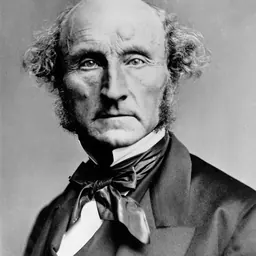


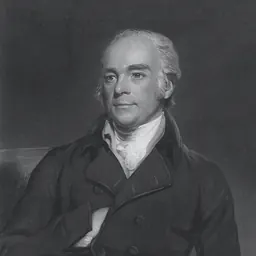

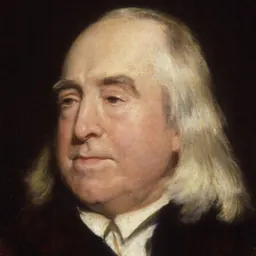
Related people
Same field, nearest in time
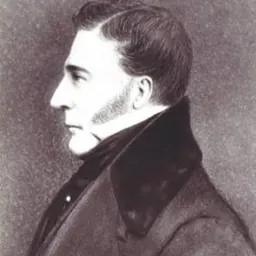

Contemporaries
People whose lives overlapped Charles Austin's






Frequently asked questions
Who was Charles Austin?
British lawyer
When was Charles Austin born?
Charles Austin was born in 1799.
When did Charles Austin die?
Charles Austin died in 1874.
What was Charles Austin's occupation?
Charles Austin was a barrister.
What nationality was Charles Austin?
Charles Austin was British.
Sources & further reading
· DBpedia: Charles Austin (lawyer)
Cite this page
APA: Biography.guide. (2026). Charles Austin. https://biography.guide/charles-austin-barrister/
MLA: "Charles Austin." Biography.guide, https://biography.guide/charles-austin-barrister/.
Chicago: "Charles Austin." Biography.guide. https://biography.guide/charles-austin-barrister/.
Data last updated: 2026-09-20 · Spot an error? Report a correction.
Page generated 2026-09-27 04:57 UTC