
Charles A. Blanchard
American academic administrator
About Charles A. Blanchard
Lived 1848 – 1925 (aged 76–77). Charles A. Blanchard was an American.
Charles Albert Blanchard (November 8, 1848 – December 20, 1925) was an American educator, Congregational minister, author, reformer, and the second president of Wheaton College in Wheaton, Illinois. He succeeded his father, Jonathan Blanchard, as president of the college in 1882 and served until his death in 1925. His forty-three-year presidency was the longest in Wheaton's history and helped shape the college's later identity as a centre of conservative evangelical higher education.
Blanchard was active in evangelical, missionary, anti-Masonic, temperance, and early fundamentalist circles. He served as pastor of College Church in Wheaton, supplied the pulpit of Moody Memorial Church in Chicago, and held leadership roles in organizations including the National Christian Association, the National Fundamentalist Association, the Chicago Tract Society, the Africa Inland Mission, and the Christian and Missionary Alliance.
Blanchard attended Wheaton Academy and graduated from Wheaton College in 1870.
Blanchard's administration linked Wheaton's nineteenth-century reform heritage with the rise of twentieth-century conservative evangelicalism and fundamentalism. A Christian History account describes him as redirecting aspects of Wheaton's earlier reform radicalism into a more conservative evangelical identity shaped partly by Chicago revival networks associated with Dwight L. Moody.
Reform commitments and fundamentalism
Blanchard continued his family's opposition to secret societies. He lectured for the National Christian Association, conducting campaigns against oath-bound organizations such as Freemasonry.
Blanchard also became associated with organized fundamentalism. He was first vice-president of the National Fundamentalist Association, He rejects the common phrase "unanswered prayer", arguing that much of what is called prayer lacks the childlike attitude of trust, obedience, submission, and faith that he regards as essential to genuine prayer.
The book also reveals Blanchard's dependence on the nineteenth-century deeper-life and holiness tradition. In its introduction he names Andrew Murray as his chief teacher on prayer and also discusses works or addresses by W. E. Biederwolf, E. M. Bounds, Austin Phelps, and R. A. Torrey. Blanchard recalls hearing Murray at Northfield urging D. L. Moody to give more time to prayer.
Patricia A. Ward places Blanchard within the American Protestant reception of Madame Guyon and François Fénelon. She notes that Blanchard read and annotated an 1893 edition of James W. Metcalf's anthology of Fénelon and Guyon, later published as Christian Counsel on Divers Matters Pertaining to the Inner Life. Ward interprets Blanchard as evidence that Catholic Quietist devotional literature passed through holiness and Keswick circles into conservative and fundamentalist evangelical settings. She also notes that Getting Things from God relies heavily on Andrew Murray and E. M. Bounds.
Blanchard believed in divine healing, but he did not present this belief as a rejection of medicine. In Getting Things from God he describes his wife as a physician and narrates episodes in which he interpreted recoveries from illness as answers to prayer. This supernaturalist outlook was consistent with his connections to late nineteenth-century evangelical holiness and missionary networks, including the Christian and Missionary Alliance.
Blanchard's administrative life also appears in devotional form in his writings. In one account, he recalls praying for land north of Wheaton's campus, standing on the property, and later interpreting its acquisition as a providential answer to prayer for the college. Such passages show that he understood college leadership as a form of religious stewardship governed by providence.
Premillennialism
Blanchard was associated with dispensational premillennialism. George W. Dollar identifies Light on the Last Days as an important expression of Blanchard's eschatological thought and notes that Blanchard dedicated the work to Emeline E. Dryer, whom he credited with first opening his mind to dispensational teaching. Dryer was also closely associated with early Chicago evangelical work and with the origins of the institution later known as Moody Bible Institute.
Personal life
Blanchard married Ella Milligan in 1873. In Getting Things from God, he refers to his household, his wife, and his children as recurring examples in his teaching on prayer. He states that God had given him nine children, two of whom had died.
Blanchard remained active in office until his death on December 20, 1925.
Legacy
Blanchard's presidency helped establish Wheaton College as a major institution of conservative evangelical higher education. His life and work joined the reformist evangelicalism of his father with the developing networks of revivalism, missions, holiness spirituality, premillennialism, and fundamentalism that shaped American conservative Protestantism in the early twentieth century.
Frank Earl Herrick, a member of Wheaton's class of 1899, composed a poem in Blanchard's honour.
Selected works
Educational Papers (1883) Modern Secret Societies (1903) Light on the Last Days: Being Familiar Talks on the Book of Revelation (1913) President Blanchard's Autobiography: The Dealings of God with Charles Albert Blanchard (1915) Getting Things from God (1915) Visions and Voices (1916) An Old Testament Gospel: A Prophet's Message to Men of Today (1918)
Don’t just read it —
keep it.
Full-length biographies made to live with: read them, listen on the way to work, watch them tonight.
- E-book
- Audio
- Video
Instant download · yours to keep · every purchase keeps this site free
Important facts
People in Charles A. Blanchard's life
Named in this biography and alive at the same time
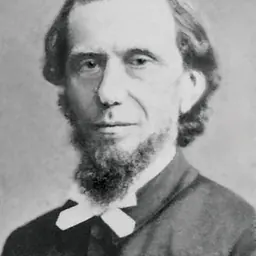
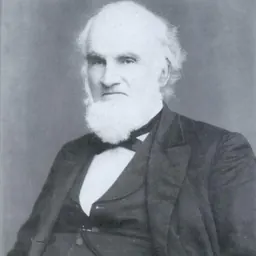

Contemporaries
People whose lives overlapped Charles A. Blanchard's

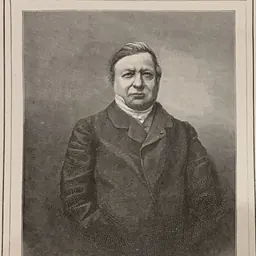
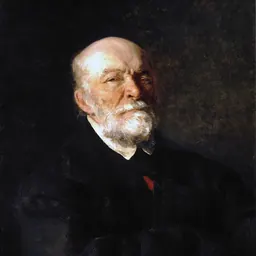



Frequently asked questions
Who was Charles A. Blanchard?
American academic administrator
When was Charles A. Blanchard born?
Charles A. Blanchard was born in 1848.
When did Charles A. Blanchard die?
Charles A. Blanchard died in 1925.
What nationality was Charles A. Blanchard?
Charles A. Blanchard was American.
Sources & further reading
· Wikipedia: Charles A. Blanchard
· DBpedia: Charles A. Blanchard (academic administrator)
Cite this page
APA: Biography.guide. (2026). Charles A. Blanchard. https://biography.guide/charles-a-blanchard/
MLA: "Charles A. Blanchard." Biography.guide, https://biography.guide/charles-a-blanchard/.
Chicago: "Charles A. Blanchard." Biography.guide. https://biography.guide/charles-a-blanchard/.
Data last updated: 2026-09-20 · Spot an error? Report a correction.
Page generated 2026-09-27 05:24 UTC