
About Chapman Pincher
Lived 1914 – 2014 (aged 100). Chapman Pincher was a British journalist, autobiographer, novelist, historian and writer.
Henry Chapman Pincher (29 March 1914 – 5 August 2014) was an English journalist, historian and novelist whose writing mainly focused on espionage and related matters, after some early books on scientific subjects.
Early life Pincher was born in Ambala, India to English parents. His father, Richard Chapman Pincher, originally from Pontefract in Yorkshire, was a major in the British army serving in the Northumberland Fusiliers.
The family returned to Pontefract when Pincher was aged three. He attended several different schools before the family settled in Darlington, where his father would later own a sweet shop and a pub on the River Tees.
Because of his previous journalistic experience, he was contacted by the Daily Express for information about the new explosive RDX that had been developed. He was allowed by the military to give appropriate details about RDX and was later allowed to supply information on other subjects. These included the "V-1 flying bomb, the V-2 rocket and the atom bomb dropped on Hiroshima."
The Daily Express could see the potential in the pieces which he had produced when a serving army officer and when he finished his time in the Army he was recruited by them as a journalist. Pincher believed it was important to keep the media informed on military decisions, and began to specialise in finding angles that nobody else covered.
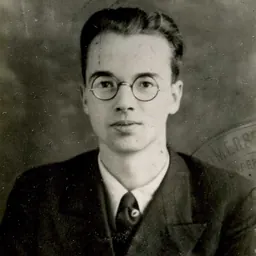
Career As a defence correspondent for the Daily Express, Pincher developed his own style of investigative journalism, actively seeking out high-level contacts to obtain secret information. Assigned to cover the stories of physicists Alan Nunn May and Klaus Fuchs, who in the early post-war years were unmasked as Soviet spies, espionage became a particular interest of Pincher's.
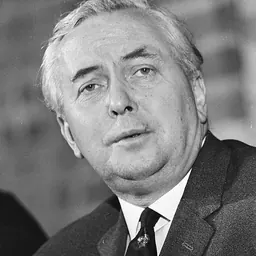
Pincher's career as a journalist thereon mainly involved uncovering Cold War secrets in London for the Daily Express. During his career, he had contacts within the British Government that suggested MI5 and MI6 could possibly be providing housing unwittingly for Soviet agents. Pincher always went "above and beyond" for his investigative reporting style, including checking people's personal phone calls and relentlessly importuning important people, such as Prime Minister Harold Wilson, for answers to questions that Pincher thought were being concealed from the public. He regularly provided exclusives that other journalists had missed, which led to his employers calling him "the lone wolf of Fleet Street". He made both friends and enemies in high places. In 1959, Prime Minister Harold Macmillan wrote to his Minister of Defence: "Can nothing be done to suppress or get rid of Chapman Pincher?" Pincher obtained the title "spy catcher" after he exposed several people as spies, including George Blake, an MI6 member who let close to one hundred Soviet spies get jobs at the embassy in London.
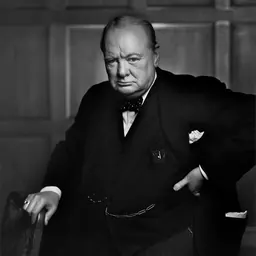
According to MI5 files held at the National Archives, Pincher served as a middle-man between his colleague Sefton Delmer and Otto John, the West German spy chief who had 'defected' to the Soviet Union and then escaped back again. John, a member of the German Resistance during the Second World War, wanted to publish his memoirs after his imprisonment in West Germany. Pincher was able to source the manuscript from Delmer, and then passed the material onto the Security Services. It is further speculated that Pincher, then The Daily Express' military correspondent, vouched for Delmer when Winston Churchill launched a secret investigation into the journalist. MI5 cited a source at The Express as part of the probe.
He won awards as Journalist of the Year in 1964, and Reporter of the Decade in 1966. The matter led to prolonged legal wrangling, with the British government mounting a strong defence against publication, which was ultimately unsuccessful through three levels of the Australian court system. Wright was represented by the barrister Malcolm Turnbull who, in 2015, became the 29th Australian Prime Minister. During his cross-examination, Turnbull exposed the British Cabinet Secretary, Sir Robert Armstrong, in a clear lie. In the meantime, Spycatcher was published in the United States in mid-1987, where it became a best seller. Pincher was investigated and cleared of any wrongdoing, through a police investigation.
Death Pincher died on 5 August 2014 at Kintbury in West Berkshire, aged 100 years old, having suffered a stroke seven weeks earlier. He died with his family by his side, talking about his time in espionage and the power it gave him in his career. The Truth About Dirty Tricks (1990) Pastoral Symphony : a Bumpkin's Tribute to Country Joys (1993) Tight Lines!: Accumulated Lore of a Lifetime's Angling (1997) Treachery: Betrayals, Blunders, and Cover-ups: Six Decades of Espionage Against America and Great Britain (New York: Random House, 2009; as Treachery: Betrayals, Blunders and Cover-Ups: Six Decades of Espionage 2011, Mainstream, UK) Chapman Pincher: Dangerous To Know (Biteback, 2014)
Footnotes
Don’t just read it —
keep it.
Full-length biographies made to live with: read them, listen on the way to work, watch them tonight.
- E-book
- Audio
- Video
Instant download · yours to keep · every purchase keeps this site free
Important facts
People in Chapman Pincher's life
Named in this biography and alive at the same time





Related people
Same field, nearest in time



Contemporaries
People whose lives overlapped Chapman Pincher's

Frequently asked questions
Who was Chapman Pincher?
English espionage historian, novelist
When was Chapman Pincher born?
Chapman Pincher was born on 29 March 1914 in Ambala.
When did Chapman Pincher die?
Chapman Pincher died on 5 August 2014 in Kintbury.
What was Chapman Pincher's occupation?
Chapman Pincher was a journalist, autobiographer, novelist, historian and writer.
What nationality was Chapman Pincher?
Chapman Pincher was British.
Sources & further reading
Cite this page
APA: Biography.guide. (2026). Chapman Pincher. https://biography.guide/chapman-pincher/
MLA: "Chapman Pincher." Biography.guide, https://biography.guide/chapman-pincher/.
Chicago: "Chapman Pincher." Biography.guide. https://biography.guide/chapman-pincher/.
Data last updated: 2026-09-20 · Spot an error? Report a correction.
Page generated 2026-09-27 05:30 UTC