
About Chaophraya Phitsanulok
Lived 1719 – 1768 (aged 48–49). Chaophraya Phitsanulok was a military personnel.
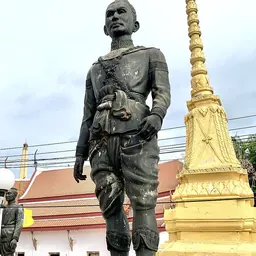
Chaophraya Phitsanulok (, ; 1719 – November 1768), personal name Rueang or Boonrueang , was governor of Phitsanulok with the noble title Chaophraya Surasi Bisanuvadhiraj from 1732 to 1767. He was governor from the reign of King Borommakot, until the fall of the Ayutthaya Kingdom during the reign of King Ekkathat.
In 1768, he declared himself King Rueang of Phitsanulok, claiming for Phitsanulok and part of Nakhon Sawan to be a new independent state. He was also known as Prince Rueang, the King of Siam. His descendants were given the Thai noble surname Rochanakul , a patronymic from Rueang's family, by King Rama VI.
Biography Ancestry Rueang was born in the Ayutthaya Kingdom. He descended from Chaophra Pichayasurindara , the grandson of King Phetracha, in Ban Phlu Luang dynasty, and later H.R.H. Prince of Krommamun Indarabhakdi conferred by King Thai Sa era. His wife was Lady Qingchiang , lady of Phitsanulok , a half-Siamese-Chinese woman of the Chen family, and a daughter of Phraya Rajsubhawadi , from a Chinese village in Ayutthaya. His younger brother was deputy governor of Phitsanulok, Phra Indara-akorn , or Phraya Chaiyabun , personal name Chan . His mother died after the second fall of the Ayutthaya Kingdom.
Early career In his early life, Rueang was in charge of Siamese military affairs in Krom Mahatthai of the Ayutthaya Kingdom during King Thai Sa's rule.
In his adolescence, he was mostly in military service at Phitsanulok, coordinating officially with Luang Pinit Akson (Thongdi) . He was a regent of the northern region. During the Burmese-Siamese War (1765–1767), Rueang was appointed commander of northern military affairs. He had a reputation as a famous elder warrior, and was respected by many Ayutthaya courtiers following the successful defeat of Burmese royal troops who attacked Phisanulok city during the Burmese–Siamese War.
In The Royal Sword, by the Ministry of Interior (Thailand), it was said that:
Death In 1768, after the second fall of the Ayutthaya Kingdom interregnum, Chaophraya Phitsanulok (Rueang) proclaimed himself King Ruang, to be King of Siam. He occupied the throne for only six months (some sources said he died only seven days of a coughing fit. Various sources said he died of abscess, scrofula, or smallpox symptoms when he was forty-nine years old., while others said he was fifty-two years old at the time of death. and the support of the military of the Ayutthaya Kingdom. According to the allegation of the Burmese King's lèse-majesté, King Naungdawgyi, the King of Burma deployed troops of 50,000 men and appointed General Ne Myo Thihapate as commander-in-chief to criminalize Chiang Mai.
Chiang Mai defeated by Burmese troops In January 1762, Phraya Chantha of Chiang Mai wrote a royal letter with a tribute presented to King Ekkathat, the King of Siam, informing him of an invasion from Burma and requesting that Chiang Mai become a tributary state of Siam and for Siamese troops to fight against the Burmese troops. Many of The Royal Chronicles of Siam stated that Chaophraya Phitsanulok (Rueang) triumphed over Ne Myo Thihapate's troops at Sukhothai, and Phitsanulok became a shelter for Ayutthaya courtiers and the Siamese Royal family of the Ban Phlu Luang Dynasty. This became known as Chaophraya Phitsanulok (Rueang)'s gathering in 1767–1769 , the largest gathering in interim Thonburi.
A battle between Ne Myo Thihapate and Governor of Phitsanulok During the encampment of Phitsanulok troops at Wat Phu Khao Thong, Chaophraya Phitsanulok (Rueang) requested royal permission to return to Phitsanilok to incinerate his mother's remains by informing King Ekkathat through Phraya Phonladep . The King granted him permission and he left his three subordinates, Luang Mahatthai , Luang Kosa and Luang Thepsena , in charge of his troops. Prince and historian Damrong Rajanubhab pointed out that it was impossible that the governor of Phitsanulok could be allowed to return to Phitsanilok city during the Burmese-Siamese war.
Later, King Ekkathat appointed Chaophraya Phitsanulok (Rueang) to suppress Burmese troops commanded by Ne Myo Thihapate marching from the northern of the Ayutthaya Kingdom.
The Royal Chronicle of the Kingdom of Ayutthaya said :
, translated by Soe Thuzar Myint, said in Second Part, Stanza 11 that :
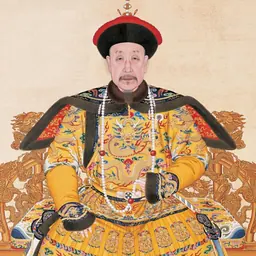
King Ruang's letter to China According to Qing Dynasty Archives, King Ruang of Phitsanulok wrote a royal letter in 1767, sealed with his Chinese name; Fu Shi Lu or Fu Shi Lu Wang and also asked Qianlong Emperor for approval of their status as King of Siam from Qianlong Emperor with Chinese imperial seal.
Whilst King Taksin sough approval from the Chinese emperor, he started seeking to purge the remaining princes of the Ban Phlu Luang Dynasty.
Viceroy Li Shiyao secretly investigated some political asylums with the governor of Ha Tian in order to find the princes of Siam that still lived and to report the situation of Ha Tian to the Chinese emperor. Qianlong Emperor discovered two living princes: Prince Chui and Prince Sisang , descendants of the Siam Dynasty, who had fled to Ha Tien and sheltered themselves there after the burning of Ayutthaya. While Prince Chui sheltered himself at Ha Tien, Qianlong Emperor recognized his status as legitimate King of Siam. Later, Prince Chui gathered troops in Ha Tien to seize King Taksin.
Prince Sisang died at Ha Tien before being captured and Prince Chui was captured and killed by King Taksin in Siam during the interim Siamese–Vietnamese War (1771–1773).
He [Taksin] thus left the chieu khoa Lien to hold Ha Tien and returned to Siam by dap [battleship] with his main force, the captive Mac family and Chieu Chuy [Prince Chui]. The last-named was killed in Siam.
There is no evidence that King Ruang was approved as the legitimate King of Siam despite the fact that he was a descendant of one royal member of the Ban Phlu Luang Dynasty, whilst King Ruang played a role in supporting the remaining royal descendants.
Chaophraya Phitsanulok's gathering
Background After dominating Ayutthaya Kingdom for 417 years, the kingdom was destroyed on April 7, 1767. Siamese prisoners were herded to Burma in large numbers by Ne Myo Thihapate and Maha Nawrahta with the support of a Siamese spy named Phraya Phonlathep . The Testimonies of the inhabitants of Ayutthaya said :
Phitsanulok was located at the northern end of the kingdom and Ayutthaya officials fled there before a siege of Burmese troops in the Ayutthaya Kingdom's capital.
The Royal Chronicle of Myanmar composed in 1913 by Prince Narathip Praphanphong said :
Phraya Srisatchanalaibodi (Liang Siripalaka) said :
Memoirs of Princess Narindaradevi said :
And The first primogenitor of Phraya Srisahadep named Thongpeng composed by K.S.R. Kulap said :
His younger brother, Phraya Chaiyabun (Chan) or Phra Indara-akon became governor of Phitsanulok. Phitsanulok city was weakened as a result of the new ruler's lack of military capability, in contrast to the former governor.
The Sangitiyavansa composed by Somdej Phra Wannaratna of Wat Phrachetupon in 1789, said :
Honors Title Titles and ranks appointed by King of Siam Chaophraya Phitsanulok's titles during 1732–1767:
Rueang official and scribe at Krom Mahatthai during the reign of King Thai Sa. Luang Maha Ammatayadibodi or Luang Senamataya (Rueang) Northern interior official at Krom Mahatthai in Phitsanulok, sakdina 1,600 during the reign of King Borommakot. Phra Rajcharittanonbahonbakdi (Rueang) Inspector as acting permanent secretary official at Phitsanulok, sakdina 3,000 during the reign of King Borommakot. Phraya Phitsanulok (Rueang) Governor of Phitsanulok, sakdina 10,000 (First Class) during the reign of King Borommakot. Chaophraya Phitsanulok (Rueang) a.k.a. Chaophraya Surasi, Governor of Phitsanulok, sakdina 10,000 (First Class) during the reign of King Borommakot to King Ekkathat.
Enthronement Phrachao Phitsanulok or Chao Phitsanulok (1768) King Rueang of Phitsanulok as state-independent, in Thonburi interim.
Namesakes alt=Rochanakul Lane located in Samut Prakan province Thailand.
Chaophraya Phitsanulok Road , Phitsanulok province. Phraya Surasi Road , Phitsanulok province. Rochanakul Lane , Samut Prakan province.
Primogenitor of noble surname Rochanakul . as Permanent Secretary of The Office of His Majesty's Principal Private Secretary, Bureau of the Royal Household from 1923 to 1927. It was bestowed by King Rama VI on 15 July 1913 and royally countersigned by The Prince Nares Varariddhi , Lord of the Privy Seal . The Thai surnames record at the King Rama VI Memorial Hall, National Library of Thailand, stated that Chaophraya Phitsanulok (Rueang) was the grand primogenitor of the surname Rochanakul.
In popular culture Chaophraya Phitsanulok (Rueang)'s presence and occurrences have been mentioned in various contemporary works.
Thai literature The Sangitiyavansa or the Chronicle of Buddhist Councils: The first Pali work belongs to The Chronicle of Pali literature, composed by Somdej Phra Wannaratna of Wat Phrachetupon, also known as Phra Phimonlatham,
International literature Yodaya Naing Mawgun by Letwe Nawrahta: A contemporary Myanmar record of the second fall of Ayutthaya Kingdom translated by Soe Thuzar Myint. The record mentioned Phitsanulok troops as a courageous foe, of which Chaophraya Phitsanulok (Rueang) was commander-in-chief. The record said "Siamese reinforcements sent from Phitsanulok and other towns were routed. The poet portrays the Siamese as a courageous foe, a worthy adversary of the Myanmar whose commanders had to resort to innovative tactics."
Verse Sam Krung: A Thai poem composed by Prince Bidyalongkorn in 1942. The story of Chao Phitsanulok (Rueang) in which Prince Bidyalongkorn mentioned, criticized the incidents and attacks on the current leadership in his descriptions.
Novel and Fiction Rattanakosin: The Birth of Bangkok: A Thai historical novel authored by Paul Adirex, mentions an incident of Chaophraya Phisanulok's Force arrangement to intercept the King Taksin's force-five thousand armies to conquer the Chaophraya Phitsanulok (Rueang)’s gathering in Nakhon Sawan, and the death of Chaophraya Phisanulok after his royal proclamation. Yot Sawettachat: Thai historical novel, written by Luang Wichitwathakan, mentions an engagement of governor of Phitsanuloks's reinforcement with Burmese troops, and Phitsanulok's seizing by Prince Chit's rebellion. Chiwit khong prathet: Thai historical novel, authored by Wissanu Krea-ngam and based upon the second fall of Ayutthaya Kingdom and King Taksin's reunification of Siam. The novel mentions the Royal proclamation of Chaophraya Phitsanulok (Rueang) to exalt himself as King of Siam and how Thongdi, father of King Rama I, got appointed as regent of Phitsanulok.
Film and television Fa Mai: Thai historical drama mentioned Orkya Phra Phitsanulok (Rueang), portrayed by Attachai Anantamek. Sai Lohit: Thai historical drama mentioned after governor of Phitsanulok had marched Siamese troops and engaged Burmese at Sukhothai, Prince Chit seized Phitsanulok. The governor of Phitsanulok had to resort to suppress Prince Chit. Love Destiny 2 (TV series): either Por Rueng (portrayed by Thanavat Vatthanaputi), Por Rueng's son; Boonrueang (not yet born) or Rueang (portrayed by Parama Imanotai) who lived in Phisanulok during reign of King Thai Sa may be related to the Governor of Phitsanulok in reign of King Borommakot, the successor of King Thai Sa. The name Rueng and Boonrueang may possibly inspired by the biography of Chaophraya Phitsanulok (Rueang).
Don’t just read it —
keep it.
Full-length biographies made to live with: read them, listen on the way to work, watch them tonight.
- E-book
- Audio
- Video
Instant download · yours to keep · every purchase keeps this site free
Important facts
People in Chaophraya Phitsanulok's life
Named in this biography and alive at the same time

Related people
Same field, nearest in time




Contemporaries
People whose lives overlapped Chaophraya Phitsanulok's




Frequently asked questions
Who was Chaophraya Phitsanulok?
Governor of Phitsanulok, Ayutthaya Kingdom
When was Chaophraya Phitsanulok born?
Chaophraya Phitsanulok was born in 1719.
When did Chaophraya Phitsanulok die?
Chaophraya Phitsanulok died in 1768.
What was Chaophraya Phitsanulok's occupation?
Chaophraya Phitsanulok was a military personnel.
Sources & further reading
· Wikipedia: Chaophraya Phitsanulok
· DBpedia: Chaophraya Phitsanulok
Cite this page
APA: Biography.guide. (2026). Chaophraya Phitsanulok. https://biography.guide/chaophraya-phitsanulok/
MLA: "Chaophraya Phitsanulok." Biography.guide, https://biography.guide/chaophraya-phitsanulok/.
Chicago: "Chaophraya Phitsanulok." Biography.guide. https://biography.guide/chaophraya-phitsanulok/.
Data last updated: 2026-09-20 · Spot an error? Report a correction.
Page generated 2026-09-27 05:01 UTC