
About Chang Kuei-hsing
Born 1956. Chang Kuei-hsing is a Taiwanese novelist.
Chang Kuei-hsing (; Hakka Chinese Pha̍k-fa-sṳ: Chông Kui-hin, b. 1956) is a Taiwanese author, novelist and educator. Born in North Borneo (Sarawak), Malaysia in a Hakka family, he "[grew] up in a state of Sarawak amidst a racially mixed Chinese and native communities".
Early life and education In his childhood, Chang has accounted his experiences living alongside the Sarawak rainforests and travelling deep into the jungles alongside his Indigenous Dayak friends. His works tend to revolve around a wild environment, where he often uses the Borneo jungle and its civilizations as a main setting, which is exemplified in some of his novels such as My South Seas Sleeping Beauty (analyzed in a series of video lectures) and Herd of Elephants.
For example, his novel Herd of Elephants (also known as Elephant Herd and Elephant Tropes), “employs poetic wordplay and explores anthropological metaphors of movement from the two competing homelands - one in original (Borneo) and the other imaginary (China)” (Tan, 236) providing a Sinophone metanarrative to spread cultural and historical knowledge on the topics of Sinophone Malaysian literature. The "main diegesis begins in late 1973, at a crucial turning point in Sarawak's multi-decade Communist insurgency".
Literary style and cultural references
Sinophone writing style Sinophone writing examines "parsing hierarchies of power relations often defined by neo-colonialism, imperialism, and nationalism". Chang Kuei-hsing's Sinophone literature is acknowledged to allow the Global South to extend beyond its empirical category and examine the implications of globalization through minor literatures. Many scholars have examined Chang Kuei-hsing's work in their research in Sinophone literature as “a manifestation of linguistic and narrative heteroglossia”, mediation for history rewriting in Sinophone literature”, and “literary tropes to depict interethnic relations and Chinese settler history”. Chang Kuei-hsing's Elephant Herd is an example of his Sinophone literature, revealing a settler community history through war, colonialism, racial tension, national liberation, and communism into one. An example of Chang's critique of "human exploitation of the natural world" is drawn in "repetitive scenes where humans destroy the rainforest vegetation and hunt local wildlife". La Traversée des sangliers. Translated by Pierre-Mong Lim. Picquier, 2022. Elephant Herd: A Novel. Translated by Carlos Rojas. New York: Columbia University Press, 2025. . The Crossing of the Boars. Translated by Christopher Rea and Julie M. Wang. New York: Columbia University Press, 2026. .
Literary awards Throughout 1980s-1990s Chang has influenced the literary culture across the Sinophone world and is one of the most decorated living authors writing in Chinese. Chang has won literary awards in Taiwan, Malaysia, and Hong Kong, including three prizes for Monkey Cup (2000), numerous awards for The Crossing of the Boars (1998), including the 2019 Taiwan Literature Award and the 8th Dream of the Red Chamber Award for "The World’s Most Distinguished Contemporary Novel in Chinese."
In March 2023, Chang was awarded the eighth Newman Prize for Chinese Literature at the University of Oklahoma.
In 2023 and 2024, Eyelids of Morning won several major literary awards, including the 2023 Taiwan Literature Award.
Don’t just read it —
keep it.
Full-length biographies made to live with: read them, listen on the way to work, watch them tonight.
- E-book
- Audio
- Video
Instant download · yours to keep · every purchase keeps this site free
Important facts
People in Chang Kuei-hsing's life
Named in this biography and alive at the same time

Related people
Same field, nearest in time

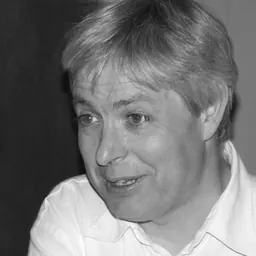

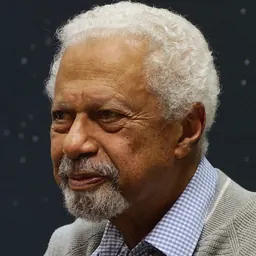


Contemporaries
People whose lives overlapped Chang Kuei-hsing's
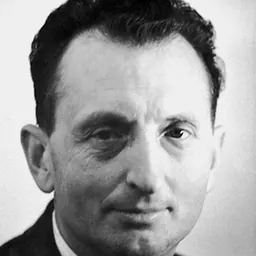
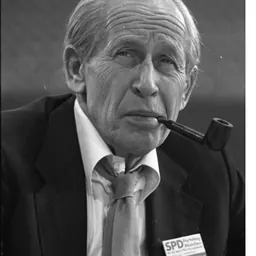
Frequently asked questions
Who is Chang Kuei-hsing?
Taiwanese writer
When was Chang Kuei-hsing born?
Chang Kuei-hsing was born in 1956.
What is Chang Kuei-hsing's occupation?
Chang Kuei-hsing is a novelist.
What nationality is Chang Kuei-hsing?
Chang Kuei-hsing is Taiwanese.
Sources & further reading
Cite this page
APA: Biography.guide. (2026). Chang Kuei-hsing. https://biography.guide/chang-kuei-hsing/
MLA: "Chang Kuei-hsing." Biography.guide, https://biography.guide/chang-kuei-hsing/.
Chicago: "Chang Kuei-hsing." Biography.guide. https://biography.guide/chang-kuei-hsing/.
Data last updated: 2026-09-20 · Spot an error? Report a correction.
Page generated 2026-09-27 05:04 UTC