
About Cesare Marsili
Lived 1592 – 1633 (aged 40–41). Cesare Marsili was a scientist.
Cesare Marsili (Bologna, 31 January 1592 – Bologna, March 22, 1633) was an Italian intellectual and associate of Galileo Galilei.
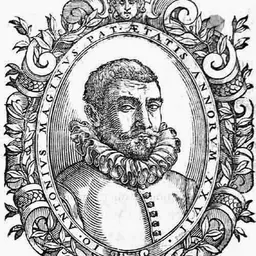
Early life Cesare Marsili was born into one of the most important senatorial families of Bologna, the son of Filippo Marsili and Elizabetta Rossi. From an early age he assumed various positions of authority in the city, becoming a member of the Council of Elders, tribune of the people, and standard-bearer of justice. In 1622, just thirty years old, was elected Superintendent of Water, a position for which he required hydraulic and mathematical skills that he had probably learned from Giovanni Antonio Magini, professor of mathematics and astronomy at the University of Bologna. On 10 November 1628, he married a noblewoman named Elena Ballatini. Marsili was also an enthusiastic jouster and is known to have participated a number of tournaments between 1615 and 1628. In another letter of 7 July 1626, Marsili reported that a Bolognese artisan had succeeded in manufacturing a mirror that could produce the effects of a telescope, but that it had not yet been possible for him to verify its working. As the correspondence continued, it was clear that Marsili and Galileo were developing the concept of the reflecting telescope, an idea that was to be developed by Cavalieri.
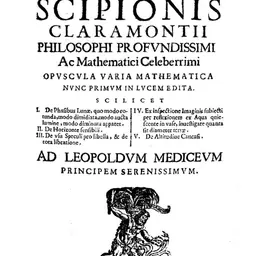
Dialogue Concerning the Two Chief World Systems Marsili's friendship proved invaluable to Galileo in the preparation of his great work Dialogue Concerning the Two Chief World Systems. Galileo finally decided to finally respond to Francesco Ingoli's work of 1616, known as De situ et quiete Terrae contra Copernici Systema disputatio challenging the theories of Copernicus. Marsili undertook to obtain a copy of it, and took part in the discussions Galileo held with his friends to work out the main lines of his counter-argument. Marsili also saw a manuscript draft of Galileo's response, and found himself the main point of contact between Galileo and other thinkers, including the peripatetic Scipione Chiaramonti and Kepler. Marsili was well aware of the importance Galileo's Dialogue, and undertook a sustained campaign of letter writing to make other Bolognese writers and scholars aware of its forthcoming publication. While preparing the ground for Galileo's ideas, he carefully avoided confrontation with traditional Aristotelian scholars. He also ordered 32 copies of the Dialogue from the printers, to sell to interested readers in Bologna.
Because of the importance Galileo's book, Marsili sought to have his own name included in it in some positive light. In his letter to Galileo of 27 March 1631 he explicitly requested a mention, and at the same time informed him of a discovery he had made. The marble sundial created some five decades previously by Ignazio Danti on the facade of Santa Maria Novella did not in fact align with the sun at the equinox. He went on to refer to a number of other discrepancies between modern astronomical data and that reported by Ptolemy and other ancient writers. Galileo obliged him. In the fourth day of his Dialogue, Marsili features in a complimentary exchange between Salviati and Sagredo:
SALVIATI: 'There is now a fifth novelty from which one might be able to able to argue for the motion of the terrestrial globe. This refers to the extremely subtle things being discovered by the most illustrious Mr. Cesare Marsili, member of a very noble family of Bologna, and also Lincean Academician; in a most learned essay he states that he has observed a constant though extremely slow motion of the meridian line. Having recently seen this essay with astonishment, I hope he sends copies of it to all students of the marvels of nature.'
SAGREDO: 'This is not the first time I have heard of this gentleman's refined learning and of his great concern to be a patron to all scholars. If this or some other work of his comes out, we can be sure it will be a thing of distinction.'
After the publication of the Dialogue in 1632, Marsili died, on 22 March 1633. He was buried in the family chapel in the San Petronio Basilica. His essay, referred to in the Dialogue is not extant and appears never to have been published, like other works attributed to him by eighteenth-century biographers.
Don’t just read it —
keep it.
Full-length biographies made to live with: read them, listen on the way to work, watch them tonight.
- E-book
- Audio
- Video
Instant download · yours to keep · every purchase keeps this site free
Important facts
People in Cesare Marsili's life
Named in this biography and alive at the same time


Related people
Same field, nearest in time



Contemporaries
People whose lives overlapped Cesare Marsili's


Frequently asked questions
Who was Cesare Marsili?
Italian philosopher (1592–1633)
When was Cesare Marsili born?
Cesare Marsili was born in 1592.
When did Cesare Marsili die?
Cesare Marsili died in 1633.
What was Cesare Marsili's occupation?
Cesare Marsili was a scientist.
Sources & further reading
Cite this page
APA: Biography.guide. (2026). Cesare Marsili. https://biography.guide/cesare-marsili/
MLA: "Cesare Marsili." Biography.guide, https://biography.guide/cesare-marsili/.
Chicago: "Cesare Marsili." Biography.guide. https://biography.guide/cesare-marsili/.
Data last updated: 2026-09-20 · Spot an error? Report a correction.
Page generated 2026-09-27 05:06 UTC