
César Manrique
Spanish artist, sculptor, architect and nature activist
About César Manrique
Lived 1919 – 1992 (aged 73). César Manrique was a Spanish painter, sculptor, environmentalist and architect.
César Manrique Cabrera ( or ) (24 April 1919 – 25 September 1992)
Manrique's contributions to the island of Lanzarote have delivered a lasting legacy. On the anniversary of his death in 1993, UNESCO declared the island a biosphere reserve in recognition of his conservation efforts. In 2019, the hundredth anniversary of his birth, the island's main airport was renamed in his honor. His foundation continues to advocate for natural conservation in the region today.
Early life
Manrique was born in Arrecife, Lanzarote, one of the Canary Islands. His father Gumersindo Manrique, originally from Fuerteventura, built the family house in Caleta de Famara. Manrique himself once said this house and its surroundings has impressed him greatly. The civil war had a profound effect on him and his contemporaries, some of whom were killed or forced into exile.
Career Arrecife (1939-1945) Manrique decided to work as a painter in 1939, after his return from the civil war. He held a number of exhibitions in the early 1940s to showcase his paintings. His first solo exhibition was in Arrecife in 1942 and others followed there and in Gran Canaria. He swiftly established the format that would guide his solo expositions from then until 1957, a mixture of more traditional paintings inspired by Lanzarote's geography, and then more fantastical or abstract scenes. While Manrique was very well connected with Madrid society, he avoided becoming involved with Francoist politics personally. He once stated that he preferred "to be an eagle rather than a sheep".
Madrid's art scene was at the time still recovering from the consequences of the civil war. The area suffered from widespread poverty, and many galleries had been closed in the 1930s. These were beginning to re-open with the gradual relaxation of Francoist isolationism early 1950s, and Spain once again began to take part in international art events. Critics have identified 1950 to 1953 as a key transitional period in Manrique's stylistic development, something which originated with two influences. This came from his membership of the Institute of Cinema Research and Experimentation, and a trip to Paris in 1950. He spent several months with an artist colony in the city, which had built up around the Spanish College. His time there exposed him to experienced artists of the area including Pablo Palazuelo and Eduardo Chillida among others. By 1953, his painting exhibited a more arbitrary use of colour and form, and intentionally child-like linework, showing reference to Mattisse and Picasso. He painted a number of well regarded murals at the Hotel Fénix, Banco Guipuzcoano and Barajas Airport. This was particularly apparent by the late 1950s, when other artists began to acknowledge his influence. He began to eschew bright colours and instead focused on material work. A grant from Nelson Rockefeller allowed him to rent his own studio. He set up on the Lower East Side, where he could be close to the art scene that was present there at the time. He painted many works in New York, which were exhibited in the prestigious "Catherine Viviano" gallery as well as the Guggenheim Museum. His exhibitions at the Viviano in particular were foundational in his establishing a presence in the New York art scene, and more broadly the art market for North America.
Lanzarote "Volcano Home" (1966-1988)
Manrique returned to Lanzarote in 1966; the island would be his home for the remainder of his life. Upon arriving, he intended to start an artist's colony on the island. Pepín Ramírez, a childhood friend of Manrique as well as the president of the island helped Manrique realize this idea. While travelling in the volcanic plains left behind by the 1824 eruption, Manrique discovered a cave, and climbed down to discover several volcanic bubbles and a tunnel. He decided to develop the location into his home, and over several years excavated and augmented the caverns, adding above ground elements also. It would form the centrepiece of his "artist's colony" on the island, and a spot for regular nude, hedonistic parties. The site has been described as "the lair of a Bond villain who ditched world domination to throw the swingiest parties in town".
Manrique gained a lot of attention with his commitment to protect Lanzarote from what he regarded as pernicious tourist developments. Manrique was not against tourism on the island. On the contrary, he thought (high-quality) tourism should be the economic engine of the island. One aspect of this is the ban of high-rise hotels on the island, which do not fit the aesthetic harmony that should cover the entire island, according to Manrique. Those high buildings that were built before the ban are generally keeping with the use of traditional colors in their exterior decoration. Homeowners are encouraged to protect this visual unity by keeping the exterior of the houses white (with specific colors for the woodwork).
With his goal in mind- helping improve tourism to the island while maintaining its natural beauty- Manrique spent much of the following 25 years designing and building structures, attractions, and public sculptures. An early example of this was the El Diablo restaurant (1970), which uses the heat of the Timanfaya volcano to cook food upon a well-like structure. The building has large panoramic windows which offer views of the volcanic landscape. He also designed the visitor center for the Timanfaya volcanic park as well as its devil symbol. This was followed by the Mirador del Río in 1973; a scenic overlook of the island which includes a cafe worked into the volcanic rock. Manrique published a book in 1974 called Architecture Unpublished, collaborating with the renowned Spanish architect Fernando Higueras.
In 1976, Manrique designed the overhaul of the Castillo de San José at Arrecife, which saw the historic structure refurbished. The fortress building became home to the International Museum of Contemporary Art, which showcases the work of both Canarian and international artists. He also developed the restaurant on site. Manrique worked on an extensive remodeling and excavation program of the volcanic caverns at Jameos del Agua through the 1970s, adding an auditorium among other changes. Manrique desired to respect the natural formations of the cavern in his works, stating that "the most important aspect of art is nature. In Jameos del Agua, I did nothing more than underline the beauty that was already there." It opened to the public in 1977.
Manrique was particularly active in the mid 1980s in campaigning against large building developments. The plans would have seen tourism accommodation quadruple in Lanzarote, through the construction of large apartment complexes and hotels; critics argued that it would have led to uncontrolled growth. Manrique referred to the plans as "suicide" for the island. He was involved in a number of marches and protests, which were ultimately successful in having several of these developments scaled back or outright cancelled. Tourism growth did occur, but in a more managed and regulated way as a result of these protests.
Haria and final works (1988-1992)
In the late 1980s, Manrique made the decision to move out of his elaborate volcano home. He designed a new, more simple Palm Grove House in the small Lanzarote village of Haria which would become his permanent residence, while redeveloping the volcano home into an art gallery. For this purpose, he launched the César Manrique Foundation. The goal of this group was to provide public access to the property as well as to further his goals of art, education and nature conservation in the Canary Islands, particularly Lanzarote. Though Manrique was in his early 70s by that point, he remained active, and in 1989 began work on the Jardin de Cactus at Guatiza, a vast garden in a remote area of the island containing hundreds of species of cactus and an elaborate restaurant. The site opened in 1991, and was his last major contribution to the landscape of the island.
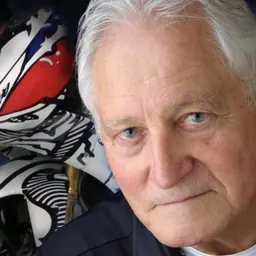
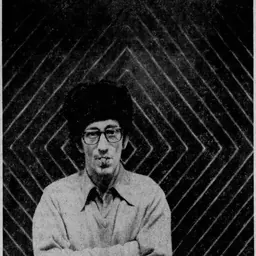
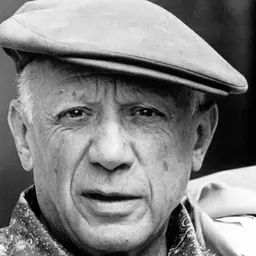
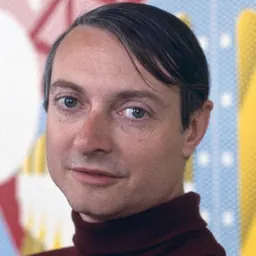
In 1990, he created one of the BMW Art Cars as a collaboration with the German designer and paint artist Walter Maurer. Their collaboration for the international automobile company increased Manrique's fame beyond the country's borders. Manrique maintained a close friendship with Walter Maurer for the rest of his life, and was involved in a constant artistic exchange. Before the collaboration with César Manrique, Maurer had already designed BMW Art Cars with other highly recognised international artists such as Andy Warhol, Frank Stella and Roy Lichtenstein. The work for the joint Art Car was carried out in Maurer's studio in Munich. César Manrique took care of the initial design proposals, coordinated them with his artistic partner Walter Maurer and was responsible for the final approval, while Maurer was responsible for applying the design to the BMW 730i.
Manrique's final artistic works were his wind toys- dynamic sculptures that are animated by the wind. The first installed was Veleta in Arrieta. Many of them went on to be constructed after his death, based on the notes and drawings he left behind. The last building credited to the artist was the Parque Marítimo César Manrique which opened in Tenerife in 1995.
Personal life
Manrique met his partner Joesfa "Pepi" Gómez in 1945 when he moved to Madrid. The two have been described as a wedded couple, though legally they never married. This was due to Gómez's previous husband, who likely died in the Spanish Civil War, but as no body was ever found Gómez was unable to prove she was a widow. Gómez and Manrique remained together until her death in 1963. Her death devastated Manrique, and prompted his decision to live in New York for a period in the mid 1960s. Discussing her death later, Manrique stated: "Until her death I was like a small child, who didn't worry about anything, except painting... Every corner of my house in Madrid smelled like Pepi. So I decided to go to New York." He had a reputation for nude, hedonistic parties, and would frequently host these gatherings at his home in Lanzarote. He was however a non-drinker and non-smoker, and was passionate about his health and fitness.
Death & legacy
On September 25, 1992, Manrique suffered a fatal car accident. He had recently undergone cataract surgery and was not meant to be driving, however the driver assigned to him by the Cabildo had called in sick and he had decided to drive himself. His car was struck at a roundabout in Tahíche, Teguise, just outside the Fundación, his Lanzarote home. He was aged 73. On the anniversary of his death in 1993, UNESCO declared the island a biosphere reserve in recognition of Manrique's work on nature and sustainability.
César Manrique Foundation
The César Manrique Foundation is a private, non-profit organisation which was set up by the artist in 1983 with four "pillars" to guide its activities. These are:
Conserving César Manrique's legacy, including managing some of the buildings he designed. The visual arts, including organising exhibitions and studies of art and nature. Environment and land use, including conservation work in the Canary Islands. Cultural reflection, including intellectual and creative activities.
The foundation is based at Manrique's former volcano home, and became active after his death in 1992. The site has become an art gallery featuring both works from Manrique himself as well as pieces he acquired, such as original sketches by Pablo Picasso and Joan Miró.
Works Architecture
In Lanzarote: 1968- Taro de Tahíche (Manrique's house near Teguise, the present seat of the Fundación César Manrique). 1970- El Diablo Restaurant (uses volcanic heat to cook). 1972- LagOmar, house briefly owned by Omar Sharif. Collaboration with Jesús Rafael Soto. 1973- Mirador del Rio (overlooking the neighbouring island of Graciosa). 1976- International Museum of Contemporary Arts in the Castillo de San José, Arrecife. 1977- Jameos del Agua (concert venue/nightclub for 600 persons in a cave). 1977- Murals, garden and swimming pools of the five-star hotel Las Salinas in Costa Teguise. 1988- Casa / Museo César Manrique (Manrique's house and artist studio in Haria, with landscaped garden). 1991- Jardín de Cactus (a cactus garden home to over 1,100 different varieties of cactuses near Guatiza).
Outside Lanzarote: 1977- Lago Martiánez (large "semi natural" open air sea-water pool complex in Puerto de la Cruz, Tenerife). 1983- La Vaguada Shopping Centre in Madrid. 1989- La Peña (a restaurant and belvedere on El Hierro). 1989- Mirador del Palmarejo (a lookout point in La Gomera). 1992- Canarian Pavilion (Expo 92, Seville, Spain). 1995- Parque Marítimo César Manrique, Santa Cruz de Tenerife, Tenerife (construction finished after his death)
Sculpture
1968- Monumento And Museo del Campesino (Monument at San Bartolomé dedicated to agricultural workers) 1970- El Diablo, symbol of the Timanfaya National Park. c. 1970-1975- Sin título. Serie Juguetes del viento. 1990- El triunfador 1990- Vane, wind toy in Arrieta 1990- Energy Of The Pyramid, wind toy in the grounds of the Fundacion. 1994- Fobos, wind toy in Tahiche, marks the location of his death
Other
1990- BMW Art Car in collaboration with Walter Maurer, Munich, Germany.
Honours
1976 Gold Medal for Tourism Merit 1978 Grand Cross of the Order of Civil Merit 1978 Weltpreis für Ökologie und Tourismus, Berlin, Germany 1980 Order of Andrés Bello 1980 Gold Medal of Merit in the Fine Arts 1986 Europa Nostra Prize European Parliament 1989 Art Prize, Canarian government 1989 Fritz Schumacher Prize at the Leibniz University Hannover, Germany 1999 honorary doctorate of the University of Las Palmas, Gran Canaria 2019 Medal of Honor, University of La Laguna.
Additional images
Don’t just read it —
keep it.
Full-length biographies made to live with: read them, listen on the way to work, watch them tonight.
- E-book
- Audio
- Video
Instant download · yours to keep · every purchase keeps this site free
Important facts
People in César Manrique's life
Named in this biography and alive at the same time



Related people
Same field, nearest in time



Contemporaries
People whose lives overlapped César Manrique's



Frequently asked questions
Who was César Manrique?
Spanish artist, sculptor, architect and nature activist (1919–1992)
When was César Manrique born?
César Manrique was born on 24 April 1919 in Arrecife.
When did César Manrique die?
César Manrique died on 25 September 1992 in Arrecife.
What was César Manrique's occupation?
César Manrique was a painter, sculptor, environmentalist and architect.
What nationality was César Manrique?
César Manrique was Spanish.
Sources & further reading
Cite this page
APA: Biography.guide. (2026). César Manrique. https://biography.guide/cesar-manrique/
MLA: "César Manrique." Biography.guide, https://biography.guide/cesar-manrique/.
Chicago: "César Manrique." Biography.guide. https://biography.guide/cesar-manrique/.
Data last updated: 2026-09-20 · Spot an error? Report a correction.
Page generated 2026-09-27 05:30 UTC