
About César Guerra-Peixe
Lived 1914 – 1993 (aged 79). César Guerra-Peixe was a Brazilian composer, conductor, ethnomusicologist, musicologist, violinist and musician.
César Guerra-Peixe (March 18, 1914 – November 26, 1993) was a Brazilian violinist, composer, and conductor.
Biography Guerra-Peixe was born in Petrópolis, son of Portuguese immigrants with Romani origins. Throughout his lifetime, Guerra-Peixe held numerous positions playing in orchestras and working as a composer and arranger in the production of radio broadcasts, recording, films, and cultural documentaries. His music can be heard in many Brazilian films, such as Terra é Sempre Terra, O Canto do Mar, Quero Essa Mulher Tanto Assim, Riacho de Sangue, Meu Nome é Lampião, and Soledade.
Although he strongly embraced serialist techniques through his compositional studies with Koellreutter, Guerra-Peixe took a strong interest in northeastern Brazilian traditional music and culture and integrated elements of Brazilian nationalism to varying degrees in his compositions. While living in Recife, Guerra-Peixe conducted field work on traditional Brazilian music and culture, and he published numerous articles based on his research in the Revista Brasileira de Folclore. He is particularly well known for his lifelong dedication and contributions to the research and promotion of Brazilian culture.
The Concertino for Violin and Orchestra is a virtuosic work for violin inspired by the sonorities of the rabeca (Brazilian folk fiddle) and re-contextualized for the classical violin. In northeastern Brazilian culture, the rabeca is used to accompany an array of traditional dance forms, folkloric ensembles, and street plays. The Concertino utilizes the full technical capabilities of the violin while reflecting the rhythmic and modal sonorities of the rabeca in an orchestral atmosphere that recalls the traditional music and culture of the Brazilian northeast.
As an ethnomusicologist, he wrote an important book Os Maracatus do Recife (1955, second edition 1980) on maracatu.
He died in Rio de Janeiro.
Discography Jornada da Lapinha nº 1/Jornada da Lapinha nº 2 (1955) Copacabana 78 Chora na rampa (1959) Chantecler 78 Cidade Maravilhosa/Menina-moça (1960) Chantecler 78 Vassourinhas (1961) Chantecler 78 Escuta, Levino/Quarta-feira de cinzas (1962) Chantecler 78 Sambas clássicos (sem data) Chantecler LP Sedução do norte (1978) RGE/Fermata LP A retirada da Laguna. Orquestra Sinfônica Nacional da Rádio MEC (1997) CD Eliane Tokeshi e Guida Borghoff - Guerra-Peixe: Obras Para Violino e Piano (YB Music, 2011) Goiás Philharmonic Orchestra conducted by Neil Thomson - Guerra-Peixe: Symphonic Suites Nos. 1 & 2 (Naxos 8.573925, 2022)
Don’t just read it —
keep it.
Full-length biographies made to live with: read them, listen on the way to work, watch them tonight.
- E-book
- Audio
- Video
Instant download · yours to keep · every purchase keeps this site free
Important facts
People in César Guerra-Peixe's life
Named in this biography and alive at the same time

Related people
Same field, nearest in time



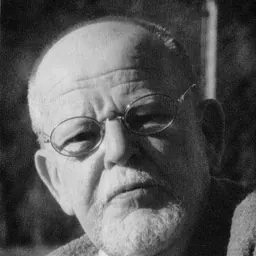
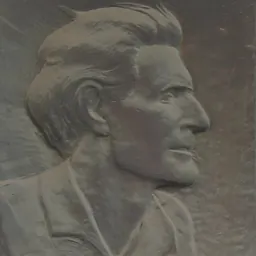

Contemporaries
People whose lives overlapped César Guerra-Peixe's

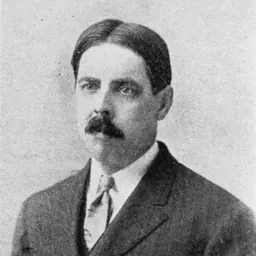

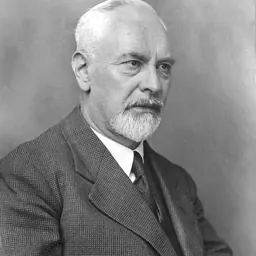
Frequently asked questions
Who was César Guerra-Peixe?
Brazilian musician (1914–1993)
When was César Guerra-Peixe born?
César Guerra-Peixe was born on 18 March 1914 in Petrópolis.
When did César Guerra-Peixe die?
César Guerra-Peixe died on 26 November 1993 in Rio de Janeiro, Petrópolis.
What was César Guerra-Peixe's occupation?
César Guerra-Peixe was a composer, conductor, ethnomusicologist, musicologist, violinist and musician.
What nationality was César Guerra-Peixe?
César Guerra-Peixe was Brazilian.
Sources & further reading
· Wikipedia: César Guerra-Peixe
Cite this page
APA: Biography.guide. (2026). César Guerra-Peixe. https://biography.guide/cesar-guerra-peixe/
MLA: "César Guerra-Peixe." Biography.guide, https://biography.guide/cesar-guerra-peixe/.
Chicago: "César Guerra-Peixe." Biography.guide. https://biography.guide/cesar-guerra-peixe/.
Data last updated: 2026-09-20 · Spot an error? Report a correction.
Page generated 2026-09-27 05:25 UTC