
About Çerkez Ethem
Lived 1886 – 1949 (aged 62–63). Çerkez Ethem was a Turkish military personnel and politician.
Çerkes Ethem (1886 – 21 September 1948, also known as Psheu Ethem; Adyghe language: Пщэу Iэтэм), known in English as Edhem the Circassian, was an Ottoman Circassian guerilla leader, social bandit, efe and soldier. He established the Kuva-yi Seyyare.
Initially siding with the Ankara Government, he put down multiple large-scale rebellions and gained several victories during the Turkish War of Independence. However, as Ethem's Islamic socialist views clashed with the Turkish nationalism of the Turkish National Movement, he cut ties with them to act independently, and was later attacked and defeated by İsmet İnönü. On 27 December 1920, Ethem was declared a "rebel" by the Ankara Government and on 26 January 1921, he surrendered to the Greek Army. After the Treaty of Lausanne, he moved to Greece and later travelled throughout the Middle East, seeking support to overthrow Mustafa Kemal.
He is widely considered one of the most prominent "traitors" in Turkish national historiography, despite his prominent role at key junctures in the independence war: after his fallout with Ataturk and İnönü, his collaboration with Greece and his undisguised dislike of the new nationalist regime meant that he would be seen as a villain by the nation-state they founded.
Early life and family His family, House of Dipsheu, was originally a famous pirate and bandit clan from the Ubykhia province of Circassia, who were exiled to Ottoman Empire in the 1860s during the Circassian genocide.
Ethem was born in the Emre village of Bandırma as the son of Psheu Ali Bey. He stood at 2.00 m (6 ft 7 in) tall.
Education and military career He ran away from home when he was 14 years old to join Bakırköy Cavalry Junior Officer School. He joined the Balkan War and was wounded on the Bulgarian front. As a result, he was awarded with honours and seniority allowance. Later he joined the Ottoman Special Organization organized by Eşref Kuşçubaşı and participated in operations in Afghanistan and Iraq during World War I. He was again wounded and retired to his village.
He later founded Kuvâ-yi Seyyâre which was the only organized military force in Anatolia during 1919–1920 period between the Armistice of Mudros and the Treaty of Sèvres. He coordinated his military operations with Ali Fuat Pasha in Ankara and harassed the Greek armies with his fast cavalry. He was instrumental in putting down various rebellions against the authority of the Grand National Assembly of Turkey. Çerkes Ethem was initially an ally of Mustafa Kemal Atatürk who appreciated him for his successful fight against invading Allied armies and bandits in different regions of Turkey. Atatürk awarded Ethem the Circassian with the title of Millî Kahraman (National Hero).
Kuva-yi Seyyare
The Kuvâ-yi Seyyâre was a force of Islamic socialist North Caucasian volunteers, led by Ethem against the allied invasion forces in Anatolia during the Turkish War of Independence. The group saw themselves as a force to fight against "those who caused disturbance to the greater good of Anatolia".
Surrender to the Greek Army and consequences According to Mustafa Kemal, Çerkes Ethem had entered into a feud with Ankara since August 1920. By November 1920, the dispute had escalated a lot. On 8 January 1920, Mustafa Kemal accused Ethem and his brothers, Tevfik and Reşit, of rebellious actions and of providing secrets to the Greek Army. On 26 January 1921, Ethem and his Kuva-yi Seyyare surrendered to the Greeks.
Ethem's defection was considered so egregious amongst Turkish nationalists of the time, that all Circassians were blamed. The head of the local gendarmerie in Manyas said that:
was already arguing by 1920 that Circassians desired to "crush the Turks" after Ahmet Anzavur's rebellion. After Ethem's defection he, too, blamed all Circassians for Ethem's departure, going even further by stating that:
Historian Сem Kumuk summarizes how many Circassians, as well as Abkhazians, were forced to flee the region after Ethem's defection, in fear of Turkish reprisals. He writes: "A large number of North Caucasian immigrants living in the Southern and Eastern Marmara regions began to worry about their future and sought refuge in Greece towards the end of 1921. These refugee groups, numbering around 4,000 people, were accommodated in Athens and Thessaloniki". Ethem and his brothers took part in a meeting of the "Association for the Strengthening of Near Eastern Circassian Rights", as representatives (amongst many others), producing a statement which read, partly, as follows:
On the contrary, Ethem's defection was welcomed by Greeks, despite his former operations against the Greek Army.
Later anti-Kemalist activities After the war, Ethem fled to the Greek islands near the Anatolian shore. Circassians supporting Greece were thousands, but they were not counted officially; estimates vary, but they might have numbered up to 20,000 in total. In February 1923, they also created the "Circassian Volunteer Corps of Mytilene", in order to support Greece if an attack on Thrace by Turkey happened. A 1923 correspondence report from Turkish military services suggested that Circassian dissidents, including Ethem and Eşref Sencer Kuşçubaşı, were expected to organize an attack with 20,000 Circassians and 8,000 Greek volunteers, though the report was likely exaggerated, as the Turkish government slowly started becoming extremely paranoid.
After the Treaty of Lausanne was officially signed and hostilities were over, Ethem lived in Athens and spent a lot of his time in Greek kafenia and breweries, discussing with other Circassian leaders. Alongside his brothers and several former officers, Ethem led one of the four anti-Kemalist organizations operating in Greece. He devised many plans to assassinate Mustafa Kemal and to overthrow the Kemalist government, supported initially by the Greek government, as well as other European governments.
In April 1925, he left Greece to go to Baghdad, British Iraq, using a Greek passport, in order to negotiate with Tahir al-Jazairi. In June–July 1925, he was in French Lebanon and Syria, first in Beirut and then in Aleppo, contacting associates and sending agents in Urfa. In 1928, he established contacts with Kurdish tribes in northern Iraq. He was buried in the Islamic cemetery. Before his death, he had requested for his grave to be unmarked and he was buried next to the wall of the cemetery.
Remembrance in literature In her 1928 work The Turkish Ordeal, Halide Edib Adıvar mentions the first time she saw Ethem the Circassian and how respected he was by Mustafa Kemal Atatürk in addition to describing Ethem Bey's physical appearance in a very positive way.
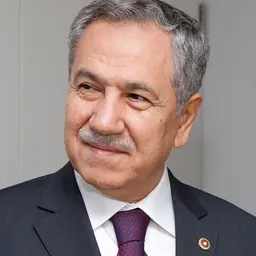
Exhumation and reburial plans In 2015, the deputy prime minister of Turkey, Bülent Arınç announced the planned exhumation and reburial of Ethem Bey in Turkey where he was born. This has not been carried out.
Don’t just read it —
keep it.
Full-length biographies made to live with: read them, listen on the way to work, watch them tonight.
- E-book
- Audio
- Video
Instant download · yours to keep · every purchase keeps this site free
Important facts
People in Çerkez Ethem's life
Named in this biography and alive at the same time


Related people
Same field, nearest in time




Contemporaries
People whose lives overlapped Çerkez Ethem's

Frequently asked questions
Who was Çerkez Ethem?
Turkish military leader (1886–1949)
When was Çerkez Ethem born?
Çerkez Ethem was born in 1886 in Bandırma.
When did Çerkez Ethem die?
Çerkez Ethem died on 7 October 1949 in Amman.
What was Çerkez Ethem's occupation?
Çerkez Ethem was a military personnel and politician.
What nationality was Çerkez Ethem?
Çerkez Ethem was Turkish.
Sources & further reading
Cite this page
APA: Biography.guide. (2026). Çerkez Ethem. https://biography.guide/cerkez-ethem/
MLA: "Çerkez Ethem." Biography.guide, https://biography.guide/cerkez-ethem/.
Chicago: "Çerkez Ethem." Biography.guide. https://biography.guide/cerkez-ethem/.
Data last updated: 2026-09-20 · Spot an error? Report a correction.
Page generated 2026-09-27 05:30 UTC