
About Céline Renooz
Lived 1840 – 1928 (aged 88). Céline Renooz was a Belgian writer, women's rights activist and editor.
Céline Renooz (7 January 1840 – 22 February 1928) was a Belgian feminist writer and activist known for her works on evolution, epistemology, and historiography.
After a troubled marriage and the birth of four children, Renooz left her husband to launch a writing career in Paris. In a prolific series of books, lectures, articles, and correspondence, she advocated for the demolition of patriarchal structures and viewpoints that oppressed women. Her philosophy, known as "neosophism," outlined an alternative, non-male-dominated approach to science, and championed matriarchy as the ideal social system. Her later works brought the neosophist approach to the field of historiography, critiquing male-centered societal narratives and suggesting a new feminist interpretation of historical events.
Renooz's theories were too radical for most feminists of her time, and her attempts to redesign the scientific method were not supported by women scientists with more formal training. Her ideas were largely dismissed and ignored by the male-dominated scientific establishment she criticized; her last works were written in poverty. However, Renooz was recognized as one of very few women who had become notable in French scientific circles, and regarded by feminist colleagues as a supporter in their campaigns against oppression.
Early life Renooz was born in Liège. Her mother was from Paris; her father was Emmanuel-Nicolas Renoz (he preferred this simplified spelling), a government-appointed notary who had played a significant role in the Belgian Revolution of 1830. Because of his politics, the Catholic Church did not give him a religious burial, a rejection which led to a public conflict between local Catholics and liberals.
Renooz's formal training was limited to the basic lessons typical of female education in the nineteenth century. In 1859, she married an engineering student, the son of a well-known and politically active Spanish banker. Though the Revue gathered a small group of enthusiastic contributors, including the physician Caroline Schultze, it was not a financial success and folded after a year.
The three volumes of La Nouvelle Science were published in book form in 1890. The first volume, La Force, outlined a new framework for understanding physics, with special attention paid to stellar evolution and the formation of carbon.
During the Dreyfus affair, Renooz was a Dreyfusard (supporter of Alfred Dreyfus's innocence), saying that both Dreyfus and herself had been shunned and unjustly treated by society. Between 1890 and 1913, she worked sporadically on an autobiography, Prédestinée: l'autobiographie de la femme cachée; it was never finished or published. In 1897, Renooz founded a society, the Société Néosophique, to help raise funds to publish her books. The book used anthropological and linguistic hypotheses to argue that women's contributions to early communities had been much more substantial than previously assumed, and that these contributions had been suppressed by later patriarchal societies. Similarly, she argued that the true founder of Christianity was a woman named Johana, portrayed in canonical scriptural texts as John the Baptist, and that Jesus was a myth invented by men anxious to assert dominance and prevent goddess worship. and with many other colleagues, including both supporters and skeptics of her theories. After a short period of illness,
Reception and legacy During her lifetime, Renooz's theory of neosophism had a small following of advocates, but it was largely rejected by feminists with more scientifically rigorous training, such as Madeleine Pelletier. Nevertheless, Pelletier treated Renooz fairly sympathetically, seeing her as an ally in the wider feminist struggle against oppression. Renooz and Royer were cited by contemporaries as the only women who had managed to make their names known in the heavily male-dominated world of French science.
Renooz's philosophy was far more radical than that of most nineteenth-century feminists, and her theories never achieved widespread acceptance. After her death, her works lapsed into obscurity. At the end of the twentieth century, however, some French feminists revived Renooz's writings, citing her as a predecessor.
Don’t just read it —
keep it.
Full-length biographies made to live with: read them, listen on the way to work, watch them tonight.
- E-book
- Audio
- Video
Instant download · yours to keep · every purchase keeps this site free
Important facts
People in Céline Renooz's life
Named in this biography and alive at the same time


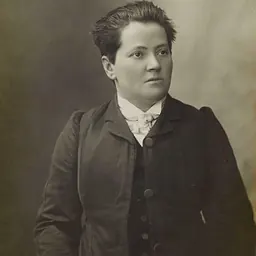
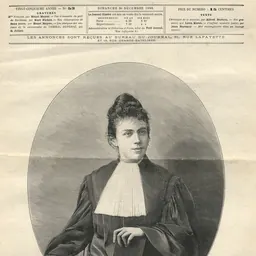
Related people
Same field, nearest in time
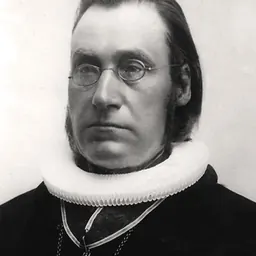
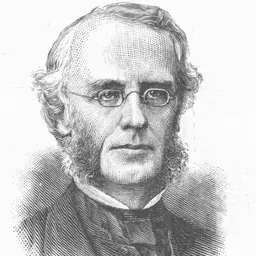
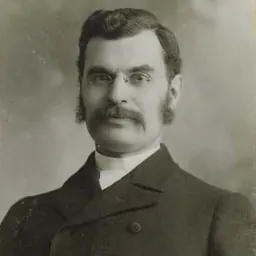
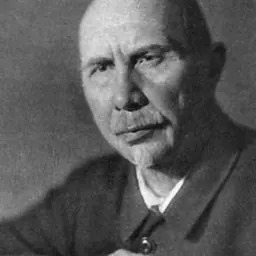
Contemporaries
People whose lives overlapped Céline Renooz's
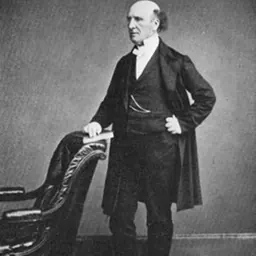
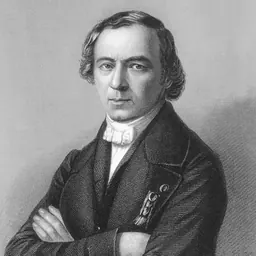

Frequently asked questions
Who was Céline Renooz?
Belgian writer, editor (1840-1928)
When was Céline Renooz born?
Céline Renooz was born on 7 January 1840 in Liège.
When did Céline Renooz die?
Céline Renooz died on 22 February 1928 in 16th arrondissement of Paris.
What was Céline Renooz's occupation?
Céline Renooz was a writer, women's rights activist and editor.
What nationality was Céline Renooz?
Céline Renooz was Belgian.
Sources & further reading
Cite this page
APA: Biography.guide. (2026). Céline Renooz. https://biography.guide/celine-renooz/
MLA: "Céline Renooz." Biography.guide, https://biography.guide/celine-renooz/.
Chicago: "Céline Renooz." Biography.guide. https://biography.guide/celine-renooz/.
Data last updated: 2026-09-26 · Spot an error? Report a correction.
Page generated 2026-09-27 05:16 UTC