
About Cecil Street
Lived 1884 – 1965 (aged 80–81). Cecil Street was a British writer and military officer.
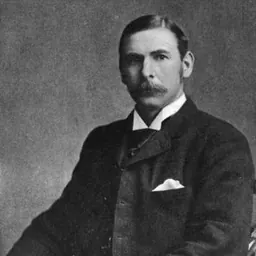
Cecil John Charles Street (3 May 1884 – 8 December 1964), also known as John Street, was a major in the British Army and a crime fiction novelist.
He began his military career as an artillery officer and during World War I, he became a propagandist for MI7. During the Irish War of Independence, he acted as an Information Officer for Dublin Castle alternating between Dublin and London and working closely with the British official Lionel Curtis. He later earned his living as a prolific writer of detective novels written under several pseudonyms including John Rhode, Miles Burton and Cecil Waye.
Early life, education, and career Street was born in Gibraltar to General John Alfred Street CB of Woking, and his second wife, Caroline, daughter of Charles Horsfall Bill of Storthes Hall, Yorkshire, head of a landed gentry family. Caroline had married comparatively late and her only son was born when she was thirty-five. General Street, having retired from the Army at the age of sixty-two just after his son's birth, died suddenly. Consequently, Street and his mother went to live with his maternal grandparents at their house in Firlands, Woking, which was "comfortably staffed with seven domestics". Street remained "modestly circumspect" about his privileged background in later life and valued "a man's personal accomplishments over his family heritage".
Street was educated in Wellington College, Berkshire and later in Royal Military Academy, Woolwich, and was commissioned into the Royal Artillery in 1903, before getting transferred to the Special Reserves. Before the First World War, he lived at Summerhill, a regency country mansion outside Lyme Regis (later owned by the Scottish educator A. S. Neill and run as a school, the name being subsequently used for his school at Leiston, Suffolk), where he was a shareholder in, and chief engineer for, the Lyme Regis Electric Light & Power Company.
He later served as a Captain in the Royal Garrison Artillery. He was wounded three times in combat and won the Military Cross for his services. As a Major, he headed a branch of British Military Intelligence and later, he acted as an Information Officer at the headquarters of the British administration, based in Dublin Castle.
Marriages In 1906, Street married Hyacinth Maud Kirwan, daughter of Major John Denis Kirwan of the Royal Artillery. They had a daughter, Verena Hyacinth Iris Street, who spent most of her life living with her grandmother and died in 1932 aged 25. The marriage was unsuccessful, with Maud suffering mental imbalance and getting admitted to a private asylum. They married in 1949, shortly after his first wife's death. They lived "a comfortable life together" living in "attractive older homes" including The Orchards, Laddingford, Kent, and Swanton Novers, Norfolk.
Novelist
John Street wrote three series of novels; one under the name of John Rhode, mostly featuring the mathematics professor Dr. Lancelot Priestley; such as analysing the mud on suspects' shoes.
Notable crime fiction critic Julian Symons considered Street to be a prominent member of the "Humdrum" school of detective fiction. According to Symons, "Most of them [the "Humdrums"] came late to writing fiction, and few had much talent for it. They had some skill in constructing puzzles, nothing more, and ironically they fulfilled much better than S. S. Van Dine his dictum that the detective story properly belonged in the category of riddles or crossword puzzles. Most of the Humdrums were British, and among the best known of them were Major John Street." The historian Jacques Barzun was more positive towards Street, praising several Rhode books in particular, even though he reviewed only a small proportion of the more than 140 novels written by Street.
In recent years, copies of many Rhode and Burton books have become hard to obtain and are highly sought after by collectors, often commanding "eye-wateringly" high prices.
The only detailed account of Street's life and works was written by the crime fiction historian Curtis Evans in his 2012 book Masters of the "Humdrum" Mystery who wrote the book "in part to give a long overdue reappraisal of these purportedly "humdrum" detection writers as accomplished literary artists. Not only did they produce a goodly number of fine fair play puzzles, but their clever tales have more intrinsic interest as social documents and even sometimes as literary novels than they have been credited with having."
Don’t just read it —
keep it.
Full-length biographies made to live with: read them, listen on the way to work, watch them tonight.
- E-book
- Audio
- Video
Instant download · yours to keep · every purchase keeps this site free
Important facts
People in Cecil Street's life
Named in this biography and alive at the same time





Related people
Same field, nearest in time

Contemporaries
People whose lives overlapped Cecil Street's

Frequently asked questions
Who was Cecil Street?
British writer (1884–1965)
When was Cecil Street born?
Cecil Street was born in 1884 in Gibraltar.
When did Cecil Street die?
Cecil Street died in 1965 in Seaford.
What was Cecil Street's occupation?
Cecil Street was a writer and military officer.
What nationality was Cecil Street?
Cecil Street was British.
Sources & further reading
Cite this page
APA: Biography.guide. (2026). Cecil Street. https://biography.guide/cecil-street/
MLA: "Cecil Street." Biography.guide, https://biography.guide/cecil-street/.
Chicago: "Cecil Street." Biography.guide. https://biography.guide/cecil-street/.
Data last updated: 2026-09-20 · Spot an error? Report a correction.
Page generated 2026-09-27 05:05 UTC