
About Cecil Harcourt Smith
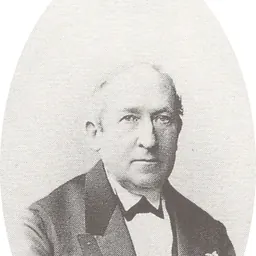
Lived 1859 – 1944 (aged 84). Cecil Harcourt Smith was a British anthropologist, art historian and archaeologist.
Sir Cecil Harcourt-Smith (11 September 1859 – 27 March 1944) was a British archaeologist and museum director. He was Keeper of Greek and Roman Antiquities at the British Museum from 1904 to 1909, and Director of the Victoria and Albert Museum from 1909 to 1924.
Early years Born on 11 September 1859 in Staines, Middlesex, Harcourt-Smith was the second son of William Smith, solicitor, and his wife, Harriet, daughter of Frederic Harcourt, of Ipswich. He attended Winchester College (1873–78) as a scholar. In 1879 he joined the department of Roman and Greek antiquities in the British Museum. He soon became known as a rising archaeologist, and in 1887 was a founder editor and contributor to the Classical Review.
In 1887 Harcourt-Smith was attached to the diplomatic mission in Persia. In 1892 he married Alice Edith, daughter of H. W. Watson of Burnopfield, Co. Durham. They had two sons, Simon and Gilbert. His report was so highly approved of that he was offered the post of director and secretary under the new organization, and in 1909 he accepted the appointment. The newly completed building gave scope for a more orderly display of the collections; the administration of the museum and its staff was set upon more modern lines, and the objects were grouped according to their material rather than, as in many great museums, by nationality or period. This method of grouping objects lasted until the evacuation of 1939 when they were grouped chronologically by Sir Leigh Ashton.
Harcourt-Smith remained at the Victoria and Albert Museum until his retirement in 1924. During this time he introduced many improvements. He raised the status of the technical staff and negotiated for them the same rank and pay as the officials of the British Museum. He added students' rooms to all departments, and a steady stream of catalogues and guides was begun. Official guide lecturers were instituted and sponsored special exhibitions such as the Franco-British Exhibition of 1921 were introduced. It was under his directorship that the museum acquired the Salting collection, the Rodin sculptures (now transferred to the Tate Gallery), the Talbot Hughes collection of costumes, the Alma Tadema library, the Le Blon Korean pottery and the Pierpont Morgan stained glass.
Other offices A year after his retirement Harcourt-Smith was appointed advisor for the Royal Art Collections and from 1928 until 1936 he was also Surveyor of the Royal Works of Art. He played a leading part in the foundation of the Central Committee for the Care of Churches, he was chairman of the committee of the Incorporated Church Building Society, and vice-chairman of the British Institute of Industrial Art and the British Society of Master Glass Painters. He was also vice-president of the Hellenic Society, president of the Society of Civil Servants and British representative on the International Office of Museums. He was an honorary member of the British Drama League and an honorary associate of the Royal Institute of British Architects.
As well as contributing to many of the British Museum departmental catalogues, Harcourt-Smith wrote for the art journals and also published a number of monographs: The Collection of J. Pierpont Morgan (1913), The Art Treasures of the Nation (1929), and The Society of the Dilettanti: its Regalia and Pictures (1932).
Hracourt-Smith was knighted in 1909, appointed CVO in 1917, and advanced to KCVO in 1934. He died on 27 March 1944 at age 84.
Don’t just read it —
keep it.
Full-length biographies made to live with: read them, listen on the way to work, watch them tonight.
- E-book
- Audio
- Video
Instant download · yours to keep · every purchase keeps this site free
Important facts
People in Cecil Harcourt Smith's life
Named in this biography and alive at the same time




Related people
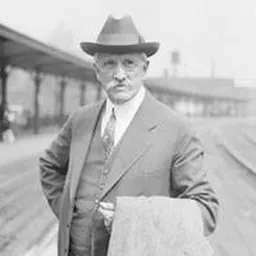
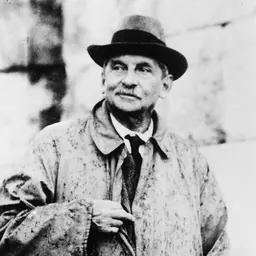
Same field, nearest in time




Contemporaries
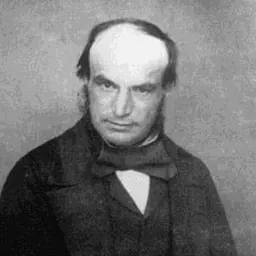
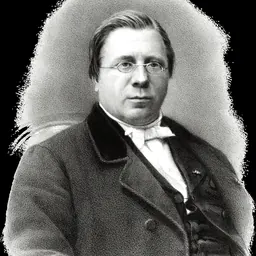
People whose lives overlapped Cecil Harcourt Smith's



Frequently asked questions
Who was Cecil Harcourt Smith?
British archaeologist (1859–1944)
When was Cecil Harcourt Smith born?
Cecil Harcourt Smith was born on 11 September 1859 in Staines-upon-Thames.
When did Cecil Harcourt Smith die?
Cecil Harcourt Smith died on 27 March 1944 in Surrey.
What was Cecil Harcourt Smith's occupation?
Cecil Harcourt Smith was an anthropologist, art historian and archaeologist.
What nationality was Cecil Harcourt Smith?
Cecil Harcourt Smith was British.
Sources & further reading
· Wikipedia: Cecil Harcourt Smith
· DBpedia: Cecil Harcourt-Smith
Cite this page
APA: Biography.guide. (2026). Cecil Harcourt Smith. https://biography.guide/cecil-harcourt-smith/
MLA: "Cecil Harcourt Smith." Biography.guide, https://biography.guide/cecil-harcourt-smith/.
Chicago: "Cecil Harcourt Smith." Biography.guide. https://biography.guide/cecil-harcourt-smith/.
Data last updated: 2026-09-25 · Spot an error? Report a correction.
Page generated 2026-09-27 05:11 UTC