
About Cazuza
Lived 1958 – 1990 (aged 32). Cazuza was a Brazilian singer-songwriter, singer, composer, songwriter, poet and writer.
Agenor de Miranda Araújo Neto, better known as Cazuza (; April 4, 1958 – July 7, 1990), was a Brazilian singer-songwriter, born in Rio de Janeiro. Along with Raul Seixas, Renato Russo and Os Mutantes, Cazuza, both while fronting Barão Vermelho and at solo career, is considered one of the best exponents of Brazilian rock music. In his 9-year career, he sold more than 5 million albums and achieved 11 number one singles and 18 Top 10 singles in Brazil.
Biography
Early life and influences Son of the record producer João Araújo and the amateur singer Maria Lúcia Araújo, Cazuza always had close contact with music. Influenced since early childhood by the strong values of Brazilian music, he had a special preference for the sad, dramatic overtones of Cartola, Lupicinio Rodrigues, Dolores Duran, and Maysa. He began to write lyrics and poems around 1965. In late 1974, a vacation in London, England, acquainted him with the music of Led Zeppelin, Janis Joplin and The Rolling Stones, and he soon became a great fan. Cazuza enrolled in college in 1978, but abandoned the course of journalism three weeks later to work with his father at Som Livre. He moved later to San Francisco, where he came in contact with Beat literature, becoming highly influenced by it.
Barão Vermelho In 1980 he returned to Rio, where he worked with the theatrical group Asdrúbal Trouxe o Trombone (Asdrúbal Brought the Trombone). There he was noticed by the novice singer/composer Léo Jaime, who introduced him to a beginning rock band that needed a vocalist, the Barão Vermelho (Red Baron). With this very successful eighties Brazilian rock band, who had their greatest success with "Bete Balanço", a song that was part of the soundtrack of a film, Cazuza began his career as a singer. In 1985, Cazuza took part in Rock in Rio with Barão Vermelho, and around this time, Caetano Veloso claimed he was the greatest Brazilian poet of his generation. It was also in this same year that Cazuza was infected with the HIV virus, precipitating his desire to leave the band to obtain a greater freedom in composition and expression, both musically and lyrically.
Solo career After he left the band, Cazuza's music began to diversify, incorporating elements of the blues in songs such as "Blues da Piedade" (Blues of Compassion), "Só as mães são felizes" (Only Mothers Are Happy) and "Balada da Esplanada" (Ballad of the Esplanade), which was based on a poem of the same name by Oswald de Andrade; showcasing increasingly intimate lyrics, like those in "Só se for a Dois" (Just the two of us), as well as opening itself up to influences from Brazilian pop music with interpretations of Cartola's "O Mundo é um Moinho" (The World is a Windmill), Raul Seixas's "Cavalos Calados" (Silent Horses) and Caetano Veloso's "Esse Cara" (This Guy).
Cazuza's solo career proved to be more successful than that of his former group. "Exagerado" (Exaggerated), "O Tempo não Pára" (Time Doesn't Stop), and "Ideologia" (Ideology) were his greatest hits and proved to be a great influence on subsequent Brazilian musicians.
Cazuza co-wrote the song "Preciso Dizer que Te Amo" with Bebel Gilberto which was released in 1986 on her self-titled EP. The song was also featured posthumously in the 1996 AIDS benefit album Red Hot + Rio produced by the Red Hot Organization in a duet with Bebel Gilberto.
Final years In 1989, he admitted publicly for the first time that he had AIDS and released his last album in life: Burguesia. Cazuza was openly bisexual but was not active in the LGBT movement. However, his openness about being a person with AIDS helped to change public perceptions and attitudes about HIV/AIDS prevention and treatment.
Death
Cazuza died in Rio de Janeiro on July 7, 1990, at the age of 32, due to a septic shock caused by AIDS. He was buried at the Cemitério São João Batista in Botafogo, Rio de Janeiro. Cazuza's mother set up the Viva Cazuza Society (Sociedade Viva Cazuza), a charity which sponsors AIDS prevention and provides a home for HIV-positive children.
Cazuza is also depicted in the 2025 Globoplay documentary series Cazuza Além da Música, directed by Patrícia Guimarães.
Discography
With Barão Vermelho 1982: Barão Vermelho 120,000 – Gold 1983: Barão Vermelho 2 180,000 – Gold 1984: Bete Balanço (Original Soundtrack) 1984: Maior Abandonado 800,000 – Platinum 1992: Barão Vermelho Ao Vivo
Solo 1985: Exagerado 750,000 – Platinum 2x 1987: Só Se For a Dois 600,000 – Platinum 1988: Ideologia 2,000,000 – Diamond 1988: O tempo não pára 1,800,000 – Diamond 1989: Burguesia 850,000 – Platinum 2x 1991: Por aí 600,000 – Platinum 2005: O Poeta Está Vivo – Ao Vivo no Teatro Ipanema 1987 250,000 – Platinum
Films Bete Balanço, 1984 Um Trem para as Estrelas, 1988 Cazuza - O Tempo Não Pára, 2004 (biopic)
Don’t just read it —
keep it.
Full-length biographies made to live with: read them, listen on the way to work, watch them tonight.
- E-book
- Audio
- Video
Instant download · yours to keep · every purchase keeps this site free
Important facts
People in Cazuza's life
Named in this biography and alive at the same time
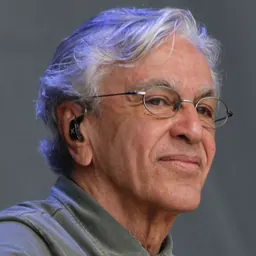
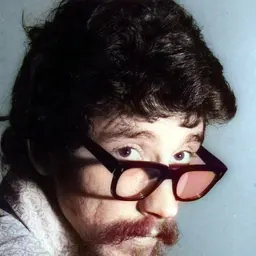

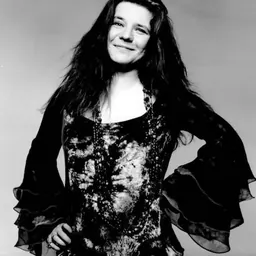




Related people
Same field, nearest in time


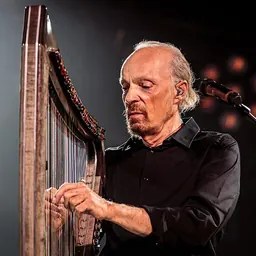

Contemporaries
People whose lives overlapped Cazuza's


Frequently asked questions
Who was Cazuza?
Brazilian composer and singer (1958–1990)
When was Cazuza born?
Cazuza was born on 4 April 1958 in Rio de Janeiro.
When did Cazuza die?
Cazuza died on 7 July 1990 in Rio de Janeiro.
What was Cazuza's occupation?
Cazuza was a singer-songwriter, singer, composer, songwriter, poet and writer.
What nationality was Cazuza?
Cazuza was Brazilian.
Sources & further reading
Cite this page
APA: Biography.guide. (2026). Cazuza. https://biography.guide/cazuza/
MLA: "Cazuza." Biography.guide, https://biography.guide/cazuza/.
Chicago: "Cazuza." Biography.guide. https://biography.guide/cazuza/.
Data last updated: 2026-09-20 · Spot an error? Report a correction.
Page generated 2026-09-27 05:30 UTC