
About Cátulo Castillo
Lived 1906 – 1975 (aged 69). Cátulo Castillo was an Argentine composer, poet and writer.
Ovidio Cátulo González Castillo (6 August 1906 – 19 October 1975) was an Argentine poet and tango music composer. He was the author of many famous works, such as , El aguacero (lyrics by ), and Caserón de tejas (both with music by Sebastián Piana), María and (both with music by Aníbal Troilo), and El último café (with music by Héctor Stamponi). The tango La calesita, which he composed with Mariano Mores, inspired the film of the same name directed in 1962 by Hugo del Carril.
His father, José González Castillo, an anarchist, wanted to list himself in the civil registry as Descanso Dominical González Castillo, but was convinced by his friends not to, and kept his other name. As an infant, Cátulo lived in Chile, where his father was exiled because of his anarchist ideology. He returned to Argentina in 1913. Cátulo later affiliated with the Communist Party.
Professional career
Cátulo composed Organito de la tarde, his first tango, at the age of 17.
In 1926, he traveled to Europe, where he would later conduct his own orchestra.
During the 1940s and 1950s, when tango was at its peak, he dedicated himself to poetry and wrote with distinguished composers: Mores (Patio de la Morocha), Armando Pontier (Anoche), Pugliese (Una vez), Sebastián Piana (Tinta roja and Caserón de tejas), and his main collaborator after 1945: Aníbal Troilo (María, La última curda, Una canción).
He wrote for many journals, published the book Danzas Argentinas in 1953, composed songs for different films, wrote the lyrical sainete El Patio de la Morocha (with music by Troilo),
In 1953, he became president of the National Commission of Culture of the Nation. Two years later, the military government, the so-called Revolución Libertadora, stripped him of everything he had achieved. His wife, Amanda Pelufo, recalls those times:
Because of persecution by Pedro Eugenio Aramburu's government, he had to abandon his profession. Included on blacklists with dozens of other tangueros like Hugo de Carril, Nelly Omar, , Anita Palmero, and Chola Luna, among others, he was persecuted for his political ideas, and did not return to work until the regime's fall.
With the political thaw in the 1960s, Cátulo returned to his former activity. He continued composing, writing radical screenplays, and working in SADAIC. He published the novel Amalio Reyes, un hombre, which became a film directed by Hugo del Carril.
In 1974, he was named Illustrious Citizen of Buenos Aires. Upon receiving the award, he told a short fable:
Death He died 19 October 1975 from a heart attack.
Filmography
Author El patio de la morocha (1951) La calesita (1963) Amalio Reyes, un hombre (1970) (1999)
Music Internado (1935) Juan Moreira (1936) (1940) Arrabalera (1950)
Soundtracks Ayúdame a vivir (1936) Eclipse de sol (1942) Buenos Aires a la vista (1950) To Live for a Moment (1951) La muerte flota en el río (1956) (1989)
Texts Ésta es mi Argentina (1974)
Don’t just read it —
keep it.
Full-length biographies made to live with: read them, listen on the way to work, watch them tonight.
- E-book
- Audio
- Video
Instant download · yours to keep · every purchase keeps this site free
Important facts
People in Cátulo Castillo's life
Named in this biography and alive at the same time
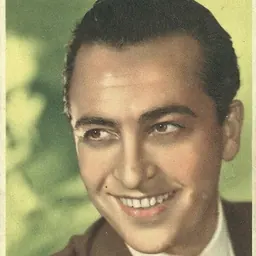
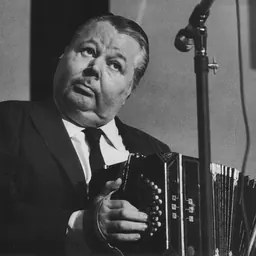




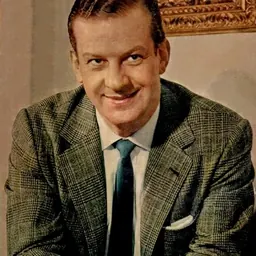
Related people
Same field, nearest in time




Contemporaries
People whose lives overlapped Cátulo Castillo's


Frequently asked questions
Who was Cátulo Castillo?
Argentine poet and composer (1906-1975)
When was Cátulo Castillo born?
Cátulo Castillo was born on 6 August 1906 in Buenos Aires.
When did Cátulo Castillo die?
Cátulo Castillo died on 19 October 1975 in Buenos Aires.
What was Cátulo Castillo's occupation?
Cátulo Castillo was a composer, poet and writer.
What nationality was Cátulo Castillo?
Cátulo Castillo was Argentine.
Sources & further reading
Cite this page
APA: Biography.guide. (2026). Cátulo Castillo. https://biography.guide/catulo-castillo/
MLA: "Cátulo Castillo." Biography.guide, https://biography.guide/catulo-castillo/.
Chicago: "Cátulo Castillo." Biography.guide. https://biography.guide/catulo-castillo/.
Data last updated: 2026-09-20 · Spot an error? Report a correction.
Page generated 2026-09-27 05:25 UTC