
About Catherine (Kate) Baker
Lived 1861 – 1953 (aged 92). Catherine (Kate) Baker was an Australian teacher and biographer, known for Joseph Furphy.
Catherine Baker (23 April 1861 – 7 September 1953) was an Irish-born Australian teacher best known for championing the work of her friend Joseph Furphy, whose novel Such Is Life had received an indifferent reception upon its initial publication in 1909 but was later embraced by critics and the public. Miles Franklin incorporated Baker's recollections into the essay "Who Was Joseph Furphy?", which won the S. H. Prior Memorial Prize in 1939. Baker was appointed an OBE in 1937 for her efforts in promoting Furphy's work and to broader Australian literature. She was an influential part of the Australian literary scene, supporting, writing to and encouraging writers such as Ada Cambridge, Victor Kennedy, Edith Coleman, the poet Marie E. J. Pitt, journalist Alice Henry and the poet John Shaw Neilson. She was made a life member of the Henry Lawson Society, and honoured with a bronze plaque by the society in 1936. Shortly before her death in 1953 she was made vice-president of the Australian Council for Civil Liberties.
Early life and career Baker was born on 23 April 1861 in Cappoquin, Ireland, to Catherine Baker and Francis Wilson Baker, a heraldic painter.
Meeting and correspondence with Joseph Furphy
Whilst teaching at Wanalta school she boarded at the home of the parents of pupil Isaac Furphy, before the next year moving to board with the parents of Joseph Furphy in Burramboot East. Before leaving her lodgings to move to Melbourne, Baker was delayed for three days due to weather. Joseph Furphy, who had been working outdoors, returned home for several days, and the two met. The encounter made a lasting impression on Baker, who later recalled to reporter J. K. Ewers that Furphy "had much the same style in speaking as in writing, discursive, breaking into side issues, but ever returning to the main topic", and that "at the time of meeting him I compared him in my mind to the gentle scholar in Longfellow's Tales of a Wayside Inn. Later, knowing him more perfectly, I likened him to Leonardo da Vinci...".
After moving back to Melbourne to teach at her old school in North Williamstown In 1914, after part the original edition of Such Is Life was found at The Bulletin under some lumber, she purchased the remaining 825 unbound copies of the novel for £60 and began arranging to have it republished by The Specialty Press as a second edition with a preface by Vance Palmer. Palmer responded to Miles's criticisms in an open letter, which he concluded by noting that "probably Joseph Furphy's work would have been left for some antiquarian in the Mitchell Library to unearth if it had not been for the enlightened energy of Miss Kate Baker" and that "not all writers are lucky enough to have such a devoted friend to act as their literary trustee." Miles Franklin later requoted the phrase, adding the word "gallant".
In November 1929, J. K. Ewers wrote a series of articles about Australian authors entitled "Pioneers of the Pen", In 1931 Baker campaigned to establish a plaque on the site of the house where Furphy grew up, which was by then the Yarra Glen primary school. Miles Franklin was no less cutting, writing in The Bulletin that "the cover is a nice blue, the dust jacket in mourning hue ― appropriately, I feel". Amongst her criticisms was the removal of the ironic use of parentheticals whenever a swear-word was mentioned, which was a comic technique used by Furphy that poked fun at the censors of the time; the removal of references easily understood by Australians but which might not have been clear to an English audience; and what seemed a lack of understanding of Australian humour of the time, heavily used in Furphy's work. She wrote that "if such 'editing' of this nobly indigenous work was the only way to gain English attention for it, then our very feeble stature as colonial writers is painfully exposed." She found, however, that the abridgement was not what she had expected. Despite her friendship with the Palmers, she wrote to The Bulletin on 9 June 1937 that she had told the publishers that "I am pleased with the book's format ― its paper, the printing, the binding; the editor has certainly kept the continuity of the story, and has written a plain, unvarnished tale that will no doubt be pleasing to the British public; but it is Joseph Furphy's Such Is Life." She further wrote that "I hope the book will sell well in England. I fear Australian connoisseurs will resent it fiercely." Franklin also found Baker to be trying, not least because by this point Baker was growing increasingly deaf – on 13 February 1939 she wrote in her diary "Hot day. The fatigue of trying to get K.B. [Kate Baker] to hear is killing. She has no idea of literary procedure or construction and one can't yell a notion into her deafness." In spite of this, Baker believed it was more important that it furthered Furphy's cause and so swallowed her pride. When Franklin was given a Commonwealth Literary Fund (CLF) grant, Baker continued to check primary manuscripts to allow Franklin to write the 1944 biography Joseph Furphy: the Legend of a Man and His Book, the same year as an unabridged version of This is Life was released. Franklin acknowledged Baker's contribution as she ensured that the biography was credited as being authored "in association with Kate Baker".
Later life In later life Baker remained active in the Australian literary scene. In 1942 she presented to the Australian National Library an unpublished manuscript of biographical essays entitled Silhouettes on notable figures of Australian literature. These included the novelist Ada Cambridge, Victor Kennedy, Edith Coleman, the poet Marie E. J. Pitt, Joseph Furphy, journalist Alice Henry and the poet John Shaw Neilson.
Cited sources
Don’t just read it —
keep it.
Full-length biographies made to live with: read them, listen on the way to work, watch them tonight.
- E-book
- Audio
- Video
Instant download · yours to keep · every purchase keeps this site free
Important facts
People in Catherine (Kate) Baker's life
Named in this biography and alive at the same time

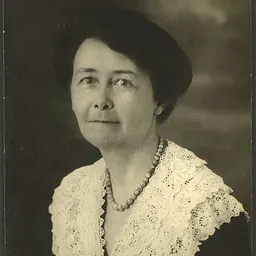

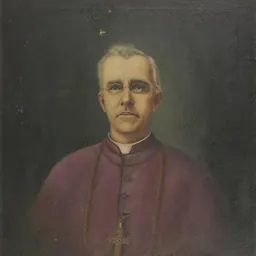


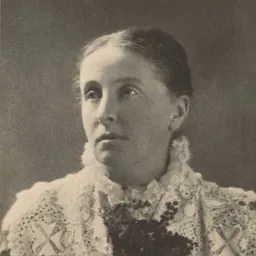
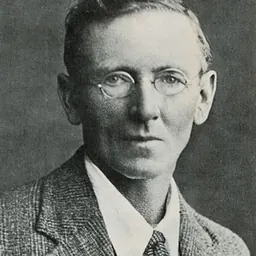
Related people
Same field, nearest in time


Contemporaries
People whose lives overlapped Catherine (Kate) Baker's



Frequently asked questions
Who was Catherine (Kate) Baker?
Irish-born Australian teacher (1861-1953)
When was Catherine (Kate) Baker born?
Catherine (Kate) Baker was born on 23 April 1861 in Cappoquin.
When did Catherine (Kate) Baker die?
Catherine (Kate) Baker died on 7 September 1953 in Camberwell, Victoria.
What was Catherine (Kate) Baker's occupation?
Catherine (Kate) Baker was a teacher and biographer.
What was Catherine (Kate) Baker known for?
Catherine (Kate) Baker was known for Joseph Furphy.
What nationality was Catherine (Kate) Baker?
Catherine (Kate) Baker was Australian.
Sources & further reading
· Wikipedia: Catherine (Kate) Baker
Cite this page
APA: Biography.guide. (2026). Catherine (Kate) Baker. https://biography.guide/catherine-kate-baker/
MLA: "Catherine (Kate) Baker." Biography.guide, https://biography.guide/catherine-kate-baker/.
Chicago: "Catherine (Kate) Baker." Biography.guide. https://biography.guide/catherine-kate-baker/.
Data last updated: 2026-09-22 · Spot an error? Report a correction.
Page generated 2026-09-27 05:28 UTC