
About Carroll Izard
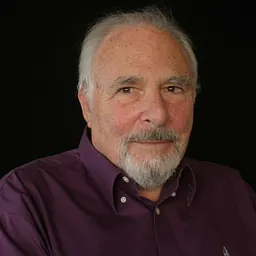
Lived 1924 – 2017 (aged 92–93). Carroll Izard was an American psychologist.
Carroll Ellis Izard (October 8, 1923 – February 5, 2017) was an American research psychologist known for his contributions to differential emotions theory (DET), and the Maximally Discriminative Affect Coding System (MAX) on which he worked with Paul Ekman. Izard also undertook empirical studies into the facial feedback hypothesis according to which emotions which have different functions also cause facial expressions which in turn provide us with cues about what emotion a person is feeling. In addition, Izard constructed a multidimensional self-report measure – the Differential Emotions Scale – currently in its 4th edition (DES-IV). His later research focused on emotional development in young children and the development and testing of his Emotions Course for Young Children.
Works Izard is noted for contributions to the developmental research on emotion. In 1971, Izard - along with colleagues - conducted groundbreaking research on this subject, which challenged the then established theory that emotions were undifferentiated and also validated universally recognizable expressions. He also defined personality as an interrelated system and that emotion is one of the core components that also include homoeostatic, motor, perceptual, and cognitive systems. As many experts maintain that emotions unfold gradually alongside the development of the nervous system, Izard maintained that even infants who are 10 weeks old are capable of several basic emotions. Izard's 1977 theory of emotion identified ten primary and discrete emotions: fear, anger, shame, contempt, disgust, guilt, distress, interest, surprise, and joy. One of Izard's major theoretical competitors, Robert Plutchik, proposed that all the distinctive emotions Izard put forth were primary except shame and guilt. Izard postulated that these ten fundamental emotions cannot be reduced to more basic emotions but can be combined to produce other emotions, just like primary colors could be combined to create different colors. He theorized that each emotion was an intra-individual process or a conscious feeling state marked by its neurobiological activity and expression pattern like distinct facial expressions.
Books Face of Emotion. (1993). Irvington Publishers. The Psychology of Emotions. (1991). New York: Plenum. Human Emotions. (1977). New York: Plenum. Patterns of Emotions: A New Analysis of Anxiety and Depression. (1972). New York: Academic. The Face of Emotion. (1971). New York: Appleton-Century-Crofts. Depression in Young People: Developmental and Clinical Perspectives. (1985). Guilford. (with Michael Rutter) Emotions, Cognition and Behavior. (1984). Cambridge University Press. (with Jerome Kagan) Measuring Emotions in Infants and Children: Vol. 1. (1982). Cambridge University Press.
Don’t just read it —
keep it.
Full-length biographies made to live with: read them, listen on the way to work, watch them tonight.
- E-book
- Audio
- Video
Instant download · yours to keep · every purchase keeps this site free
Important facts
People in Carroll Izard's life
Named in this biography and alive at the same time



Related people
Same field, nearest in time



Contemporaries
People whose lives overlapped Carroll Izard's


Frequently asked questions
Who was Carroll Izard?
American psychologist
When was Carroll Izard born?
Carroll Izard was born in 1924.
When did Carroll Izard die?
Carroll Izard died on 5 February 2017.
What was Carroll Izard's occupation?
Carroll Izard was a psychologist.
What nationality was Carroll Izard?
Carroll Izard was American.
Sources & further reading
Cite this page
APA: Biography.guide. (2026). Carroll Izard. https://biography.guide/carroll-izard/
MLA: "Carroll Izard." Biography.guide, https://biography.guide/carroll-izard/.
Chicago: "Carroll Izard." Biography.guide. https://biography.guide/carroll-izard/.
Data last updated: 2026-09-20 · Spot an error? Report a correction.
Page generated 2026-09-27 05:23 UTC