
About Carol Weiss King
Lived 1895 – 1952 (aged 56). Carol Weiss King was an American lawyer and jurist, known for Gerhart Eisler, Harry Bridges and J. Peters.
Carol Weiss King (24 August 1895 – 22 January 1952) was a well-known immigration lawyer, renowned for her advocacy in defending the civil rights of immigrants, key founder of the International Juridical Association, and a founding member of the National Lawyers Guild in the United States. Her left-leaning career spanned from the Palmer Raids to the McCarthy Era.
Background
Born on August 24, 1895, Carole Therese Weiss was the youngest child of Samuel William Weiss and Carrie Stix. Her father was a founder of the law firm of Frank and Weiss (1875–1880), then practiced alone (1880–1910). Her eldest brother, William S. Weiss, continued their father's firm until forced to stop by multiple sclerosis. Another older brother, Louis S. Weiss, also entered his father's firm, which developed into Paul, Weiss, Rifkind, Wharton & Garrison. In 1914, she was known as "man-hating" yet managed to appear "resplendent" for the Sophomore Dance. She also joined the managing board of the Barnard Bulletin, whereafter her name appeared as an associate editor. In 1914–15, she was active in the English Club. In 1915, she was involved in the Social Science League, which discussed theories of Scott Nearing and for which she was running as secretary-treasurer. For the Athletic Club, she served as pitcher in 1914.
In 1916, she was among many who had not paid her Athletic Association dues but was in good enough standing to appear listed as a member in the yearbook as well as a committee member for Greek Games. She graduated in 1916. In 1917, Weiss entered law school and in 1920 graduated with a J.D. degree from New York University; her brother Louis graduated with a BA in law from Columbia University, although he started law school a year earlier.
Career By the end of 1916, Weiss was "doing volunteer work for the American Association for Labor Legislation." In 1917, she was a volunteer research assistant for the American Civil Liberties Union (ACLU).
In 1924, the communist Daily Worker newspaper listed her as one of their most successful solicitors of subscriptions. One of Carol Weiss King's first and most durable relationships was with Pollak, a onetime partner of Benjamin Cardozo, whom she met through her brother-in-law Carl Stern. King, Pollak and Stern worked on the Scottsboro Boys cases, which Pollak successfully argued in the U.S. Supreme Court, among other cases. ) King also associated with left-wing activists, including members of the Communist Party of the United States of America.
In 1924, she began to edit the Law and Freedom Bulletin an ACLU digest that recorded state and federal cases involving significant questions of constitutional law.
In 1937, she helped found the National Lawyers Guild.
Cases
King supported several United States Supreme Court cases including Powell v. Alabama (1932) (the first Scottsboro Boys case) and Herndon v. Lowrey (1937). exemplifies her success in enlisting other (male) attorneys to work for free on key constitutional cases — in this case, recruiting Wendell Willkie, the 1940 Republican Party presidential nominee, to represent Schneiderman before the Supreme Court. King won this case in 1943, preventing the Government's revocation of the Communist Party leader's citizenship.
Gerhart Eisler 1947 King also represented Gerhart Eisler in his trial in July 1947. She accused FBI agent, Robert J. Lamphere, of framing Eisler. After only a few hours of deliberation, the jury brought in a guilty verdict and he was sentenced to a year in prison. Lamphere asked Eisler as the court was adjourning, "Gerhart, do you think you got a fair trial?" He replied: "Yes, a fair trial but an unfair indictment." Lamphere later recalled: "It was the last time I saw Eisler in person; in a way, I almost liked him - his bravado was astonishing."
J. Peters 1948
King also defended "red conspirator" J. Peters against the INS (named by Louis Budenz and Whittaker Chambers as mastermind of a Soviet underground spy ring operating in Washington, DC, during the 1930s and 1940s) and counseled Peters on how to testify before the House Un-American Activities Committee (HUAC) (1948–1949).
Although the J. Peters case was among the best known of King's career, Ann Fagan Ginger makes only a single reference to it in her biography of more than 500 pages.
King herself made only one appearance before the Supreme Court, in Butterfield v. Zydok (342 U.S. 524, 1952), which she lost. Her husband died of pneumonia in 1930, leaving her a widow with one son—and her work. )
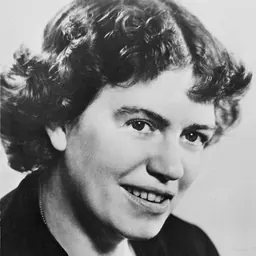
The Federal Bureau of Investigation (FBI) kept King under surveillance due to her close communist associations. Other alumnae who appeared in that article include poet Leonie Adams Troy ('22), author Irma Simonton Black ('27), and Margaret Mead ('23).
The National Lawyers Guild's Immigration Project presents the Carol King award each year in Ms. King's honor to an outstanding immigration advocate.
Don’t just read it —
keep it.
Full-length biographies made to live with: read them, listen on the way to work, watch them tonight.
- E-book
- Audio
- Video
Instant download · yours to keep · every purchase keeps this site free
Important facts
Family & relationships
People in Carol Weiss King's life
Named in this biography and alive at the same time


Related people
Same field, nearest in time

Contemporaries
People whose lives overlapped Carol Weiss King's

Frequently asked questions
Who was Carol Weiss King?
American lawyer and activist (1895-1952)
When was Carol Weiss King born?
Carol Weiss King was born on 24 August 1895 in New York City.
When did Carol Weiss King die?
Carol Weiss King died on 22 January 1952.
What was Carol Weiss King's occupation?
Carol Weiss King was a lawyer and jurist.
What was Carol Weiss King known for?
Carol Weiss King was known for Gerhart Eisler, Harry Bridges and J. Peters.
What nationality was Carol Weiss King?
Carol Weiss King was American.
Sources & further reading
Cite this page
APA: Biography.guide. (2026). Carol Weiss King. https://biography.guide/carol-weiss-king/
MLA: "Carol Weiss King." Biography.guide, https://biography.guide/carol-weiss-king/.
Chicago: "Carol Weiss King." Biography.guide. https://biography.guide/carol-weiss-king/.
Data last updated: 2026-09-22 · Spot an error? Report a correction.
Page generated 2026-09-27 05:10 UTC