
About Carmine DeSapio
Lived 1908 – 2004 (aged 95). Carmine DeSapio was an American politician.
Carmine Gerard DeSapio (December 10, 1908 – July 27, 2004) was an American politician from New York City. He was the last head of the Tammany Hall political machine to dominate municipal politics.
Early life and career DeSapio was born in lower Manhattan. His father was an Italian immigrant from Monteforte Irpino, Campania, while his mother was a second generation Italian American. DeSapio's father operated a trucking business. DeSapio graduated from Fordham University in 1931.
He started his career in the Tammany Hall organization as an errand boy and messenger for precinct captains. DeSapio earned a reputation during his deliveries of coal and turkey on behalf of the local Tammany club by thanking recipients for their acceptance of Tammany handouts. DeSapio was first elected a district captain in 1939, but was rejected by the leadership in the struggle between Irish and Italian interests for control of the organization.
Unlike many previous Tammany Hall bosses, DeSapio always made his decisions known to the public and promoted himself as a reformer. As boss of Tammany, he demonstrated liberal credentials when he diversified Tammany's leadership by naming the first Puerto Rican Manhattan district leader, Anthony Mandez, and backed Hulan Jack as Manhattan's first African-American Borough President. His ties with Frank Costello also failed to halt his rise to power in the local political scene. and allegations of corruption. In 1951, Senator Estes Kefauver of Tennessee concluded that DeSapio was assisting the activities of New York's most powerful mobster Frank Costello, and that Costello had become influential in decisions made by the Tammany Hall council. DeSapio admitted to having met Costello several times, but insisted that "politics was never discussed". helping Wagner win the general election. Following Wagner's success, DeSapio became a powerful kingmaker in the New York political scene.
1958 U.S. Senate race In 1958, DeSapio's image was severely damaged after he successfully manoeuvred to have his own candidate for Senate, Manhattan District Attorney Frank Hogan, placed on the Democratic and Liberal ticket. New Yorkers now saw DeSapio as an old-time Tammany Hall boss and Hogan lost the Senate election to Republican Kenneth Keating. Republican Nelson Rockefeller was elected Governor the same year as well. Democrats who had once praised DeSapio now found it expedient to excoriate him. In 1961, Wagner won re-election by running a reformist campaign that denounced his former patron, DeSapio, as an undemocratic practitioner of Tammany machine politics. The same year, DeSapio lost the district leadership of his native Greenwich Village, a post he had held for two decades, to an upstart reform Democrat, James Lanigan, who was backed by nationally known liberal Democrats such as Wagner, Eleanor Roosevelt and former Senator Herbert H. Lehman.
Ouster His leadership ended in 1961, and with it the dynasty that was Tammany Hall. It took several years of work by Eleanor Roosevelt to bring this about. She told local journalist Murray Kempton, who published her remarks many years later in 1991 when he was a columnist for Newsday, "I told Carmine I would get him for what he did to Franklin, and get him I did." She had vowed revenge because she felt DeSapio had derailed her son's (Franklin D. Roosevelt, Jr.) political ambitions by persuading him to abandon his run for Governor of New York in 1954 and instead run for New York Attorney General. After Roosevelt dropped out, DeSapio then got the local Democratic Party officials to accept former banker and diplomat W. Averell Harriman as the Democratic Party's nominee for governor in the New York state election. Harriman barely managed to secure victory as Governor of New York and Roosevelt lost his bid to become the New York Attorney General. Following Harriman's victory, DeSapio served in Harriman's cabinet as Secretary of State of New York.
Later career In 1963 and 1965, after Lanigan stepped down, DeSapio tried to retake his position as Greenwich Village district leader, but was twice defeated by another reform candidate, Edward I. Koch, who was elected mayor in 1977. DeSapio reached a low point in 1969 when he was convicted in a federal court of conspiracy and bribery after it was acknowledged that he conspired to bribe the New York City water commissioner, James L. Marcus, and extort contracts from Consolidated Edison that would result in kickbacks. He served two years in federal prison (1971–1973). After his release, he never re-entered politics, although he supported many community, charitable, and civic causes. He regained some of his former popularity through his skill as a speaker. In 1992, former Mayor Ed Koch, his opponent in 1963 and 1965, whom DeSapio had later befriended and met with on occasions, said of him, "He is a crook, but I like him ... Most politicians still like DeSapio. He always gets the most applause when he is introduced at Democratic dinners".
Among DeSapio's accomplishments were support of the Fair Employment Practices Law, the New York City rent control laws, and the lowering of the voting age to 18.
Death DeSapio died at age 95 on July 27, 2004, at St. Vincent's Hospital in Manhattan. He was interred in a private mausoleum at Calvary Cemetery in Woodside, Queens. He was survived by his daughter Geraldine A. DeSapio.
Don’t just read it —
keep it.
Full-length biographies made to live with: read them, listen on the way to work, watch them tonight.
- E-book
- Audio
- Video
Instant download · yours to keep · every purchase keeps this site free
Important facts
People in Carmine DeSapio's life
Named in this biography and alive at the same time


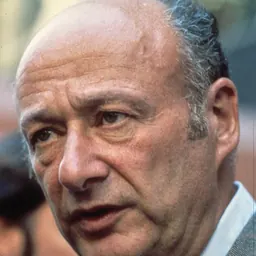


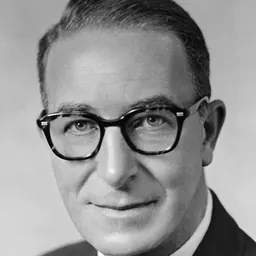
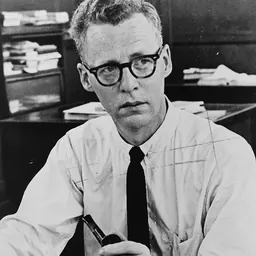
Related people
Same field, nearest in time





Contemporaries
People whose lives overlapped Carmine DeSapio's
Frequently asked questions
Who was Carmine DeSapio?
American politician
When was Carmine DeSapio born?
Carmine DeSapio was born on 10 December 1908 in Manhattan.
When did Carmine DeSapio die?
Carmine DeSapio died on 27 July 2004 in New York City.
What was Carmine DeSapio's occupation?
Carmine DeSapio was a politician.
What nationality was Carmine DeSapio?
Carmine DeSapio was American.
Sources & further reading
Cite this page
APA: Biography.guide. (2026). Carmine DeSapio. https://biography.guide/carmine-desapio/
MLA: "Carmine DeSapio." Biography.guide, https://biography.guide/carmine-desapio/.
Chicago: "Carmine DeSapio." Biography.guide. https://biography.guide/carmine-desapio/.
Data last updated: 2026-09-20 · Spot an error? Report a correction.
Page generated 2026-09-27 05:19 UTC