
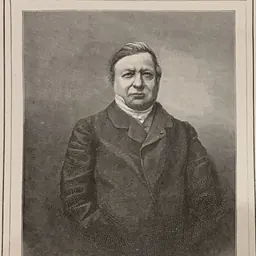
Carlos Pellegrini
Lawyer, journalist and former president of Argentina
About Carlos Pellegrini
Lived 1846 – 1906 (aged 59). Carlos Pellegrini was an Argentine and Spanish lawyer, politician, journalist, translator and jurist.
Carlos Enrique José Pellegrini Bevans (October 11, 1846 – July 17, 1906) was Vice President of Argentina and became President of Argentina from August 6, 1890 to October 12, 1892, upon Miguel Ángel Juárez Celman's resignation (see Revolución del Parque).
Biography Pellegrini was the son of Swiss-Italian engineer Charles Henri Pellegrini (born in Chambéry) and María Bevans Bright, and grandson of English engineer James "Santiago" Bevans.
Like many other nineteenth century Argentines prominent in public life, he was a Freemason.
Carlos Enrique José Pellegrini was born in the city of Buenos Aires on 11 October 1846, during the Rosas era; he was the son of the British-born María Bevans and the Swiss engineer (of French descent) Carlos Enrique Pellegrini, originally from Chambéry (Kingdom of Sardinia).
The engineer Charles Henry Pellegrini had arrived in the country from Switzerland in 1828, having been hired by president Bernardino Rivadavia for the construction of the Port of Buenos Aires. Upon his arrival in the country, the project was suspended due to a change of government. Unable to practice his profession, Pellegrini's father began working in Argentina as a portrait painter, and soon became one of the most sought-after artists in Buenos Aires society. He maintained a strong interest in political and social debates occurring in Europe, and his private library contained many British journals specializing in these subjects, such as The Edinburgh Review, The Quarterly Review, and The Westminster Review. On his mother's side, María Bevans was the daughter of the British engineer Santiago Bevans, who had also arrived in the Río de la Plata under circumstances similar to those of his future son-in-law. María was a niece of the British liberal politician John Bright, co-founder of the Manchester League and a close collaborator of William Gladstone. These family characteristics placed the Pellegrini family in a central position in the social life of the city of Buenos Aires. There he served as an artillery ensign, After recovering he returned to Buenos Aires, completed his law studies in 1869, and joined the recently founded newspaper La Prensa. With his university degree he began working for the state as undersecretary of the Ministry of Finance, During the last three years of that presidency a struggle arose between autonomists and nationalists, and Pellegrini joined the Autonomist Party led by Adolfo Alsina. He was a candidate for deputy in the elections of 1870 and 1871 but was defeated by the nationalists commanded by Bartolomé Mitre. Only after Alsina's victory, and thanks to the election of governor Mariano Acosta in the province of Buenos Aires, did Pellegrini obtain his first legislative seat. He was the youngest among the provincial deputies, at only twenty-six years of age, and his first speech concerned the conversion of paper currency; throughout his career he took part in debates related to monetary and economic matters.
In 1871, a tragic year in Buenos Aires when thousands died from the yellow fever epidemic, Pellegrini married Carolina Ignacia Lagos García, a union that produced no children. That same year he began his political involvement through Alsina's Autonomist Party when he ran in the legislative elections of 1871 and 1872, though he lost both contests.
Senator (1881–1883) In 1881 he was elected national senator for the Buenos Aires Province to complete the term of Dardo Rocha, serving until 30 April 1883. During his time in the Senate he secured congressional approval to resume construction of the Port of Buenos Aires, which had remained unfinished since the presidency of Bernardino Rivadavia. He adopted the earlier project of Eduardo Madero, and through financing and British technicians the port was completed nine years later, when Pellegrini was serving as vice president.
He was commissioned by the government of Julio Argentino Roca to negotiate a delicate loan with creditors in Europe in 1885. Bankruptcies followed, the stock exchange collapsed, and the cost of living rose considerably.
As the government strengthened its influence over customs revenues and the national army, its authority expanded into the provinces, affecting provincial autonomy. This led to the formation of a single party under the orders of the president, known as the "unicato", which provoked intense popular opposition. At this point Pellegrini began to distance himself from Juárez Celman when the latter proclaimed the "unicato" and concentrated state authority and party leadership in his own hands. When the first revolutionary events of 1890 occurred, Vice President Pellegrini upheld government authority and commanded troops to suppress the uprising. When Juárez Celman went to Retiro to board a ship bound for Campana, Pellegrini rode on horseback to Plaza Libertad to inspect the command of General Nicolás Levalle. He established himself at the house of José Luis Amadeo and directed from there the final assault on the artillery park.
Presidency Carlos Pellegrini casting his vote in an open-air church atrium.
As a result of the Revolution of 1890, President Miguel Juárez Celman resigned, and Pellegrini succeeded him as president on 6 August 1890, completing the term on 12 October 1892, as stipulated in the Constitution.
Pellegrini appointed as ministers men of recognized public reputation, drawn from the most important political centers of the time. These included figures from the National Autonomist Party led by Roca, the Civic Party led by Mitre, and even a certain nucleus from the Civic Union. Former president Julio Argentino Roca was appointed Minister of the Interior; he was the most influential person in the cabinet and managed to prevent the success of Alem's revolution. Eduardo Costa was appointed Minister of Foreign Affairs; he was a close friend of Mitre and a renowned jurist. Vicente Fidel López, a defender of the policies of General Urquiza and of the San Nicolás Agreement, accepted—despite his advanced age—the position of Minister of Finance in order to repair the national finances. Lieutenant Nicolás Levalle, a close collaborator of Roca, continued as Minister of War and the Navy. José María Gutiérrez took charge of the portfolios of Justice, Worship, and the Navy. He was also a friend of Mitre and, as a journalist, had collaborated on the newspaper La Nación. Three ministers were linked to the revolutionary party.
In 1893 gubernatorial elections were held in Buenos Aires Province. Pellegrini was a candidate for the Unión Provincial, the name used by the PAN in that district, but he was defeated by the Radical Civic Union, while the Mitristas finished in third place, this time in relatively close elections without fraud. But as no candidate had obtained an absolute majority, the decision fell to the provincial legislature. There he used his influence in favor of the Mitrista Guillermo Udaondo, displacing the radical candidate who had won. The legislature also resolved to designate Pellegrini as national senator. Back in the legislature, Pellegrini did not take long to become the central figure in the Senate, something that irritated president Uriburu, who came to accuse the senator of tyrannizing the upper chamber. Roca ultimately withdrew the bill without Pellegrini's consent, an action that angered the senator to the point of severing personal relations with the president, though he still remained within the National Autonomist Party.
Beginning in July 1902, a division arose in the Argentine Republic's PAN over the succession to president Julio A. Roca. The "convention of notables", established from 1903 as the informal body for selecting the presidential candidate of the ruling party, fractured over the failure to fulfill the commitment to nominate former president Carlos Pellegrini and Roca's decision to promote the lawyer Manuel Quintana in the 1904 election. From then until his death, Pellegrini demanded a law guaranteeing deep electoral reform in order to end fraud and promote civic freedoms.
In that context, the autonomists took part in the national senatorial elections for the City of Buenos Aires on 6 March 1904. Sáenz Peña withdrew his candidacy and Carlos Pellegrini stood in his place against the government deputy Benito Villanueva, president of the Capital Committee of the National Autonomist Party, and Emilio Mitre, candidate of the Republican Party. The government victory was overwhelming: Villanueva won with 11,516 votes and 28 electors, followed by Pellegrini with 9,075 votes and 6 electors, and Mitre with 7,547 votes and 10 electors. Quintana, meanwhile, obtained a majority of electors on 10 April, and in the supplementary elections for vacant deputy seats Pellegrini won comfortably on 16 June 1905, returning to the Chamber of Deputies after twenty-eight years.
During his final years, Pellegrini attempted to adapt the PAN to the political changes taking place in the country. To achieve this, he became convinced that it was necessary to carry out a reform of electoral practices. But his early death, in Buenos Aires, on 17 July 1906 at the age of 59, though not surprising to his friends and colleagues because of the deterioration of his health, had a profound national impact due to the expectations generated around the need for electoral reform, and created a political vacuum that would later be filled by Roque Sáenz Peña, considered his political heir, who put forward the secret-ballot electoral reform that would bring Hipólito Yrigoyen to the presidency in 1916. Sáenz Peña, however, died in 1914.
Deputy again (1906) Amid the institutional fluctuations of the presidential politics of Manuel Quintana and the radical revolution of 1905, the enemies of Julio A. Roca outnumbered his friends and allies. Thus, in 1906, he was elected National Representative in the lower house in the election of 11 March 1906, again under the complete-list system: the Popular Concentration coalition defeated the government slate amid scandals and protests over vote-buying. It was a political front of autonomists, Mitristas, the conservative Benito Villanueva and Bernardista radicals that placed Pellegrini, Emilio Mitre, Roque Sáenz Peña and Ernesto Tornquist in the leading positions.
He took the seat as legislator that he had won. In the session of 9 May 1906, he delivered a fiery speech while challenging the credentials of the deputies elected by the Buenos Aires government party:
Death On 9 January 1906 Bartolomé Mitre died in his native city of Buenos Aires. Although he had announced his retirement from politics on turning 80, he still retained a certain influence, at least in the Capital and Buenos Aires Province; and on 12 March, less than twenty-four hours after the defeat of the government in the Capital, president Manuel Quintana died. In that context, Carlos Pellegrini had a chance to become the "natural" candidate of the reformist conservatives for the presidency in 1910, because of the national prestige he had acquired in his brief presidency, his knowledge of public finances, his position on reform of the electoral system, and his close political ties with the new president of the Republic, José Figueroa Alcorta.
He is buried in La Recoleta Cemetery.
Don’t just read it —
keep it.
Full-length biographies made to live with: read them, listen on the way to work, watch them tonight.
- E-book
- Audio
- Video
Instant download · yours to keep · every purchase keeps this site free
Important facts
People in Carlos Pellegrini's life
Named in this biography and alive at the same time

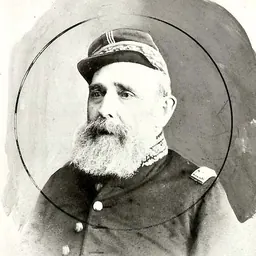
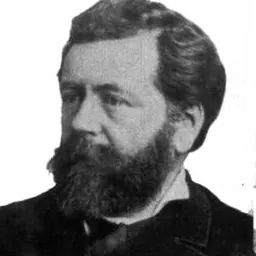
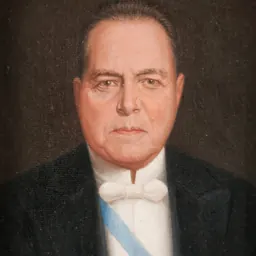
Related people
Same field, nearest in time
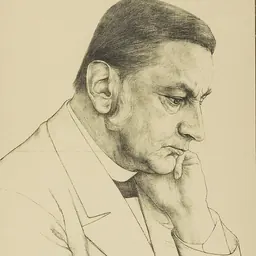
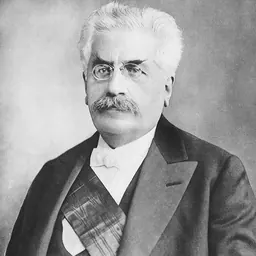


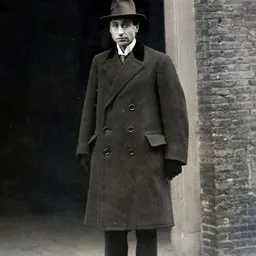
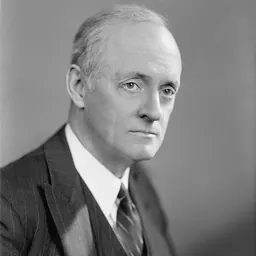
Contemporaries
People whose lives overlapped Carlos Pellegrini's
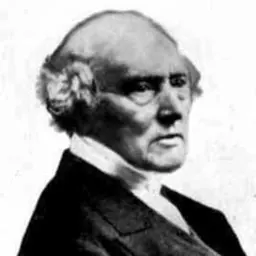



Frequently asked questions
Who was Carlos Pellegrini?
Lawyer, journalist and former president of Argentina (1846-1906)
When was Carlos Pellegrini born?
Carlos Pellegrini was born on 11 October 1846 in Buenos Aires.
When did Carlos Pellegrini die?
Carlos Pellegrini died on 17 July 1906 in Buenos Aires.
What was Carlos Pellegrini's occupation?
Carlos Pellegrini was a lawyer, politician, journalist, translator and jurist.
What nationality was Carlos Pellegrini?
Carlos Pellegrini was Argentine and Spanish.
Sources & further reading
· Wikipedia: Carlos Pellegrini
Cite this page
APA: Biography.guide. (2026). Carlos Pellegrini. https://biography.guide/carlos-pellegrini/
MLA: "Carlos Pellegrini." Biography.guide, https://biography.guide/carlos-pellegrini/.
Chicago: "Carlos Pellegrini." Biography.guide. https://biography.guide/carlos-pellegrini/.
Data last updated: 2026-09-20 · Spot an error? Report a correction.
Page generated 2026-09-27 05:19 UTC