
Carlos Palanca
Diplomat and government official
About Carlos Palanca
Lived 1844 – 1901 (aged 56–57).
Early life Carlos Lim Palanca was born on June 6, 1844, named in Hokkien (later romanized in Spanish Philippines as "Tan Quien Sien") in Tong'an , Amoy, Fukien, Qing China. His mother was named Lim Chia.
He first came to the Philippines in 1856 when he was twelve years old as an apprentice in a draper business by his relative. Initially, he was poor and uneducated, but he later taught himself how to read and write, such as Spanish and Classical Chinese.
Later, he converted to Roman Catholicism in the 1860s and adopted his non-Chinese name from an influential padrino (godfather), Spanish diplomat and field marshal Carlos G. Palanca of the Spanish colonial army. Carlos L. Palanca had one son, Engracio G. Palanca (Tan Kang) and a daughter, Alejandra G. Palanca-Boncan, who would later marry Emiliano Boncan, scion of another powerful Hokkien merchant family, who in turn intermarried with leading mestizo families, like the Limjaps. the oldest surviving Chinese temple in Manila, with syncretic features of Buddhism, Taoism, ancestral veneration, and Christianity. the oldest hospital for the Chinese community in the Philippines. It was also in this same year that José Rizal's second novel, El Filibusterismo (1891), was released, where it describes a certain character known as Quiroga the Chinaman.
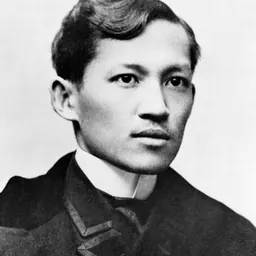
In Rizal's Chinese Overcoat, Alfonso Ang asserts that the character Quiroga in Rizal's novel El Filibusterismo was based on Palanca. Wilson (2004) also asserts this, that Rizal portrayed the character of Quiroga the Chinaman as a tacky and duplicitous opportunist, as a form of critique on Carlos Palanca's political and economic influence. Quiroga is portrayed just like Carlos Palanca where he is dressed as a mandarin bureaucrat with a blue-tasseled cap, advocating to open a Chinese consulate in Manila with himself as consul general.
Later in 1898, Palanca's son, Engracio, would later serve as the first official consul general of Qing China to Spanish Philippines, appointed on July 28, 1898 and approved for service in September 1898, and arriving by January 1899, due to some delays on approval by the changing acting Spanish Governors-General during the Philippine Revolution, which from July 28, 1898 to January 1899, Carlos L. Palanca (Tan Quien Sien) acted instead as the de facto acting consul general. His son's tenure would be cut short though due to the change in political control from the Spanish authorities to the Americans after the Philippine Revolution in 1899 and complaints to the American authorities from Cantonese, British, and German merchants that Carlos had previously made enemies of. Also, due to the recent death of Carlos' wife around 1899, his son decided to step down as consul-general by March 1899 to observe a period of mourning. By April 15, 1899 though, his son would instead help the Communidad de Chinos found the Anglo-Chinese School (modern-day Tiong Se Academy), the first and oldest Chinese Filipino school in the Philippines, offering foreign language, math, science, and the Confucian classics. Later, his son would instead act as the Chinese consul general in Havana, Cuba during its US military rule, but then would return again by 1900 in Manila to serve as interim consul during US military rule of the Philippines.
Death Carlos Lim Palanca (Tan Quien Sien) would later pass away in September 1901 at the age of 57 years old, passing his role to other cabecillas (community leader).
Legacy
Carlos Tanguinlay Palanca Sr., a successful influential Chinese Filipino businessman during the American colonial era, would ascribe him as his godfather using his name too and later started the La Tondeña Distillery, Inc. by 1902 in Manila, which later became part of San Miguel Corporation (SMC) and was renamed as Ginebra San Miguel in 2003.
For Carlos Lim Palanca's (Tan Quien Sien) legacy, streets were named after him and a memorial and statue of himself were made displayed in the Manila Chinese Cemetery, primarily at the Chong Hock Tong Temple, in the same land he had donated for the cemetery and temple's founding.
Don’t just read it —
keep it.
Full-length biographies made to live with: read them, listen on the way to work, watch them tonight.
- E-book
- Audio
- Video
Instant download · yours to keep · every purchase keeps this site free
Important facts
People in Carlos Palanca's life
Named in this biography and alive at the same time
Contemporaries
People whose lives overlapped Carlos Palanca's

Frequently asked questions
Who was Carlos Palanca?
diplomat and government official
When was Carlos Palanca born?
Carlos Palanca was born on 6 June 1844 in Amoy, Fujian, Qing China, Tong'an District.
When did Carlos Palanca die?
Carlos Palanca died in 1901.
Sources & further reading
· DBpedia: Carlos Palanca (born 1844)
Cite this page
APA: Biography.guide. (2026). Carlos Palanca. https://biography.guide/carlos-palanca/
MLA: "Carlos Palanca." Biography.guide, https://biography.guide/carlos-palanca/.
Chicago: "Carlos Palanca." Biography.guide. https://biography.guide/carlos-palanca/.
Data last updated: 2026-09-25 · Spot an error? Report a correction.
Page generated 2026-09-27 05:13 UTC