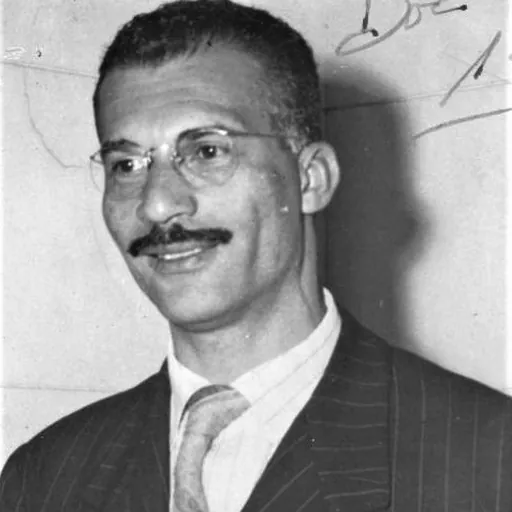
Carlos Marighella
Brazilian politician, writer, and guerrilla fighter
About Carlos Marighella
Lived 1911 – 1969 (aged 57). Carlos Marighella was a Brazilian writer, poet, politician and revolutionary.
Carlos Marighella (; 5 December 1911 – 4 November 1969) was a Brazilian politician, writer, and Marxist–Leninist militant. He was killed by police in 1969 in an ambush. Marighella's most famous contribution to revolutionary literature was the Minimanual of the Urban Guerrilla.
Biography
Marighella was born in Salvador, Bahia, to Italian immigrant Augusto Marighella and Afro-Brazilian Maria Rita do Nascimento. His father was a blue-collar worker originally from Emilia, while his mother was a descendant of enslaved Africans, brought from the Sudan (Hausa blacks). He spent his young life at a house in Rua do Desterro, at the Baixa do Sapateiro neighbourhood, where he would graduate from primary and secondary education. In 1934, he left the Polytechnic School of Bahia, where he was pursuing a degree in civil engineering, in order to become an active member of the Brazilian Communist Party (PCB). He then moved to Rio de Janeiro to work in the restructuring of PCB.
Son of an Italian Roman Catholic father and a mother of African Muslim background, Carlos was raised in a Catholic household, eventually becoming atheist in his early 20s.
Arrests
Marighella was first arrested in 1932, after he wrote an offensive poem about the administration of Bahia intervener Juracy Magalhães. On 1 May 1936, during the Getúlio Vargas time in presidency, he was once again arrested for subversion by the political police led by Filinto Müller. In May 1964, after the military coup, he was shot and arrested by agents of the Department of Political and Social Order (Departamento de Ordem Política e Social - DOPS), the political police, at a movie theater in Rio. He was released in the following year by a court order.
Writing In 1966, he wrote The Brazilian Crisis, opting for the armed struggle against the military dictatorship. Later that year, he renounced his office in the national leadership of PCB.
In August 1967, he participated at the 1st Conference of Latin American Solidarity in Havana, contradicting what party had determined. In Havana, he wrote Some Questions About the Guerrillas in Brazil, dedicated to the memory of Che Guevara and made public by Jornal do Brasil on 5 September 1968. That same year he was expelled from PCB, and founded the Ação Libertadora Nacional (ALN) in February 1968.
1969 kidnapping of the United States Ambassador
In September 1969, ALN members kidnapped the U.S. ambassador Charles Burke Elbrick in a coordinated move with the Revolutionary Movement 8th October (Movimento Revolucionário 8 de Outubro – MR-8). The group was responsible for several executions as well.
Assassination Vandalised tombstone of Marighella, Cemitério Público da Quinta dos Lázaros, Salvador, Bahia, designed by the modernist architect Oscar Niemeyer. After a series of successful robberies and kidnappings, the police force was determined to eliminate him. He was shot by police at an ambush at 8:00 pm on 4 November 1969 at 800 Alameda Casa Branca, São Paulo. This ambush was organized by police deputy Sérgio Paranhos Fleury, known for his work inside DOPS.
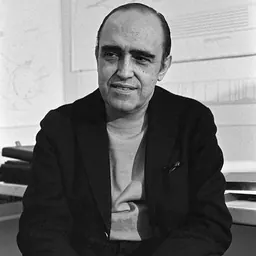
Marighella was buried at Cemitério Público da Quinta dos Lázaros, a cemetery in Salvador, Bahia. His tombstone was designed by architect Oscar Niemeyer, and is the only grave monument designed by the architect. It bears a quote from Marighella: "I didn't have time to be afraid" (Não tive tempo para ter medo).
Legacy Marighella's most famous contribution to revolutionary struggle literature
In popular culture
Marighella was portrayed by Geraldo Del Rey in the 1987 Brazilian drama film Dedé Mamata.
In the 2006 biographical drama film Baptism of Blood, Marighella was portrayed by Brazilian actor and musician Marku Ribas.
In the 2019 drama Marighella, Marighella was portrayed by Seu Jorge; the film was accomplished actor Wagner Moura's directorial debut. The movie was exhibited at international film festivals, but Brazil's Agência Nacional do Cinema (National Agency of Cinema), during Bolsonaro's government, barred it from distribution in Brazil, citing "subversive elements"; it finally appeared on Brazilian screens in November, 2021.
Don’t just read it —
keep it.
Full-length biographies made to live with: read them, listen on the way to work, watch them tonight.
- E-book
- Audio
- Video
Instant download · yours to keep · every purchase keeps this site free
Important facts
People in Carlos Marighella's life
Named in this biography and alive at the same time




Related people
Same field, nearest in time



Contemporaries
People whose lives overlapped Carlos Marighella's






Frequently asked questions
Who was Carlos Marighella?
Brazilian politician, writer, and guerrilla fighter (1911–1969)
When was Carlos Marighella born?
Carlos Marighella was born on 5 December 1911 in Salvador.
When did Carlos Marighella die?
Carlos Marighella died on 4 November 1969 in São Paulo.
What was Carlos Marighella's occupation?
Carlos Marighella was a writer, poet, politician and revolutionary.
What nationality was Carlos Marighella?
Carlos Marighella was Brazilian.
Sources & further reading
· Wikipedia: Carlos Marighella
Cite this page
APA: Biography.guide. (2026). Carlos Marighella. https://biography.guide/carlos-marighella/
MLA: "Carlos Marighella." Biography.guide, https://biography.guide/carlos-marighella/.
Chicago: "Carlos Marighella." Biography.guide. https://biography.guide/carlos-marighella/.
Data last updated: 2026-09-20 · Spot an error? Report a correction.
Page generated 2026-09-27 05:09 UTC