
About Carlo Giuseppe Merlo
Lived 1690 – 1760 (aged 69). Carlo Giuseppe Merlo was an architect.
Carlo Giuseppe Merlo (5 November 1690 – 13 February 1760) was an Italian architect of the late-Baroque period.
Biography
Early career Born in Milan, he was a pupil of Francesco Bianchi, and from 1708 to 1716 trained in the College of Engineers and Architects in Milan. He worked in the local Lombard architectural tradition but incorporated late Baroque elements, reflecting architectural trends throughout Europe. His early works included the Oratory for the church of San Bernardino, Milan (1716; completed 1749), the completion of the parish church at Desio (1726–36) and the Villa Perego at Inverigo, both near Milan. In 1731, he designed the main altar for the Sanctuary of the Blessed Virgin of Caravaggio. In the following years Merlo designed and directed the construction of the entryway stairs for Palazzo Litta, Milan (1738), and designed the Oratory of the Immacolata in Magenta, Lombardy (1740).
Milan Cathedral His most important work was at the Cathedral of Milan. Following the rejection of plans by Luigi Vanvitelli, the cathedral chapter entrusted Merlo and Francesco Croce with the task of carrying out the new façade (plans; Milan, Biblioteca Ambrosiana). Merlo’s plans, prepared in 1745, proposed Gothic pilasters similar to those of the interior, replacing the twisted columns proposed by Vanvitelli. Work did not begin until 1765 but was completed under Croce’s supervision by 1769. Merlo also made proposals in 1759 for the great spire of the cathedral.
Other works During his years of association with the cathedral Merlo also designed the façade of Sant'Andrea Apostolo (1745) at Pioltello, which incorporated vegetable motifs on the volutes connecting the upper and lower storeys, and the elaborate patterned marble high altar (1759) of San Sebastiano. He was a member of the Accademia dei Trasformati, Milan, and left two printed works on hydraulics as well as several manuscript studies, one of which was on curves. This interest in curvilinear form derived from Guarino Guarini and was reflected in his elliptical ground-plan for Santa Giuliana at Caponago (1742), where the interior is planned as a series of free-flowing lines articulated with free-standing Ionic columns and Ionic pilasters.
In conjunction with Giulio Galliori Merlo designed the ephemeral decorative car used to translate the body of St. Charles Borromeo. Again with Galliori he designed the cupola of the Sanctuary of the Blessed Virgin of the Sorrows, Rho. He helped raise the belltower for the parochial church of Olginate. He also helped design a house for the poor and jail.
Don’t just read it —
keep it.
Full-length biographies made to live with: read them, listen on the way to work, watch them tonight.
- E-book
- Audio
- Video
Instant download · yours to keep · every purchase keeps this site free
Important facts
People in Carlo Giuseppe Merlo's life
Named in this biography and alive at the same time

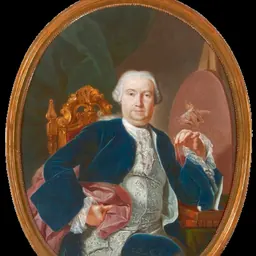
Related people
Same field, nearest in time
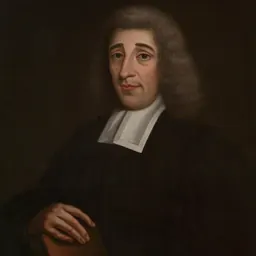
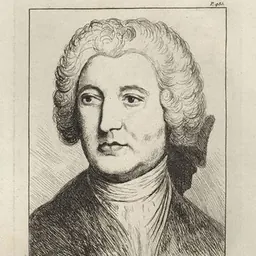


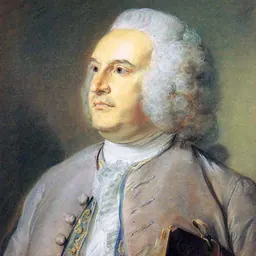
Contemporaries
People whose lives overlapped Carlo Giuseppe Merlo's



Frequently asked questions
Who was Carlo Giuseppe Merlo?
Italian architect of the late-Baroque period
When was Carlo Giuseppe Merlo born?
Carlo Giuseppe Merlo was born on 5 November 1690 in Milan.
When did Carlo Giuseppe Merlo die?
Carlo Giuseppe Merlo died on 13 February 1760 in Milan.
What was Carlo Giuseppe Merlo's occupation?
Carlo Giuseppe Merlo was an architect.
Sources & further reading
· Wikipedia: Carlo Giuseppe Merlo
· DBpedia: Carlo Giuseppe Merlo
Cite this page
APA: Biography.guide. (2026). Carlo Giuseppe Merlo. https://biography.guide/carlo-giuseppe-merlo/
MLA: "Carlo Giuseppe Merlo." Biography.guide, https://biography.guide/carlo-giuseppe-merlo/.
Chicago: "Carlo Giuseppe Merlo." Biography.guide. https://biography.guide/carlo-giuseppe-merlo/.
Data last updated: 2026-09-20 · Spot an error? Report a correction.
Page generated 2026-09-27 05:28 UTC