
Carlo Galli
Italian diplomat
About Carlo Galli
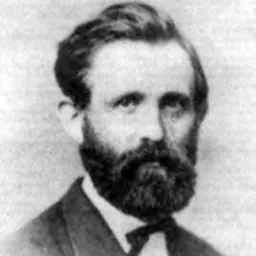
Lived 1878 – 1966 (aged 87). Carlo Galli was an Italian diplomat, politician and envoy extraordinary and minister plenipotentiary.
Carlo Galli (Florence, 25 November 1878 – Venice, 12 January 1966) was an Italian diplomat, who served as Italian ambassador to Persia, Portugal, Yugoslavia and Turkey and as Minister of Popular Culture of the Kingdom of Italy in the Badoglio I Cabinet.
Biography
After graduating in law from the University of Florence, in 1904, Galli started his diplomatic career at the Italian consulate in Trieste, where he remained for some years, helping fuel Italian irredentism (he himself was a convinced nationalist). In June 1911, he was appointed consul in Tripoli, where he helped prepare the Italian invasion of Libya, after which he returned to Trieste. He later held other consular posts abroad (and was a member of the International Control Commission in Albania in 1913) until the outbreak of the First World War, when he was transferred to the General Secretariat for Civil Affairs at the Supreme Command.
After the end of the war, from January 1919 to December 1922, he was sent to Paris and was part of the Italian delegation to the Versailles Peace Conference. In January 1923 he was appointed Consul General in Damascus, where he remained until April 1924, when he was appointed Ambassador to Teheran (Persia) for two years, having meanwhile joined the National Fascist Party. From November 1926 to May 1928 he served as Ambassador to Lisbon (Portugal), from June 1928 to December 1934 as Ambassador to Belgrade (Yugoslavia), and from January 1935 to June 1938 as Ambassador to Ankara (Turkey). During the 1930s he became increasingly detached from the Fascist regime, until he was retired in June 1938. In 1939 he joined the board of directors of Assicurazioni Generali, where he remained for some years.
After the fall of the regime on 25 July 1943 he returned to politics and in August he was appointed Minister of Popular Culture of the first Badoglio Government, formally holding the post from 15 August 1943 to 24 February 1944, although in reality he ceased from his functions following the armistice of Cassibile, as he did not follow the king and government in their flight from Rome to Brindisi and retired to private life in Venice. He was however wanted by the Italian Social Republic and was forced to go into hiding in Nerviano, hosted by his friend Paolo Caccia Dominioni, until in December 1944 he was arrested along with Caccia Dominoni himself and General Luigi Trionfi and imprisoned initially in San Vittore and later in Lumezzane, where he remained until April 1945. At the end of the war, he was freed and was able to return to Venice, where he retired to private life.
Don’t just read it —
keep it.
Full-length biographies made to live with: read them, listen on the way to work, watch them tonight.
- E-book
- Audio
- Video
Instant download · yours to keep · every purchase keeps this site free
Important facts
People in Carlo Galli's life
Named in this biography and alive at the same time

Related people
Same field, nearest in time

Contemporaries
People whose lives overlapped Carlo Galli's




Frequently asked questions
Who was Carlo Galli?
Italian diplomat (1878-1966)
When was Carlo Galli born?
Carlo Galli was born on 25 November 1878 in Florence.
When did Carlo Galli die?
Carlo Galli died on 12 January 1966 in Venice.
What was Carlo Galli's occupation?
Carlo Galli was a diplomat, politician and envoy extraordinary and minister plenipotentiary.
What nationality was Carlo Galli?
Carlo Galli was Italian.
Sources & further reading
· DBpedia: Carlo Galli (diplomat)
Cite this page
APA: Biography.guide. (2026). Carlo Galli. https://biography.guide/carlo-galli/
MLA: "Carlo Galli." Biography.guide, https://biography.guide/carlo-galli/.
Chicago: "Carlo Galli." Biography.guide. https://biography.guide/carlo-galli/.
Data last updated: 2026-09-20 · Spot an error? Report a correction.
Page generated 2026-09-27 05:17 UTC