
About Paolo Caccia Dominioni
Lived 1896 – 1992 (aged 96). Paolo Caccia Dominioni was an Italian writer, engineer, architect, partisan and soldier.
Paolo Caccia Dominioni, 14th Baron of Sillavengo (; 14 May 1896 – 12 August 1992) was an Italian soldier, officer in the Alpini mountain Infantry Corps, engineer and writer, most noted for his leadership in the North Africa Campaign in World War II.
Biography Paolo Caccia Dominioni was born on 14 May 1896, in Nerviano, Milan, Kingdom of Italy. He was the son of Carlo (seventeenth count of Sillavengo; a diplomat) and Bianca (a marquise; maiden name, Cusani-Confalonieni).
In 1913 he entered the Faculty of Engineering at the Royal High Polytechnical School of Milan. In 1915, when Italy joined World War I, he registered as a volunteer. He fought in the Alpini Corps, where he was commissioned a first lieutenant. In February 1920, he re-entered the Polytechnical School. He earned his doctorate in Civil Engineering in 1922.
From 1924 onwards, Caccia Dominioni worked mainly abroad. During his engineer's career in prewar Egypt, he developed a deep friendship with the Belgian expatriate Vladimir Peniakoff, later to be known as Popski (the creator and leader of a World War II Special Forces unit called Popski's Private Army ("No 1 Demolition Squadron, PPA") with whom he had explored the Egyptian desert; a few years later the two friends would be facing each other as enemies, in Libya, in World War II. In 1931, Caccia Dominioni undertook a topographical survey of Tripolitania and in 1935 he led a reconnaissance campaign in Sudan.
In 1935–6 Caccia Dominioni fought in the Second Italo-Ethiopian War. At the outbreak of World War II he was first assigned to Military Intelligence (Servizio Informazioni Militare). In June 1942 he was given command of the XXXI Sappers Battalion, which he commanded during the First Battle of El Alamein, the Battle of Alam el Halfa, and the Second Battle of El Alamein. Field Marshall Erwin Rommel personally awarded him the Iron Cross, 2nd Class for his actions during the First Battle of El Alamein.
After the Armistice of Cassibile he joined the Italian resistance movement. In July 1944 he was arrested by the National Republican Guard, but released shortly afterward. His book on the Italian Campaign in North Africa, Alamein 1933–1962, was translated into English and published by Allen & Unwin in 1966 as Alamein 1933–1962: An Italian Story.
On 7 May 1958, Caccia Dominioni married Elena Sciolette (an amateur archaeologist). They had two daughters: Bianca Ottavia and Anna Francesca.
Caccia Dominioni devoted his postwar career to the retrieving of soldiers' corpses still on the Alamein battlefield and to the design and construction of a cemetery and a memorial building, located on a particular spot on the Alamein battleground named "Hill 33" where – thanks to his twenty years of efforts – thousands of Italian, German and British unknown fallen soldiers, were eventually identified and received a proper burial.
Dominioni also designed the Italian National Ossario in Murchison, Australia. The ossario holds the remains of 130 Italian prisoners of war and interned civilians who died in while interned in Australia during World War II.
Caccia Dominioni was correspondent for the Italian newspaper Il Corriere della Sera (1931–61), and contributor to other Italian and French newspapers. He died on 12 August 1992, in Rome, Lazio, Italy.
Works
Le trecento ore a Nord di Qattara (anthology on the Battle of El Alamein), Longanesi, 1972.
Works translated into English
Honors Military decorationsGold Medal of Military ValourSilver Medal of Military ValorBronze Medal of Military ValorWar Cross of Military ValorWar Merit CrossCommemorative Medal for the Italo-Austrian War 1915–1918Commemorative Medal of the Unity of ItalyAllied Victory MedalIron Cross 2nd ClassCross of Merit of the Federal Republic of Germany
Don’t just read it —
keep it.
Full-length biographies made to live with: read them, listen on the way to work, watch them tonight.
- E-book
- Audio
- Video
Instant download · yours to keep · every purchase keeps this site free
Important facts
People in Paolo Caccia Dominioni's life
Named in this biography and alive at the same time


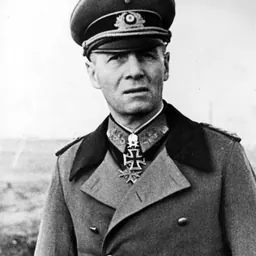
Related people
Same field, nearest in time


Contemporaries
People whose lives overlapped Paolo Caccia Dominioni's




Frequently asked questions
Who was Paolo Caccia Dominioni?
Italian resistance member (1896–1992)
When was Paolo Caccia Dominioni born?
Paolo Caccia Dominioni was born on 14 May 1896 in Nerviano.
When did Paolo Caccia Dominioni die?
Paolo Caccia Dominioni died on 12 August 1992 in Rome.
What was Paolo Caccia Dominioni's occupation?
Paolo Caccia Dominioni was a writer, engineer, architect, partisan and soldier.
What nationality was Paolo Caccia Dominioni?
Paolo Caccia Dominioni was Italian.
Sources & further reading
· Wikipedia: Paolo Caccia Dominioni
· DBpedia: Paolo Caccia Dominioni
Cite this page
APA: Biography.guide. (2026). Paolo Caccia Dominioni. https://biography.guide/paolo-caccia-dominioni/
MLA: "Paolo Caccia Dominioni." Biography.guide, https://biography.guide/paolo-caccia-dominioni/.
Chicago: "Paolo Caccia Dominioni." Biography.guide. https://biography.guide/paolo-caccia-dominioni/.
Data last updated: 2026-09-20 · Spot an error? Report a correction.
Page generated 2026-09-27 05:26 UTC