
About Carl Olof Rosenius
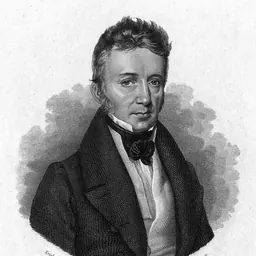
Lived 1816 – 1868 (aged 52). Carl Olof Rosenius was a Swedish preacher, hymnwriter, newspaper editor and theologian, known for Nyevangelism.
Carl Olof Rosenius (3 February 1816 – 24 February 1868) was a Swedish lay preacher, author and editor of the monthly Pietisten (The Pietist) from 1842 to 1868. He was one of the country's most widely-heard preachers of his day and has been described as being of "extraordinary importance for the low-church evangelical revival not only in Sweden but also in the other Nordic countries".
Biography
Family and childhood Rosenius was born in Nysätra in Västerbotten while his father, Anders Rosenius, was serving there as a parish pastor. His mother, Sara Margareta Norenius, was the daughter of Olof Norenius, a clergyman. Before Rosenius was born, his mother dreamed that he would be used by God. He was the third child of seven. His six siblings included Eric Andreas – who died as an infant – another brother also named Eric Andreas, Claes Johan, Sara Magdalene, Margareta Eliana, and . Two of his brothers would later receive a theological education: Eric Andreas, who went by Anton, became a preacher, and Martin Gabriel became a theology professor at Lund University.
In Rosenius' home, religion was important; he received a religious education at an early age including the works of Martin Luther and Olov Svebilius. His father, a simple, evangelical man, supported the revival movement in Sweden as part of the Reader (läsare) movement, bringing it to Nysätra in 1814.
As a child, he found an early interest in spiritual matters. He was known to leave his friends while playing to walk alone in the forest and ponder the existence of God. Later, he was said to have tested whether God existed or not: putting a blindfold over his eyes, he tested whether God would guide his steps to the door of the barn. However, as he started to walk, a strange feeling made him stop – there he stood just at the edge of a deep well, and if he had walked any further, he would have fallen in. Rosenius took this as a sign from God. When Rosenius was thirteen, his family moved to the town of Sävar. They were poor and his parents sent the boys to the city in 1828. He attended school in Piteå, writing small, spiritually-themed letters even as a child.
Conversion and education At the age of fifteen, he experienced a crisis of faith and religious breakthrough. Having read a translation of Erik Pontoppidan's , which states that even the most seemingly-zealous believer who knows the entire Bible and can even perform miracles can still go to hell without true faith, Rosenius was shaken and became sullen for some time. This experience impressed upon him the importance of conversion and a living faith. Rosenius' breakthrough was also influenced by Lutheran revivalist preacher Pehr Brandell.
While studying in Umeå as a teenager, he led conventicles or private religious gatherings, during school holidays. He was called "the second Luther" and "the little Reformer". Rosenius completed his gymnasium education in Härnösand. He often wrote home to her when his courage failed him, as it often did during his student years. Söderlund was widely known in northern Västerbotten for her knowledge of the Bible and her ability to inspire hope in difficult times while the Conventicle Act severely restricted laymen's opportunities to preach outside the framework of the household. He referred to her as the "prophetess from Stor-Kåge". A number of spiritual sayings and advice in Rosenius' are attributed to her, as well as an excerpt printed in the February 1844 edition of Pietisten.
Stockholm In 1838 Rosenius began his theological studies at Uppsala University but was forced to give them up after a year due to failing health and financial difficulties. He instead found employment as a private tutor at Länna farm outside of Stockholm. At this point he was beset with serious religious doubts, including on the credibility of the Bible. In 1839, he met the Methodist minister George Scott in Stockholm, who had initially come to Sweden in 1830 to work as a preacher for British workers. However, Scott quickly learned Swedish and began revivalist preaching with a goal of inspiring spiritual renewal among the Swedish people in a manner that deemphasized religious sectarianism. Rosenius' conversations with Scott, in which he also analyzed the Bible, helped dispel his uncertainties and "made him understand the vital role of the Christian laymen and gave him a vision of unity across the denominational borders." In 1840, he was offered the opportunity to assist Scott in his ministry. It was unheard of at the time for a Lutheran preacher to work with a non-Lutheran for the purposes of evangelism. Regarding his ecumenical mission work, Rosenius stated:
The opportunity marked a significant moment in Rosenius' life: he abandoned his plans of becoming a priest and moved to Stockholm to work with Scott at the newly built Engelska kapellet (English Chapel) near Hötorget (Haymarket Square). Rosenius traveled around Stockholm as a preacher and colporteur, preaching in homes and at times to the well-to-do in larger meeting rooms. Lars Paul Esbjörn, later founder of the Augustana Evangelical Lutheran Church, also worked with Scott at this time and was influenced by Rosenius. The same year, they met American preacher and temperance activist Robert Baird, who had come to work with Scott and Peter Wieselgren, another key temperance figure. In 1841, while Scott was on a fundraising trip in the United States, Rosenius took on a greater role and was responsible for the running of the church in his absence. Rosenius preaching in Bethlehem Church, likely sometime around 1864–1867. In 1842 Scott started the publication Pietisten to provide "practical edification without polemics", of which Rosenius was the editor. Its sales also helped support Rosenius financially.
Preaching Rosenius often preached extemporaneously. On hearing Rosenius, preacher Paul Petter Waldenström described his preaching in his Norrland dialect as natural and down-to-earth, with "no pompous words, no grandiose claims". Rosenius spoke calmly and did not preach loudly and emotionally or with dramatic gestures. Writer August Strindberg, upon seeing Rosenius preach, stated he "looked like peace and beamed with heavenly joy."
In 1849, he helped found the Swedish Diaconal Institution, now known as , and supported mission work, colportage, and social work in Stockholm. A year later the organization bought the English Church's old building and reopened it as Bethlehem Church. Rosenius was able to work there as well as on numerous preaching trips throughout the country. He continued to edit and publish Pietisten, which went from 2,000 subscribers to 10,000 between 1850 and 1860. He published the journal until his death along with publishing and editing Missionstidningen and several other magazines.
Theology Rosenius' Pietism, influenced by the (Reader) movement, the Herrnhuters (Moravian Brethren), and Methodism, retained key features of the northern Swedish religious revival – with the Bible as the Word of God, Lutheran objective atonement in Jesus Christ, and justification by grace alone at its core. In the Schartauan emphasis on the order of salvation, he suspected legalism; "come as you are!" was his message. He was on friendly terms with the Herrnhuters and had much in common with the Finnish evangelist Fredrik Gabriel Hedberg, despite believing that he went too far in the direction of antinomianism. Evidence of Scott's Methodist faith was more apparent in Rosenius' evangelistic work than in his theology. He had a strong dislike of Erik Janssonism.
He did not use Den svenska psalmboken, the Church of Sweden's hymnal, but rather song collections of a more personal religious nature, including those published by Oscar Ahnfelt. Hymns of his would, however, later be published in the church's 1921 supplement . Throughout his life Rosenius remained a member of the Church of Sweden, baptizing his children and taking Communion in the state church and rejecting separatism and the free distribution of Communion. His commitment to personal involvement in religious belief affected not only the practices of the free church but also those of the state church, especially in northern and central Sweden.
Despite initial dismissal from large parts of the Church of Sweden, Rosenius became one of Sweden's most widely read religious writers at the time and a leading figure in the religious revival of the country. Rosenius' works were published extensively, with two million copies in Swedish and one million in other languages. accounts for 180,000 copies in 36 editions. This makes him one of Sweden's most widely read authors – only Selma Lagerlöf and August Strindberg are clearly more widely read.
His impact on the religious development of Norway was significant, with Norwegian theologian Olav Valen-Sendstad stating:
Rosenius' movement gained followers through the Mission Friends both within Sweden and abroad – particularly in Denmark (the Bornholmers) and Norway, as well as among Scandinavian settlers in the American Midwest. Among them was a lay preacher from Småland named Nicolaus Bergensköld, who immigrated to the United States in the 1860s and was a leader of the revivalist movement in the Scandinavian settlements of the American Midwest. Rosenius made a significant impact on the Swedish Lutherans – and to a lesser extent the Norwegian Lutherans – of the United States. His works were held in high esteem and reprinted by Lutheran leaders such as Tuve Hasselquist, Olof Olsson, and John N. Kildahl. He was also friends with and influenced Anders Wiberg, Per Palmqvist, and Gustaf Palmquist, Lutherans who became Baptist pioneers in Sweden and the United States. He had a great impact on the religious development of Mathilda Foy, an early innovator of Sunday school in Sweden known for her charitable work, who was introduced to Rosenius by Theodore Hamberg, a missionary equally captivated by his preaching.
He was also instrumental in the formation of Evangeliska Fosterlandsstiftelsen (The Swedish Evangelical Mission) as one of its co-founders. As of 2019, it had 51 members and was planning to publish newly discovered manuscripts of 40 of Rosenius' sermons.
Rosenius Day, featuring lectures on Rosenius and the related revival movement, is held in August each year in Ånäset, where the Rosenius family home was located.
Don’t just read it —
keep it.
Full-length biographies made to live with: read them, listen on the way to work, watch them tonight.
- E-book
- Audio
- Video
Instant download · yours to keep · every purchase keeps this site free
Important facts
People in Carl Olof Rosenius's life
Named in this biography and alive at the same time

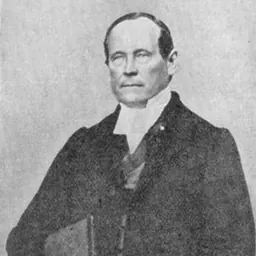
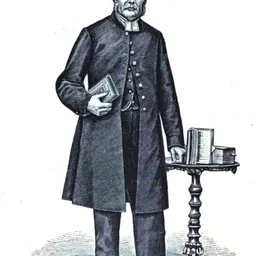


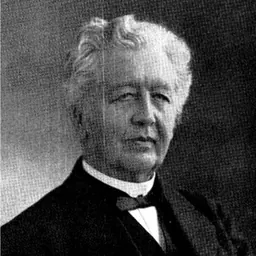
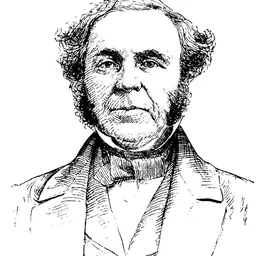
Related people
Same field, nearest in time


Contemporaries
People whose lives overlapped Carl Olof Rosenius's





Frequently asked questions
Who was Carl Olof Rosenius?
Swedish hymnwriter and preacher (1816–1868)
When was Carl Olof Rosenius born?
Carl Olof Rosenius was born on 3 February 1816 in Robertsfors Municipality, Sweden.
When did Carl Olof Rosenius die?
Carl Olof Rosenius died on 24 February 1868 in Stockholm, Jakob and Johannes parish.
What was Carl Olof Rosenius's occupation?
Carl Olof Rosenius was a preacher, hymnwriter, newspaper editor and theologian.
What was Carl Olof Rosenius known for?
Carl Olof Rosenius was known for Nyevangelism.
What nationality was Carl Olof Rosenius?
Carl Olof Rosenius was Swedish.
Sources & further reading
· Wikipedia: Carl Olof Rosenius
Cite this page
APA: Biography.guide. (2026). Carl Olof Rosenius. https://biography.guide/carl-olof-rosenius/
MLA: "Carl Olof Rosenius." Biography.guide, https://biography.guide/carl-olof-rosenius/.
Chicago: "Carl Olof Rosenius." Biography.guide. https://biography.guide/carl-olof-rosenius/.
Data last updated: 2026-09-22 · Spot an error? Report a correction.
Page generated 2026-09-27 05:31 UTC