
Carl-Heinrich von Stülpnagel
German general and resistance fighter
About Carl-Heinrich von Stülpnagel
Lived 1886 – 1944 (aged 58). Carl-Heinrich von Stülpnagel was a military personnel, resistance fighter and soldier.
Carl-Heinrich Rudolf Wilhelm von Stülpnagel (2 January 1886 – 30 August 1944) was a German general in the Wehrmacht's Heer (the army controlled by the Wehrmacht) during World War II who was an army level commander. While serving as military commander of German-occupied France and as commander of the 17th Army in the Soviet Union during Operation Barbarossa, Stülpnagel participated in German war crimes, including authorising reprisal operations against civilian population and cooperating with the Einsatzgruppen in their mass murder of Jews. He was a member of the 20 July Plot to assassinate Adolf Hitler, being in charge of the conspirators' actions in France. After the failure of the plot, he was recalled to Berlin and attempted to commit suicide en route, but failed. Tried on 30 August 1944, he was convicted of treason and executed on the same day.
Early life Born in Berlin into a noble family, Stülpnagel joined the Prussian Army straight from school in 1904, and served as a general staff officer in World War I. After the war, he served in the Reichswehr reaching the rank of Colonel in 1933. The same year, he was appointed head of the 'Foreign Armies' branch of the General Staff of the Army. By 1936 he was a Major General and commanded the 30th Infantry Division in Lübeck.
On 27 August 1937, as a Lieutenant General, he was appointed Deputy Chief of the General Staff of the Army. In 1938, after the Blomberg-Fritsch affair and the Sudeten Crisis, he established contact with the Schwarze Kapelle, revealing the secret plan for the invasion of Czechoslovakia. Stülpnagel took part in the military opposition's first plans to remove Hitler from power, but the plans were largely abandoned after the Munich Agreement.
World War II
From 20 December 1940 to 4 October 1941, Stülpnagel was a General of Infantry (April 1939) and commanded the 17th Army. On 22 June 1941, after the launch of Operation Barbarossa, he successfully led this army across southern Russia on the Eastern Front. Under Stülpnagel's command, the 17th Army achieved victory during the Battle of Uman and the Battle of Kiev.
In February 1942, Stülpnagel was made German-occupied France's military commander, In the Soviet Union, Stülpnagel signed many orders authorizing reprisals against civilians for partisan attacks and closely collaborated with the Einsatzgruppen in their mass executions of Jews. He admonished his soldiers not for the massacre of the civilian population, but for chaotic means in which it was undertaken, particularly early premature taking hostages and random measures. He ordered his troops to focus on Jews and Communist civilians, remarking that Communists were Jews that needed capture anyways.
20 July plot On the day in question, 20 July 1944, Stülpnagel put his part of the plot into operation. This mainly involved having Hans Otfried von Linstow, who was only informed of the plot on that same day, round up all SS and Gestapo officers in Paris and imprison them. However, when it became apparent that the assassination attempt in East Prussia had failed, Stülpnagel was unable to convince Field Marshal Günther von Kluge to support the uprising and was forced to release his prisoners. When Stülpnagel was recalled from Paris, he stopped at Verdun and tried to kill himself by shooting himself in the head and in the aftermath he was heard muttering repeatedly in delirium "Rommel", making himself the first to implicate the Field Marshal named as a party to the plot, leading ultimately to the latter's forced suicide.
Stülpnagel and his adviser were both arrested by the Gestapo, and Stülpnagel was brought before the Volksgerichtshof (People's Court) on 30 August 1944 where he was berated by Roland Freisler. He was found guilty of high treason and hanged the same day at Plötzensee Prison in Berlin. Iron Cross (1914) 2nd and 1st class Wound Badge (1918) in black General Honor Decoration of Hesse Hanseatic Cross of Hamburg Order of Henry the Lion 4th class Military Merit Cross of Austria-Hungary, 3rd class with war decoration Order of Military Merit of Bulgaria 4th class Honour Cross of the World War 1914/1918 Clasp to the Iron Cross 2nd and 1st class German Cross in silver 14 February 1944 War Merit Cross 2nd and 1st class with swords Knight's Cross of the Iron Cross on 21 August 1941 as General of the Infantry and commander-in-chief of the 17th Army
Don’t just read it —
keep it.
Full-length biographies made to live with: read them, listen on the way to work, watch them tonight.
- E-book
- Audio
- Video
Instant download · yours to keep · every purchase keeps this site free
Important facts
People in Carl-Heinrich von Stülpnagel's life
Named in this biography and alive at the same time
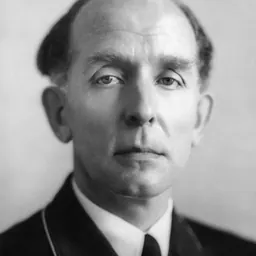

Related people
Same field, nearest in time




Contemporaries
People whose lives overlapped Carl-Heinrich von Stülpnagel's




Frequently asked questions
Who was Carl-Heinrich von Stülpnagel?
German general and resistance fighter (1886–1944)
When was Carl-Heinrich von Stülpnagel born?
Carl-Heinrich von Stülpnagel was born on 2 January 1886 in Berlin.
When did Carl-Heinrich von Stülpnagel die?
Carl-Heinrich von Stülpnagel died on 30 August 1944 in Plötzensee Prison, Berlin.
What was Carl-Heinrich von Stülpnagel's occupation?
Carl-Heinrich von Stülpnagel was a military personnel, resistance fighter and soldier.
What nationality was Carl-Heinrich von Stülpnagel?
Carl-Heinrich von Stülpnagel's recorded nationality: German Reich.
Sources & further reading
· Wikipedia: Carl-Heinrich von Stülpnagel
· DBpedia: Carl-Heinrich von Stülpnagel
Cite this page
APA: Biography.guide. (2026). Carl-Heinrich von Stülpnagel. https://biography.guide/carl-heinrich-von-stulpnagel/
MLA: "Carl-Heinrich von Stülpnagel." Biography.guide, https://biography.guide/carl-heinrich-von-stulpnagel/.
Chicago: "Carl-Heinrich von Stülpnagel." Biography.guide. https://biography.guide/carl-heinrich-von-stulpnagel/.
Data last updated: 2026-09-20 · Spot an error? Report a correction.
Page generated 2026-09-27 05:33 UTC