
Carl Gustav Rehnskiöld
Swedish field marshal
About Carl Gustav Rehnskiöld
Lived 1651 – 1722 (aged 70). Carl Gustav Rehnskiöld was a Swedish military personnel, military officer and general field marshal.
Count Carl Gustav Rehnskiöld (6 August 1651 – 29 January 1722) was a Swedish Field Marshal (fältmarskalk) and Royal Councillor. He was mentor and chief military advisor to King Charles XII of Sweden, and served as deputy commander-in-chief of the Carolean Army, an army he assisted both in its education and development.
Rehnskiöld grew up in Swedish Pomerania and studied at Lund University under philosopher Samuel von Pufendorf. He entered Swedish war service in 1673 and participated with distinction in the Battles of Halmstad, Lund, and Landskrona during the Scanian War, where he was appointed Lieutenant-Colonel and Adjutant-General. After the war, he was commander of several regiments, observer and tutor to Duke Frederick IV during the Nine Years' War, and Governor-General of Scania.
In the Great Northern War he was Charles XII's right-hand man in the operative organization of the Carolean Army and drafted the battle plans for the landing at Humlebæk and for the battles of Narva, Düna and Kliszów. In the Battle of Fraustadt in 1706, with his own independent army, he decisively defeated a Saxon-Russian Army under the command of Field Marshal Schulenburg. For his services, Rehnskiöld was appointed Field Marshal and the title of Count. During Charles XII's campaign against Russia, Rehnskiöld was in command during the Battle of Holowczyn and the siege of Veprik, where he was severely injured. After Charles XII became incapacitated by a bullet wound, Rehnskiöld replaced him as commander-in-chief of the Swedish Army during the Battle of Poltava in 1709, where it suffered a decisive defeat.
After the battle, Rehnskiöld became a prisoner of war in Russia and spent the years in captivity together with Count Carl Piper by running a management office in Moscow to assist the other Swedish prisoners of war. Rehnskiöld was exchanged in 1718 and arrived at the siege of Fredriksten just before Charles XII was shot to death. Rehnskiöld later served as commander in western Sweden and, suffering from an old shrapnel injury, died in 1722.
Childhood and Education (1651–1676)
Rehnskiöld was born on 6 August 1651 in Stralsund in Swedish Pomerania. His parents were the government councillor of Pomerania, Gerdt Antoniison Rehnskiöld (1610−1658), originally Keffenbrinck, and Birgitta Torskeskål (died 1655), niece of Baron Johan Adler Salvius.
Carl Gustav Rehnskiöld was the eighth of the Rehnskiölds' eleven children. After his father's death in 1658, Carl Gustav had two brothers and two sisters. The government councillor Philip Christoff von der Lancken and the regional councillor Joachim Cuhn von Owstien, both close friends to Gerdt Rehnskiöld before his death, received custody over the five siblings. The siblings suffered from financial hardship, partly due to Gerdt's money problems during the latter part of his life, and partly because of inheritance disputes between the five siblings and Gerdt Rehnskiöld's third wife and widow Anna Catharina Gärffelt. The guardians had granted her Birgitta Rehnskiöld's family jewelry and 14,000 riksdaler from the heritage. As a result, the siblings complained about their guardians' way of treating them and wrote several letters of complaint to the Swedish government. Carl Gustav Rehnskiöld's brother-in-law Anders Appelman later came to participate more actively in the upbringing of the five siblings, and gave funds to Carl Gustav's and his brothers' continued education. Carl Gustav Rehnskiöld undertook home education and entered Lund University at the age of 20. Here he studied theology, history, language and philosophy. He participated in lectures with historian and philosopher Samuel von Pufendorf, who took notice of the keen student and offered individual lessons under his tutelage. Pufendorf left a lasting impression. Rehnskiöld re-wrote Pufendorf's work Einleitung zur Historie der vornehmsten Reichen und Staaten in Europa (printed in Frankfurt only in 1682), provided the manuscript with Pufendorf's personal comments, and kept it for the remainder of his life.
Back in the Horse Life Regiment, this time as ryttmästare, Rehnskiöld participated in the Battle of Lund. After his squadron commander Lindhielm was wounded during the battle, Rehnskiöld replaced him and lead his squadron against the enemy. Charles XI was highly impressed by Rehnskiöld's bravery, promoting him on the battlefield to major and transferring him to be Adjutant-General in the General Staff under Erik Dahlbergh's guidance and supervision. When the Swedish Army retreated from Rönneberga in May 1677, he alternately commanded the van- and rearguards, participating in numerous skirmishes. His efforts won the praise of Dahlbergh, who called Rehnskiöld "one of the most promising young officers in the army" in the presence of Charles XI. In the Battle of Landskrona, Rehnskiöld, along with his two companies, was surrounded by Danish elite units, and the Life Regiment's casualties were the highest among the Swedish regiments participating in the battle. On 5 November 1677, Rehnskiöld was promoted to lieutenant-colonel at the age of 26. He took effective command of the Queen Dowager of the Realm's Horse Life Regiment since its commander, General Rutger von Ascheberg, was commanded elsewhere. Rehnskiöld became a long-standing friend to von Ascheberg, who was Charles XI's chief military advisor and mentor, and whom Rehnskiöld regarded as his teacher in the art of war.
In the last two years of the war, Rehnskiöld served on the Norwegian front in Bohuslän and participated in the relief of Bohus Fortress, where his career came close to an abrupt end when he was fired upon by a fortified Norwegian force. At Uddevalla's redoubt, he was the main reason that a Danish relief attempt was repelled.
During 1690 and 1691 the Dutch Republic negotiated with Sweden for volunteers to fight in the war against France. The Swedish King provided 6,000 men, and Rehnskiöld, with the King's blessing, traveled to the Netherlands in the late summer of 1691. For three months, he served as a military observer and military tutor to Prince Frederick of Holstein-Gottorp. Rehnskiöld reported to Charles XI on King William III and the Grand Alliance's joint operations, and the lack of discipline among the Allied forces.
Upon his return to Sweden in 1693, Rehnskiöld received the colonelcy of the Scanian Cavalry Regiment; he was made major-general of cavalry in 1696. After von Ascheberg's death in April 1693, Rehnskiöld came to finish his work of renewing the old allotment system, becoming Charles XI's chief military steward, and was employed in matters of tactics and education. In Herrevad Abbey and Ljungbyhed he organized extensive training activities for his regiment and worked to make it well-equipped and combat-effective. Under his tutelage, the Scanian Cavalry Regiment became a model regiment in the Swedish cavalry. When Charles XI died in 1697, he was succeeded by his son Charles XII. The new King granted Rehnskiöld the title of Baron, appointed him Governor-General of Scania and lieutenant-general of cavalry.
As Governor-General, Rehnskiöld asserted the Crown's interests in Scania through cultivation of crown land, forest management, and by counteracting a famine before a suspected bad harvest. He completed the province's military allotment and was tasked with setting the kingdom's plan of defense for a coming war with Denmark. Denmark had a tense relationship with the Duchy of Holstein-Gottorp to the south, which was allied with Sweden. Rehnskiöld advocated that the border provinces of the Swedish Empire would constitute its strongest defense; each province would be defended by its own allotted regiments. The eastern provinces were reinforced with Finnish allotted regiments and over 100 permanent forts, guarded by enlisted garrison regiments. For the kingdom to have a successful defense the Swedish Navy must have dominion over the Baltic Sea, to provide troop transports and maintain supply lines. Since the army was short of dragoon regiments, Rehnskiöld implored permission to set up his own regiment through recruitment, and, in 1700, he founded the Life Dragoon Regiment. Lieutenant-Colonel Hugo Johan Hamilton was appointed its second-in-command. Rehnskiöld wanted to make it an elite unit fighting at the King's side, and it would consist only of men from mainland Sweden. In Scania, Rehnskiöld was the owner of Allerup and Torup farms. He owned the largest collection of oxen in all of Scania; 112 pairs in total. He was succeeded as Governor-General by Magnus Stenbock in 1705.
On 17 January 1697, Rehnskiöld married Elisabeth Funck, daughter of the assessor in Bergskollegium Johan Funck. Rehnskiöld was thus brother-in-law to Carl Magnus Stuart, who was married to his wife's older sister Margaretha Funck. In 1699, a daughter was born to the couple, who died before she was one year old. Rehnskiöld then left Sweden to embark on the Great Northern War, reuniting with his wife on the spring of 1707 in the castle of Altranstädt.
Throughout the Swedish Empire the allotted regiments were mobilized and ordered to march to southern Sweden. The standing army consisted of 77,000 men, of which 10,000 were sent to the Norwegian border and 16,000 were gathered in Scania to fight against Denmark. Rehnskiöld was commander of the army's deployment in Scania, which he later commanded, and was appointed leader of the operational army headquarters, serving directly under the King. The Swedish ministry of foreign affairs, under Bengt Gabrielsson Oxenstierna, advised Charles XII to relieve Livland, but the King chose to first avert the Danish threat, and Rehnskiöld passed the King's decision to Oxenstierna.
Following Denmark's withdrawal from the war, the Swedish Army reassembled in Scania at the end of August to be transported to the Baltic front. Shortly before, Charles XII was informed that Russian troops under Tsar Peter I had besieged the strategically important Swedish outpost of Narva in Estonia. The Swedish Army were shipped from Karlshamn to Pernau in Estonia on early October. Once informed about the Swedish landing, Augustus II ordered his troops to abandon the siege of Riga. With another threat stopped for the time being, Charles XII and Rehnskiöld left Pernau on 16 October and arrived at Reval on 25 October. At Wesenberg, east of Reval, Charles XII gathered all available Swedish units, a total of about 11,000 men. On 13 November the Swedish main army broke up and marched towards Narva. Many officers considered this venture too risky, since the Russian siege army was rumoured to number about 80,000 and the Swedish Army lacked supplies and reinforcements. After skirmishes with Russian reconnoitres the Swedes arrived at the outskirts of Narva on 20 November. Through reconnaissance the Swedes learned that the Russians, who were about 30,000 strong, had built a fortification system that stretched in a semicircle between the north and south sides of the city.
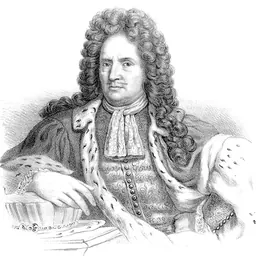
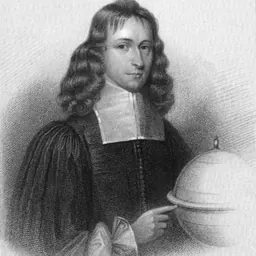
Carl Gustav Rehnskiöld. Engraving by Johan Snack based on a painting by David von Krafft.
Together with Quartermaster Lieutenant-General Gerdt Ehrenschantz and artillery commander Johan Siöblad, Rehnskiöld drafted a simple battle plan that was never written on paper. The Swedes would attack with two columns, consisting of both infantry and cavalry, against the central part of the fortification line. Each column would then move to the south and north along the line and roll up the Russian defense so that the Russian Army would be trapped in two pockets against the Narva River. The Swedish artillery would support their advance. Rehnskiöld himself took charge of the left column while general Otto Vellingk commanded the right. Rehnskiöld's column was split into two groups, one under Major-General Georg Johan Maidel and the other under Colonel Magnus Stenbock.
In the afternoon of 20 November, the two Swedish columns advanced towards the Russian line. The Swedes, hidden by a heavy snowstorm that blew directly into the eyes of the Russians, breached the fortifications, causing a violent massacre and panic among the Russian troops. After a wild rout the Russian Army chose to surrender, and after negotiations were allowed to withdraw back to Russia. The Russians lost about 9,000 men during the battle, and their entire command was captured, while the Swedish casualties were estimated to be around 1,900 men. Peter I himself was not present at the battle, since he handed over the command of his army to Duke Charles Eugène de Croÿ, who became a prisoner of war. Many European nations were greatly impressed with the Swedish victory and congratulated the King and his army. Magnus Stenbock later praised Rehnskiöld for his efforts during the battle:
Campaign in Poland
The main Swedish army overwintered outside the town of Dorpat and the dilapidated Laiuse Castle. In the spring, the army was reinforced by regiments from the Swedish mainland, raising their numbers to 24,000 men. In June the army broke up and marched south to Riga to attack Augustus II and his combined Saxon-Russian army, which was estimated to 38,000 men. On 7 July the Swedish main army stood outside Riga, and Charles XII and Rehnskiöld planned to cross the Düna river right next to the city. Augustus II entrenched his troops along the river, but they were uncertain whether the Swedes were going to cross at Koknese or Riga, and decided to split their forces. Rehnskiöld drafted the battle plan together with Carl Magnus Stuart and Erik Dahlbergh. Dahlberg was tasked to obtain landing boats near Riga and construct floating batteries, embarked by infantry units that would land on the opposite beach and establish a bridgehead. A floating bridge had been constructed by Dahlbergh to transfer the cavalry across the river and pursue the Saxon troops. The cavalry was commanded by Rehnskiöld, while the infantry was commanded by the King accompanied by Lieutenant-General Bernhard von Liewen.
Having failed to defeat Augustus II in the Düna operation, Charles XII decided to carry out a military campaign on Polish territory to defeat Augustus' army, and secure his own back for an attack against Russia. In July 1702, Charles XII and his main army caught up with Augustus II at the village of Kliszów northeast of Kraków. He was eager to attack Augustus II, but on Rehnskiöld's advice, waited for reinforcements from Lieutenant-General Carl Mörner's division, which arrived on 8 July. At the same time, Augustus waited for the Polish cavalry, which arrived the following day. Together with Lieutenant-Generals Bernhard von Liewen and Jakob Spens, Rehnskiöld drafted the battle plan. Augustus had around 24,000 Saxon-Polish troops covered by dense forest and vast swamps on the Nida river. The artillery was stationed at a height between the two wings, while the Saxon center was placed behind the artillery. The Swedish Army consisted of 12,000 troops. The main Swedish force would move parallel to the Saxon front line and perform a flanking maneuver towards the Saxon right wing. The Swedish right wing, led by Rehnskiöld, would defend itself against the Saxon frontal assault, led by Field Marshal Adam Heinrich von Steinau, before the Saxon troops had the time to regroup in order to repel the Swedish main force.
On the morning of 9 July, the Swedish troops advanced towards the Saxon front line. When the Polish cavalry began to attack the Swedish left wing and threatened to surround the main Swedish force, the Swedes were forced to regroup to face the Polish cavalry and managed to rout the cavalry. By ordering his troops to form squares, Rehnskiöld successfully resisted Steinau's frontal attack, whose troops were forced to withdraw. The Swedish main forces advanced into the Saxon camp, took control of the Saxon artillery, and threatened to encircle the Saxon center. Augustus II was forced to withdraw, and lost about 4,000 men, with Swedish losses were estimated at 1,100 men. Among the dead was Rehnskiöld's nephew Frans Anton Rehnskiöld, who was Captain of the Life Guards, and Frederick IV, Duke of Holstein-Gottorp, who commanded the Swedish left wing in their attack.
Charles XII failed to hunt down Augustus II's retreating army and Augustus II's defeat was once again not decisive, as he was able to withdraw and organize new troops. As a result, Charles XII and the main Swedish army operated around Poland to destroy Augustus II's Polish resources and his Saxon division, while also persuading various nobility factions in Poland who opposed Augustus II to depose him as King. In December 1702 Rehnskiöld was commissioned with four infantry and nine cavalry regiments, about 10,000 men, operating independently from the Swedish main army. He was tasked with securing the negotiations between the various noble factions in Warsaw, and to collect money and food from the immediate vicinity to supply the Swedish troops besieging the city of Thorn. He established headquarters near Piotrków Trybunalski, while his troops were mostly stationed in different locations in Greater Poland, where he kept a watchful eye towards the nobility factions fighting for Augustus II. During his debriefings to the royal headquarters, Rehnskiöld exchanged command with Major-General Arvid Axel Mardefelt. In April 1703 Rehnskiöld was promoted to General of cavalry, elevating his prestige during his negotiations with the Polish nobility factions which included Prince James Louis Sobieski, magnate Hieronim Augustyn Lubomirski and Cardinal Michał Stefan Radziejowski. In February 1704 the Warsaw Confederation congregated and agreed to depose Augustus II as King of Poland, since he had lost much of his influence in the kingdom. Rehnskiöld was given the task of securing their deliberations and preventing the troops of Augustus II from advancing eastwards.
French engraving from 1707 depicting Saxon soldiers surrendering to Rehnskiöld following the battle of Fraustadt. Rehnskiöld gave the attack signal at noon on 3 February 1706. The battle of Fraustadt began with the two Swedish wings advancing faster than the center, making the Swedish battle line curved, which Schulenburg perceived as a sign of weakness. The Swedish wings, however, charged the Saxon flanks and drove off their cavalry. The Swedish wings encircled and enclosed the Saxon-Russian center, which soon disintegrated, forcing Schulenburg to retreat. Schulenburg himself managed to escape, but large parts of his army were cut down by the Swedish cavalry and the remnants were surrounded and captured. After two hours of battle, 7,377 men from Schulenburg's army had been killed and between 7,300 and 7,900 were taken prisoner; among these, about 2,000 were wounded. Of Rehnskiöld's troops, 400 were killed and 1,000 were wounded. Many of the Saxon prisoners were subsequently employed in the Swedish Army and formed a Bavarian regiment and a French and a Swiss battalion respectively.
Rehnskiöld's name was later tied to a massacre that was purported to have occurred shortly after the battle. According to testimony from a Lieutenant Joachim Matthiæ Lyth and Lieutenant-Colonel Nils Gyllenstierna, Rehnskiöld ordered the massacre of up to 500 Russian prisoners of war.
A few days later Lewenhaupt proposed, first to Piper and later to Rehnskiöld, that they should reconcile so that their hostile relationship would not affect the other Swedish officers. In the presence of Swedish generals and colonels, Rehnskiöld and Piper settled their differences. Both remained in Moscow and established a collaboration to help the Swedish prisoners of war and satisfy their interests. With the approval of the Russian authorities they established a management office in the city, through which all contact with the Swedish authorities was routed. They worked hard to raise money for the Swedish prisoners through funds sent from the State Treasury in Stockholm; however, over the years these transfers became increasingly sporadic.
Due to the lack of support from the Swedish authorities for their captured countrymen, Rehnskiöld and the Swedish officers were forced to request allowances from the Tsar in 1714. However, the Tsar decided to exacerbate the conditions of subsistence for the Swedish officers as a punishment for Rehnskiöld's and Piper's earlier inflexibility before the Senate in Saint Petersburg, where threats of reprisals were required to compel them to sign the exchange act between the Swedish Commandant Nils Stromberg and the Russian General Adam Veyde, a matter in which they had no authority. The Tsar's resentment over reports of the treatment of Russian prisoners of war in Sweden was a contributing factor to this decision. Piper was imprisoned in Shlisselburg Fortress, where he fell ill and died in 1716. Rehnskiöld was forced to take care of the management office by himself. He wrote letters of complaint to the Swedish authorities regarding the misery of the Swedish prisoners around Russia. With the rapid spread of pietism among the prisoners Rehnskiöld formed an ecclesiastical board in Moscow, from which captive chaplains were sent out to the Swedish prison camps. Rehnskiöld himself decided the biblical texts for the four set days for intercession.
After a long time without any effort from the Swedish side, the matter of getting Rehnskiöld exchanged from captivity was raised in the spring of 1718, when Russia commenced peace negotiations with Sweden in Lövö village on Vårdö in Åland. Rehnskiöld came to be involved in the matter of succession in Sweden on the initiative of Georg Heinrich von Görtz from Holstein-Gottorp, who had served as Swedish "grand-vizier" since 1716 and was responsible for the peace talks. Charles XII had no heirs, so Görtz wanted Rehnskiöld on his side to strengthen his own position in the Holstein Party, in which Görtz held great influence. Görtz and his party wanted to make Charles Frederick, Duke of Holstein-Gottorp heir to the Swedish throne, in order to counteract the pressure from the Hessian party, whose choice for heir to the throne was landgrave Frederick of Hesse-Kassel, Prince consort to Charles XII's sister Princess Ulrika Eleonora. After pressure from the Swedish side, Peter I gave the order on 17 September to send Rehnskiöld to Lövö, where he would be exchanged with Major-General Ivan Trubetskoy and Count Avtonom Golovin. Rehnskiöld arrived at Lovö on 14 October, where he entrusted Görtz's secretary, Andreas Stambke, to convince Charles Frederick to marry a daughter to Peter I in order to bolster relations between Sweden and Russia. On 30 October the exchange was finalized and Rehnskiöld was finally released.
The last years (1718–1722)
Immediately after his release, Rehnskiöld went to Stockholm and met with Görtz. Later, Rehnskiöld went to Charles XII's headquarters in Tistedalen in Norway, where the King commenced his second Norwegian campaign by laying siege to the fortress of Fredriksten. Rehnskiöld arrived at the end of November 1718, and the reunion with the King was claimed as "one of his last joys in life". Both had a long conversation on 28 November, regarding the current operational situation in Norway and the peace talks with Russia, about which Rehnskiöld obtained fresh information. Two days later, on the evening of 30 November, Charles was shot by a projectile and immediately killed. The King's sudden death forced Prince Frederick, appointed Generalissimo of the army, to call for a council of war, where the Swedes decided that the army must abandon the siege and return to Sweden. The report on the death of Charles XII was signed by Rehnskiöld and Field Marshal Carl Mörner and sent to the Privy Council in Stockholm. Furthermore, Frederick ordered the arrest of Görtz on 2 December, since the Hessian party sought to seize the upper hand in the matter of succession, which they gained with the death of Charles XII. Görtz was taken to Stockholm, where he was sentenced to death at the Svea Court of Appeal and beheaded on 19 February 1719. With Görtz's death, the negotiations with Russia were discontinued and the war went on for another three years.
Another council of war took place in Strömstad on 14 January 1719. The reason for this was that a considerable sum of 100,000 riksdaler arrived from the war commissioner, and Prince Frederick wanted to distribute the money to the high command of the army, in order to win influential votes in the matter of succession. Rehnskiöld himself received 12,000 riksdaler, which he saw as a recognition for his time in Russian captivity. Rehnskiöld later entered the Privy Council in Stockholm. When the soldiers carrying the King's body arrived in Stockholm on 27 January, they were received by the council members Rehnskiöld, Arvid Horn and Gustaf Cronhielm. On 26 February Charles XII was buried in the Riddarholm Church; Rehnskiöld carried the royal spire during a long procession from Karlberg Palace to Riddarholmen.
Due to the kingdom's critical state of weakness, Rehnskiöld was appointed commander in western Sweden to protect these regions from Danish attacks. Rehnskiöld travelled between Uddevalla and Gothenburg for inspection, strengthening the defenses in the cities and fortresses in Bohuslän and Scania. On 10 July, Danish forces landed at Strömstad, and a Danish-Norwegian main army of 30,000 men crossed the border at Svinesund and advanced south without resistance. Shortly after, Strömstad was taken and Frederick IV set up his headquarters there. In Bohuslän, Rehnskiöld had 5,000 men at his disposal and ordered them to burn down supply depots to prevent them from falling into Danish hands. He gathered his troops and fortified his position in Uddevalla, with the intent to defend the road connections towards Vänersborg and Dalsland. Rehnskiöld later learned about Commandant Henrich Danckwardt's surrender of Carlsten Fortress and decided to stay in Uddevalla despite the threat of being cut off by Danish forces, who could be landed north of Gothenburg. The Danish-Norwegian army in Strömstad, however, returned to Norway at the end of August. Rehnskiöld proceeded to Scania and defended it from an invasion threat. On 28 October 1719, an armistice was agreed with Denmark, and a peace treaty was signed in Frederiksborg on 3 July 1720.
Promotions Ensign: 2 December 1673 The officiant was Chaplain Jöran Nordberg, who had followed Rehnskiöld and the army from 1703 to 1715. Rehnskiöld's widow, Elisabeth, married Imperial Count Erasmus Ernst Fredrik von Küssow in 1724, and died on 23 November 1726.
Don’t just read it —
keep it.
Full-length biographies made to live with: read them, listen on the way to work, watch them tonight.
- E-book
- Audio
- Video
Instant download · yours to keep · every purchase keeps this site free
Important facts
People in Carl Gustav Rehnskiöld's life
Named in this biography and alive at the same time






Related people
Same field, nearest in time



Contemporaries
People whose lives overlapped Carl Gustav Rehnskiöld's


Frequently asked questions
Who was Carl Gustav Rehnskiöld?
Swedish field marshal (1651-1722)
When was Carl Gustav Rehnskiöld born?
Carl Gustav Rehnskiöld was born on 6 August 1651 in Stralsund.
When did Carl Gustav Rehnskiöld die?
Carl Gustav Rehnskiöld died on 29 January 1722 in Kärnbo socken.
What was Carl Gustav Rehnskiöld's occupation?
Carl Gustav Rehnskiöld was a military personnel, military officer and general field marshal.
What nationality was Carl Gustav Rehnskiöld?
Carl Gustav Rehnskiöld was Swedish.
Sources & further reading
· Wikipedia: Carl Gustav Rehnskiöld
· DBpedia: Carl Gustav Rehnskiöld
Cite this page
APA: Biography.guide. (2026). Carl Gustav Rehnskiöld. https://biography.guide/carl-gustav-rehnskiold/
MLA: "Carl Gustav Rehnskiöld." Biography.guide, https://biography.guide/carl-gustav-rehnskiold/.
Chicago: "Carl Gustav Rehnskiöld." Biography.guide. https://biography.guide/carl-gustav-rehnskiold/.
Data last updated: 2026-09-20 · Spot an error? Report a correction.
Page generated 2026-09-27 05:17 UTC