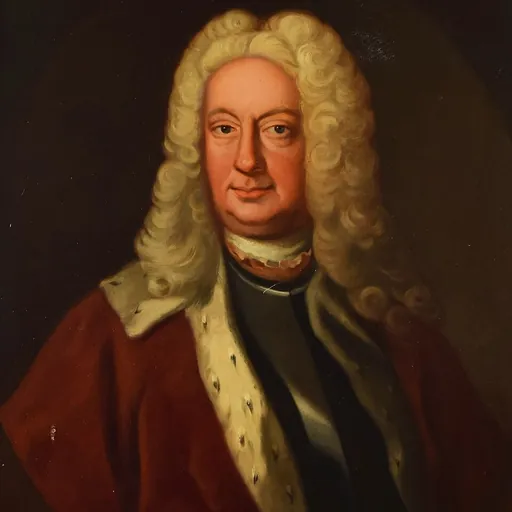
Carl Gustaf Dücker
Swedish military personnel of Baltic German origin
About Carl Gustaf Dücker
Lived 1663 – 1732 (aged 68–69). Carl Gustaf Dücker was a Swedish and Russian politician, land owner, military personnel, military officer, marshal and governor-general.
Count Carl Gustaf Dücker (1663 – 3 July 1732) was a Swedish field marshal (Fältmarskalk) and Royal Councillor.
Born in Livonia, Dücker began his career fighting for the French in the Nine Years' war. At the start of the Great Northern War, Dücker became a subordinate to King Charles XII and served under him with distinction during the Polish and Russian campaigns. Dücker was taken prisoner following the disastrous battle of Poltava, but was released soon after in a prisoner exchange. Upon returning to service, he fought against Coalition forces in Swedish Pomerania, most notably during the siege of Stralsund. After being taken prisoner once again, he returned to Sweden in early 1718 and participated in the siege of Fredriksten.
In January 1719, he was promoted to the rank of field marshal and received the title of count and a seat in the Royal Council. Dücker was also put in charge of the War College but did not become president. Dücker died in 1732 in Stockholm.
Early life Carl Gustaf Dücker was born in Swedish Livonia in 1663 to Major Carl Fredrik Dücker and Anna Elisabeth Sass. His ancestors originally came from Westphalia before they immigrated to the Baltic region in the 15th century. Originally starting out as a cadet, Dücker was soon promoted to an ensign the same year as enlisting. He also took part in the Battle of Kalisz. However, after a short while in captivity, he was released in exchange for a colonel named Peter Lefort, who was being held prisoner by the Swedes. In June, he was Governor-General of Livonia.
During his time in the council, he advocated for an alliance with Great Britain and proposed a plan to send troops to Finland for a joint attack on Livonia, which had now come under Russian occupation. The two had no children.
The Dücker family lineage would become extinct on the male side following the death of Johan Henrik Valter Dücker in 1892.
Dücker died on 3 July 1732 in Stockholm. He is buried in Riddarholmen Church.
Don’t just read it —
keep it.
Full-length biographies made to live with: read them, listen on the way to work, watch them tonight.
- E-book
- Audio
- Video
Instant download · yours to keep · every purchase keeps this site free
Important facts
Related people
Same field, nearest in time




Contemporaries
People whose lives overlapped Carl Gustaf Dücker's




Frequently asked questions
Who was Carl Gustaf Dücker?
Swedish military personnel of Baltic German origin (1663-1732)
When was Carl Gustaf Dücker born?
Carl Gustaf Dücker was born in 1663 in Livonia.
When did Carl Gustaf Dücker die?
Carl Gustaf Dücker died on 3 July 1732 in Stockholm.
What was Carl Gustaf Dücker's occupation?
Carl Gustaf Dücker was a politician, land owner, military personnel, military officer, marshal and governor-general.
What nationality was Carl Gustaf Dücker?
Carl Gustaf Dücker was Swedish and Russian.
Sources & further reading
· Wikipedia: Carl Gustaf Dücker
Cite this page
APA: Biography.guide. (2026). Carl Gustaf Dücker. https://biography.guide/carl-gustaf-ducker/
MLA: "Carl Gustaf Dücker." Biography.guide, https://biography.guide/carl-gustaf-ducker/.
Chicago: "Carl Gustaf Dücker." Biography.guide. https://biography.guide/carl-gustaf-ducker/.
Data last updated: 2026-09-21 · Spot an error? Report a correction.
Portrait: Wikimedia Commons · author & licence
Page generated 2026-09-27 05:00 UTC