
Carl Friedrich August Grosse
German writer, translator and geologist
About Carl Friedrich August Grosse
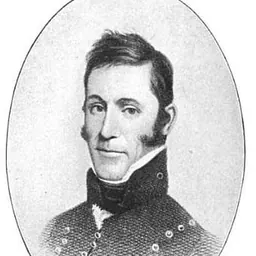
Lived 1768 – 1847 (aged 78). Carl Friedrich August Grosse was a German writer, geologist, geographer and mineralogist.
Carl Friedrich August Grosse (5 June 1768 – 15 March 1847) also known as Edouard Romeo Vargas-Bedemar was a German author, translator, aesthetic philosopher, and mineralogist. He is best known for his gothic novel Der Genius, which was translated into English by Peter Will as Horrid Mysteries, subtitled "A Story From the German Of The Marquis Of Grosse" and subsequently referenced by Jane Austen as one of the seven 'horrid novels' in Northanger Abbey. His philosophy focused on the aesthetics of sublimity, following the work of Friedrich Schiller, and provided one of the first philosophical treatments of imagination.
Biography Grosse was born in Magdeburg, Germany on 5 June 1768, the son of Erenst Grosse, a successful doctor, and Dorothea Elizabeth Amalia Schröder. In 1786, he enrolled at the University of Göttingen to study medicine, and began his literary career there with essays on the sublime and transmigration of the soul, as well as engaging in translation of works by Scottish moral philosopher and poet James Beattie. Grosse also served some time in the Austrian military as an officer. He invented a fake family for himself: father Carl Emmanuel von Vargas, mother Elizabeth Murray (who he claimed was of old Scottish ancestry), and sister Rosalia von Spreti. Grosse's fiancée Luise Michaelis (daughter of scholar Johann David Michaelis) described him as "mysterious, impressive, and frightening" and ultimately did not end up marrying him.
Grosse died on 15 March 1847 in Copenhagen. Grosse was a proponent of hearing as the sense best suited to the sublime, rather than the typically privileged sight. He wrote that the ear is "most suited to an indefinite Schwärmerei of imagination." He also theorized that distance of sound (which he called "entfernung" had a key role in producing sublime experiences, writing "A soft music heard from afar is far more stirring than if heard in the concert hall; and the wavering tones of the distant [entfernung] set off the power of imagination into the realm of scattered images." According to Grosse, the imagination turns passive emotional sublimity into an active emotional without any moral evaluation, a philosophical stance that anticipated amoralism and was one of the earliest attempts at a theory of imagination.
Der Genius was loosely translated into English by Peter Will and entitled Horrid Mysteries. Printed by Minerva Press, the book became well known to an English audience and was included by Jane Austen among seven 'horrid' novels in Northanger Abbey, alongside The Necromancer by Karl Friedrich Kahlert, The Castle of Wolfenbach by Eliza Parsons, Clermont by Regina Maria Roche, The Mysterious Warning, a German Tale, by Eliza Parsons, The Midnight Bell by Francis Lathom, and The Orphan of the Rhine by Eleanor Sleath. The book was favoured by early English romantics.
Works
Über das Erhabene (Göttingen and Leipzig, 1788) Helim, oder Über die Seelenwanderung (Zittau and Leipzig, 1789) Der Genius. Aus den Papieren des Marquis C. von G. (Halle, 1791–1795) Memoiren des Marquis von G. (Berlin, 1792–1795) Der Dolch (Berlin, 1794–1795) Chlorinde. Aus den Papieren des Don Juans von B. (Berlin 1796) Horrid Mysteries (London, 1796) Über des grieschische Epigramm (Berlin and Stettin, 1798) Reise nach dem Hohen Norden durch Schweden, Norwegen, und Lappland. In den Jahren 1810, 1811, 1812, und 1814 (Frankfurt, 1819)
Don’t just read it —
keep it.
Full-length biographies made to live with: read them, listen on the way to work, watch them tonight.
- E-book
- Audio
- Video
Instant download · yours to keep · every purchase keeps this site free
Important facts
People in Carl Friedrich August Grosse's life
Named in this biography and alive at the same time
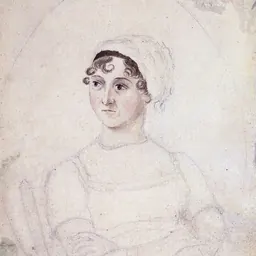

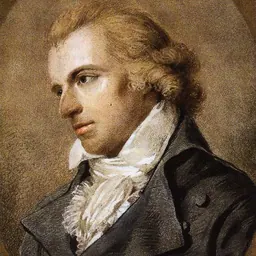
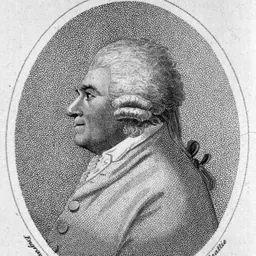


Related people
Same field, nearest in time

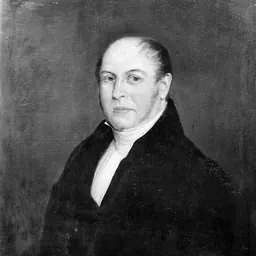

Contemporaries
People whose lives overlapped Carl Friedrich August Grosse's



Frequently asked questions
Who was Carl Friedrich August Grosse?
German writer, translator and geologist
When was Carl Friedrich August Grosse born?
Carl Friedrich August Grosse was born on 5 June 1768 in Magdeburg.
When did Carl Friedrich August Grosse die?
Carl Friedrich August Grosse died on 15 March 1847 in Copenhagen.
What was Carl Friedrich August Grosse's occupation?
Carl Friedrich August Grosse was a writer, geologist, geographer and mineralogist.
What nationality was Carl Friedrich August Grosse?
Carl Friedrich August Grosse was German.
Sources & further reading
· Wikipedia: Carl Friedrich August Grosse
Cite this page
APA: Biography.guide. (2026). Carl Friedrich August Grosse. https://biography.guide/carl-friedrich-august-grosse/
MLA: "Carl Friedrich August Grosse." Biography.guide, https://biography.guide/carl-friedrich-august-grosse/.
Chicago: "Carl Friedrich August Grosse." Biography.guide. https://biography.guide/carl-friedrich-august-grosse/.
Data last updated: 2026-09-20 · Spot an error? Report a correction.
Page generated 2026-09-27 05:06 UTC