
About Carl F. Kraenzel
Lived 1906 – 1980 (aged 73). Carl F. Kraenzel was an American sociologist, known for Great Plains sociology and Rural sociology.
Carl Frederick Kraenzel (November 1, 1906 – July 26, 1980) was an American sociologist. Most of Kraenzel's work focuses on the people of the Great Plains, covering a range of topics including quality of life, power relations, resource use, and mental health. Kraenzel has been widely published in a variety of professional journals, monographs, research bulletins, special reports, and books in the fields of rural sociology, Great Plains sociology, and natural resource sociology. His best known work, The Great Plains in Transition, describes the challenges of social life and connections to the natural environments in the North American semiarid region located between the 98th meridian and the Rocky Mountains. While Kraenzel may not have been a historian, The Great Plains in Transition has greatly influenced the study of Great Plains history.
Biography Born in Hebron, North Dakota, Kraenzel grew up on a farm in the countryside of the Northern Great Plains and witnessed first-hand the challenges of rural life and living in the region. Kraenzel attended the University of North Dakota for his undergraduate degree, and continued on to do graduate work at the University of Minnesota, Harvard University, and the University of Wisconsin, where he received his Ph.D. in 1935. While at the University of Wisconsin, Kraenzel conducted research under Dr. E. L. Kirkpatrick on a study of relief in relation to rural rehabilitation in the Great Lakes states area of Michigan, Wisconsin and Minnesota. Upon completion of the study, Kraenzel returned to Wisconsin to act as Coordinator between the Wisconsin Emergency Relief Administration and the Wisconsin College of Agriculture. Carl F. Kraenzel died on July 16, 1980, in Las Cruces, New Mexico.
Writings
Major works
The Great Plains in Transition. University of Oklahoma Press, 1955. The Social Cost of Space in the Yonland. Endowment and Research Foundation at Montana State University, 1980.
Works in association with other authors
The Northern Plains in a World of Change: A Study Outline for Adult Groups in the Northern Plains of Canada and the United States. Gregory-Cartwright, 1942. Montana's Population Changes, 1920 to 1950: Especially as to Numbers and Composition. Montana State College, Agricultural Experiment Station, 1956. Social Forces in Rural Communities of Sparsely Populated Areas; Findings and Recommendations Growing Out of a Mental Health Study. Montana Agricultural Experiment Station, 1971.
Impact on the study of the Great Plains Kraenzel's work has added greatly to the historical discussion of the Great Plains and its influences. Regionalism and cultural adaptation are two of the important elements of Kraenzel's examination of the Great Plains, where the residents of the Great Plains must reside in the region and develop its needed facilities and institutions in order to cooperate with and become equal to the other regions in the United States. While neither of these two terms are unique to Kraenzel and his study alone, they add to the greater discussion.
Kraenzel created his own theory of the study of communities on the Great Plains that focus around two areas: the "" and the "yonland," particularly related to the social and community life of a region. While there is a similarity to the hinterland theory in these terms, Kraenzel insists these terms are separate still as all the plains are hinterland. The "," according to Kraenzel: "is the more densely settled, often stringlike, area of habitation along the major avenues of transportation. Generally, this area includes the railroads, which are frequently paralleled by the major highways, bus routes, and by the public utilities such as telephone and telegraph lines, gas lines, and power distribution facilities. Here also, are found the larger towns and cities and all that they imply--specialized and enlarged wholesaling and retailing; banking; shipping and processing for livestock and grain; storage; and specialization in hospital and medical-care facilities."
There is a push-pull factor related to the hinterlands of the Great Plains and the core of large cities on the edge of the Great Plains as well as throughout the country. Kraenzel's examination of the push-pull factor applies to his and yonland theory because of the population fluctuations that emerge, shifting the communities in the sutland. Higher education is a popular example of the pull-factor, where due to the larger colleges and universities being located on the far edges of the plains or outside the region all together. Shopping, entertainment, sports, and cultural events are further example of the push-pull factor as it applies to the /yonland theory because they draw residents of the Great Plains to other cities to take part in what their own communities are too small to support.
Today, with the celebration of social and community life, especially on the Great Plains, regionalism and the relationship between the and the yonland are just as important as ever to understanding the inhabitants of the plains.
Don’t just read it —
keep it.
Full-length biographies made to live with: read them, listen on the way to work, watch them tonight.
- E-book
- Audio
- Video
Instant download · yours to keep · every purchase keeps this site free
Important facts
Related people
Same field, nearest in time

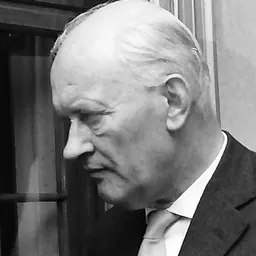

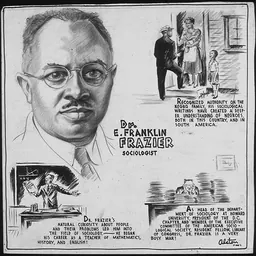


Contemporaries
People whose lives overlapped Carl F. Kraenzel's

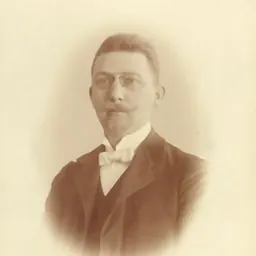
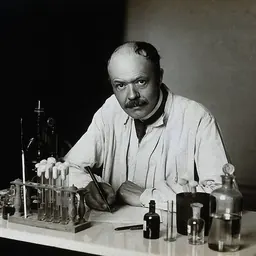
Frequently asked questions
Who was Carl F. Kraenzel?
American sociologist
When was Carl F. Kraenzel born?
Carl F. Kraenzel was born on 1 November 1906 in Hebron.
When did Carl F. Kraenzel die?
Carl F. Kraenzel died on 26 July 1980 in Las Cruces.
What was Carl F. Kraenzel's occupation?
Carl F. Kraenzel was a sociologist.
What was Carl F. Kraenzel known for?
Carl F. Kraenzel was known for Great Plains sociology and Rural sociology.
What nationality was Carl F. Kraenzel?
Carl F. Kraenzel was American.
Sources & further reading
Cite this page
APA: Biography.guide. (2026). Carl F. Kraenzel. https://biography.guide/carl-f-kraenzel/
MLA: "Carl F. Kraenzel." Biography.guide, https://biography.guide/carl-f-kraenzel/.
Chicago: "Carl F. Kraenzel." Biography.guide. https://biography.guide/carl-f-kraenzel/.
Data last updated: 2026-09-20 · Spot an error? Report a correction.
Page generated 2026-09-27 05:25 UTC