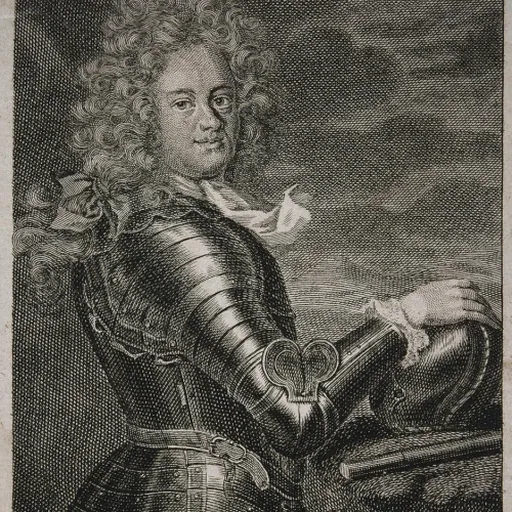
About Carl Ewald von Rönne
Lived 1663 – 1716 (aged 53). Carl Ewald von Rönne was a military personnel.
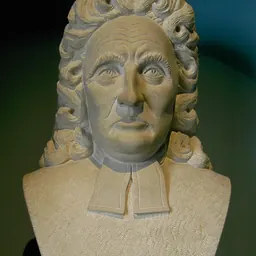
Carl Ewald von Rönne (15 December 1663 – 29 December 1716) was a German-born Russian cavalry officer. He became General of the Cavalry in the Russian army of Peter the Great. He served in both the Great Northern War and in the Russo-Turkish War of 1710–1713. He also commanded the tsarist army in Ukraine from 1711 to 1716.
Biography
His ancestors, who originally came from Bremen, later moved to Livonia. Carl Ewald von Rönne was born on 15 December 1663 in Courland. Rönne was in the Swedish service as a page from 1673. In 1683, he entered the Dutch service and began his officer career as a cornet in the cavalry. In 1692, he was promoted to captain and served in the service of the Electorate of Saxony in the army of General Patkul.
In 1702, Rönne entered the Tsar's service on the basis of a contract with the Russian Prince Dolgorukov, and in 1703, he became colonel of a dragoon regiment that also bore his name.
In July 1703, he defeated Swedish units in the Battle of Vyborg. He only lost 32 soldiers as compared to over 1,000 Swedish losses. Peter I witnessed the battle and appointed him commander of the conquered Nyenschanz fortress and subsequently the first commander of Saint Petersburg.
In May 1704, he became major general. He took part in the conquest of the cities of Narva and Tartu, defeating the Swedes under General Wolmar Anton von Schlippenbach. In 1705, Rönne became lieutenant general of the cavalry.
In 1706, a 3,000-man raiding party under the command of Carl Ewald von Rönne attacked a 13,000-man unit of Count Potozki in Windau, Duchy of Courland and Semigallia (now Latvia) and routed them. On July 3, 1708, Rönne took part in the Battle of Holowczyn, which was unsuccessful for the Russian army. On February 10, 1709, Rönne and his unit of ten dragoon regiments repelled the attack of the Swedish forces under the command of Charles XII. He successfully attacked the city of Krasnokutsk and almost captured the Swedish king.
On April 12, 1709, Rönne's units were attacked by the numerically significantly larger troops of the Swedish general Carl Kruse. Rönne was able to successfully repel the attack and pushed the Swedes across the Vorskla River.
In the Battle of Poltava on June 27, 1709, Rönne was wounded, after which he handed over command to General Rodion Baur. After this battle he was awarded the rank of general of cavalry. In 1710 he was appointed to the rank of general. On 14 July, 1711, Toma Cantacuzino and Rönne besieged and conquered Brăila.
From 1711 to 1715 Rönne was commander-in-chief of the Russian troops in Ukraine and from 1716 until his death commander-in-chief of the Russian corps in Poland.
Participation in the battles
17021703 conquest of Nöteborg (Schlüsselburg/Shlisselburg) and Nyenschanz 1703 participation in the battle of Systerbäck as a commanding colonel 1704 participation in the battles of Reval and Narva and the first victory, as commander-in-chief of an army, near Wesenberg 1705 sieges of Mitau and Bauske 1706 participation in the battle of Windau 1708 the defeat at Golovchin/Holowczyn 1709 participation in the battle of Poltava Participated in the siege and capture of Riga 1711 the victory as commander-in-chief of a force at the siege of Brăila or Brailov
Orders and awards
Knight of the Order of Saint Andrew the First-Called Knight of the Order of the White Eagle (Poland) Knight of the Prussian Order of the Générosité He received the rarely awarded Order of Gratitude de la Reconnaissance from the Duke of Courland. The Duke also gave him the Bershof estate (1710) and he became pledgee of the Alt-Pönau (Kensingshof) estate (1711), both located in Courland.
Family Carl Ewald von Rönne was married to the Russian lady-in-waiting Anna Lucia de Preen. She was a daughter of Mr. Gustav von Preen from Mecklenburg and Dorothea von Manteuffel, heir to Puhren, Wilzen and Paddern.
After her husband's death, Anna Luzia became the chief steward to the widowed Anna Ioannovna, duchess in the Courland residence of Mitau. Anna Ioannovna was a daughter of Tsar Ivan V and the niece of Peter I and later ruled Russia as Tsarina from 1730 to 1740.
Children:
Carl Johann Ernst Freiherr von Rönne (* 1700; † 1733), captain of Windau
Don’t just read it —
keep it.
Full-length biographies made to live with: read them, listen on the way to work, watch them tonight.
- E-book
- Audio
- Video
Instant download · yours to keep · every purchase keeps this site free
Important facts
People in Carl Ewald von Rönne's life
Named in this biography and alive at the same time


Related people
Same field, nearest in time




Contemporaries
People whose lives overlapped Carl Ewald von Rönne's



Frequently asked questions
Who was Carl Ewald von Rönne?
Baltic German military personnel (1663-1716)
When was Carl Ewald von Rönne born?
Carl Ewald von Rönne was born on 25 December 1663 in Tallinn.
When did Carl Ewald von Rönne die?
Carl Ewald von Rönne died on 29 December 1716 in Hrodna.
What was Carl Ewald von Rönne's occupation?
Carl Ewald von Rönne was a military personnel.
Sources & further reading
· Wikipedia: Carl Ewald von Rönne
· DBpedia: Carl Ewald von Rönne
Cite this page
APA: Biography.guide. (2026). Carl Ewald von Rönne. https://biography.guide/carl-ewald-von-ronne/
MLA: "Carl Ewald von Rönne." Biography.guide, https://biography.guide/carl-ewald-von-ronne/.
Chicago: "Carl Ewald von Rönne." Biography.guide. https://biography.guide/carl-ewald-von-ronne/.
Data last updated: 2026-09-22 · Spot an error? Report a correction.
Portrait: Wikimedia Commons · author & licence
Page generated 2026-09-27 05:04 UTC