
About Carl Einstein
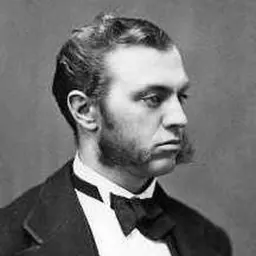
Lived 1885 – 1940 (aged 55). Carl Einstein was a German and French art historian, anarchist, writer, screenwriter, art critic and poet.
Early life Carl Einstein who was born to a German Jewish family on 26 April 1885, in the Rhineland town of Neuwied. In 1907 he visited Paris and learnt of Pablo Picasso, Georges Braque and Juan Gris, as well as other artists. Upon his return he started writing prose and joined the radical circle around Franz Pfemfert and his magazine Die Aktion. This led to the publication of Bebuquin oder die Dilettanten des Wunders in serialised form in Die Aktion in 1912, with a subsequent volume collecting the episodes in a single book. In 1913 he married Maria Ramm, the sister of Alexandra Ramm-Pfemfert and so becoming Franz's brother in law. served as a soldier of Imperial Germany in World War I. The majority of his wartime service was spent in German-occupied Belgium. The work carried out by German scholars on Congolese art during the occupation would prove to be considerably helpful in Einstein's later efforts to encourage the beginning of a serious appreciation of black African art by Europeans.
Einstein’s life after the First World War was marked by the violent political and social implications of the war and revolutionary sentiment following the Hohenzollern monarchy's collapse. He was actively involved in the short-lived Revolutionary Brussels Soldiers' Council and to a lesser extent in the failed Spartacist Uprising in Berlin and later in the defeated anarchist Durruti Column during the Spanish Civil War.
Confusion with Albert Einstein Albert Einstein was offered a part-time professorship at Leiden University in 1920. Hendrik Lorentz, one of the people who organised the offer saw it as way of promoting international reconciliation following the First World War. However, when the proposed appointment was passed to the government bureaucracy for approval as University professors were regarded as senior civil servants who required royal approval. However, a Dutch military intelligence report was submitted to the Minister of Education Johannes Theodoor de Visser, which gave an account of Carl Einstein's activities in the 1918 Brussels Soldiers' Council. This caused delays in governmental approval for the appointment. This was accompanied by a number of accounts of Carl's agitational activity during the German Revolution, including Carl's graveside oration after the murder of Rosa Luxemburg, which frequently omitted his first name. It is possible that this confusion led Paul Weyland to coin the phrase "scientific Dadaism". Indeed, Hannah Höch featured the inclusion of the image of Albert Einstein in her collage Schnitt mit dem Küchenmesser. Dada durch die letzte weimarer Bierbauchkulturepoche Deutschlands, which was exhibited in the first International Dada Fair, held in Berlin in 1920. Other major works include the final volume of the prestigious Propyläen Verlag history of art series Die Kunst des 20. Jahrhunderts (Art of the 20th Century), which may have gained him an invitation to teach at the Bauhaus (he declined), and the notorious play Die Schlimme Botschaft. Another Africa-related book is Afrikanische Märchen und Legenden, a compilation of African mythology in very expressive language. Einstein also worked on numerous journals and collective projects, among some of the more important: Die Aktion edited by Franz Pfemfert, Die Pleite and Der Blutige Ernst with George Grosz, and the legendary journal Documents: Doctrines, Archéologie, Beaux-arts, Ethnographie edited with Georges Bataille.
Einstein's avant-garde orientation and leftist political sympathies made him a marked man for right-wing attacks during the Weimar Republic. His passion play Die Schlimme Botschaft (The Sad Tidings, or The Bad News) was met with attacks as blasphemous; its 1921 publication resulted in a legal process and a conviction for blasphemy in 1922, and Einstein was forced to atone for the revolutionary ideas placed into the mouth of his Jesus Christ with a 15,000-mark fine.
Better received in France, Einstein left Germany for permanent residence in France in 1928; with Adolf Hitler's rise to power in 1933, the exile became permanent and officially mandated. Having met Lyda Guévrékian in 1928, Einstein married her in 1932. The French Cubist painter and sculptor, Georges Braque, served as a witness.
Einstein spent 1936-1938 fighting in the Spanish Civil War; returning to France where in 1940, he was arrested and interned along with the other German émigrés until his liberation later in the spring of 1940 as a result of chaotic circumstances in the face of the rapidly progressing German invasion. Although able to escape the German occupation of Paris during the Fall of France and flee to the south, he was left trapped on the French border with Francoist Spain.
Seeing no alternatives, Einstein committed suicide in the Pyrenees town of Lestelle-Betharram on 5 July 1940.
Don’t just read it —
keep it.
Full-length biographies made to live with: read them, listen on the way to work, watch them tonight.
- E-book
- Audio
- Video
Instant download · yours to keep · every purchase keeps this site free
Important facts
People in Carl Einstein's life
Named in this biography and alive at the same time




Related people
Same field, nearest in time

Contemporaries
People whose lives overlapped Carl Einstein's




Frequently asked questions
Who was Carl Einstein?
German art historian (1885-1940)
When was Carl Einstein born?
Carl Einstein was born on 26 April 1885 in Neuwied.
When did Carl Einstein die?
Carl Einstein died on 5 July 1940 in Pau.
What was Carl Einstein's occupation?
Carl Einstein was an art historian, anarchist, writer, screenwriter, art critic and poet.
What nationality was Carl Einstein?
Carl Einstein was German and French.
Sources & further reading
Cite this page
APA: Biography.guide. (2026). Carl Einstein. https://biography.guide/carl-einstein/
MLA: "Carl Einstein." Biography.guide, https://biography.guide/carl-einstein/.
Chicago: "Carl Einstein." Biography.guide. https://biography.guide/carl-einstein/.
Data last updated: 2026-09-20 · Spot an error? Report a correction.
Page generated 2026-09-27 05:20 UTC