
About Carl A. Schenck
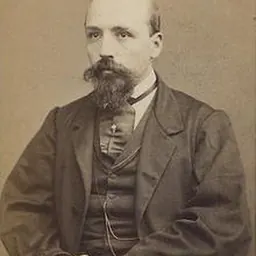
Lived 1868 – 1955 (aged 87). Carl A. Schenck was a German university teacher, conservationist, botanist and forestry scientist, known for Biltmore Estate and Biltmore Forest School.
Carl Alwin Schenck (March 25, 1868 – May 17, 1955) was a German forester and pioneering forestry educator. When Schenck came to the United States to work for George W. Vanderbilt at the Biltmore Estate, he became the third formally trained forester in the United States. He established and operated the Biltmore Forest School, the first forestry school in North America, on Vanderbilt's property.
Schenck also helped create the forestry school at Sewanee: The University of the South, taught at the University of Montana in Missoula and the University of Giessen, and wrote textbooks. His teachings comprise the foundation of forestry education in the United States. However, Schenck's contributions were rarely recognized in histories of forestry because he was a German during an era when the United States fought two wars against Germany.
Early life Schenck (far right) with William Schlich (middle, front row) and other students, Saxony, 1892Schenck was born on March 25, 1868, in Darmstadt, now the state of Hesse, Germany. He studied botany in Darmstadt before enrolling in college. He became the third formally trained forester in the United States. Vanderbilt first hired Gifford Pinchot as the estate's forester. However, his work crews and the sawmill would only take instruction from Pinchot and ignored Schenck because he was a foreigner. As a result, the work crew overharvested tulip poplar trees that floated, leaving many other varieties of trees behind. This property included part of Schenck's long-term "masterpiece", the Biltmore Forest School, which he had always said needed time to see a profit. The Biltmore Forest School provided a one-year course of study, with a curriculum, focused on pairing traditional classroom lectures with extensive hands-on, practical forest management field training.
Lecturer and consultant As a consultant, Schenck helped create the forestry school curriculum at Sewanee: The University of the South. He also attended a reunion of Biltmore Forest School alumni. Alumni of the Biltmore Forest School placed a plaque at the site in his honor in 1950. A redwood grove at Prairie Creek Redwoods State Park, near Orrick, California, was purchased and dedicated in his honor in 1951. A plaque at the site reads, “In memory of Carl Alwin Schenck, 1867-1955. This memorial forest is dedicated to honor a great teacher and founder of the Biltmore Forest School, the first school of forestry in the New World. His ashes have been spread here among the trees he loved.” In 2015, the Forest History Society funded an Emmy Award-winning documentary about Schenck, America's First Forest: Carl Schenck and the Asheville Experiment.
During World War II, Schenck stayed in Lindenfels and taught local boys when the schools closed. He also invented the Biltmore Stick, which is still used today to measure tree heights and diameters. In addition, Schenck had his students develop the tools and tables that were used by the federal government.
However, Schenck's name was rarely included in histories of forestry, in part, because he was German during an era when the United States fought two wars against Germany. Pinchot wrote, "We in the Division of Forestry fully recognized the necessity for professional education in Forestry in this country, but we had small confidence in the leadership of Dr. Fernow and Dr. Schenck. We distrusted them and their German lack of faith in American Forestry. What we wanted was American foresters trained by Americans in American ways for the work ahead in American forests." After meeting Schenck, President Theodore Roosevelt said, “Nobody has a right to work here for so long without becoming a citizen of the United States!"
Pinchot and Schenck also had differing ideas as to how to manage forests, with the former preferring public lands and the latter preferring private lands. As historian Hill notes, "Though the two shared the common goal of popularizing forestry in the United States, their means of meeting that goal conflicted as much as their definition of forestry." Because Pinchot was in charge of the U.S. Forest Service, his vision dominated and shaped forestry in the United States. However, modern historians have found that Schenck's role was greater than what had been depicted in the historical narrative.
Selected publications Our Yellow Poplar: Notes and Tables Showing Contents and Value of Poplar Logs and Poplar Trees . United States, 1896 White Pine Timber Supplies: Letter from the Secretary of Agriculture, Transmitting, in Response to Senate Resolution of April 14, 1897. with Cornelius Clarkson Vermeule, Gifford Pinchot, Henry Solon Graves, and Robert Thomas Hill. Washington, D.C.: U.S. Government Printing Office, 1896 Guide for an Excursion through Biltmore Forest, on September 17th and 18th, 1897. United States: American Forestry Association,1897. Forestry as Applied to Reservations Used as Parks. United States: American Forestry Association, 1898 Our Commonwealth and the Necessity of Forest Preservation: Address Delivered at the First Meeting of the North Carolina Forestry Society, at New Bern, N.C., March 2, 1898. North Carolina, 1898 OCLC 887107759 Forestry for Kentucky: A Steriopticon-Lecture Delivered at the Invitation of the Louisville Board of Trade by C.A. Schenck, Ph. D. Forester of the Biltmore Estate. United States: Louisville Board of Trade, 1899 In the Woods of Minnesota: This Expert German Forester Travels Over the Site of the Proposed Great National Park and as a Result Presents Some Considerations that the People of the State and Country Cannot Afford to Ignore, Large Profits from Small Expenditure and Labor. United States, G.E. Cole, 1899 Forestry vs. lumbering. Asheville, NC: The French Broad Press, 1900. OCLC 83896742 Some Business Problems of American Forestry. Asheville, NC: The French Broad Press, 1900 The Problem of Forestry in Minnesota. St. Paul, Minn: The Pioneer Press Company, 1900 The Commercial Side of Governmental and Private Forestry. United States, Pennsylvania Forestry Association, 1901 Financial Results of Forestry at Biltmore. Asheville, NC, 1903. OCLC 71075215 Lectures on Forest Policy. Second part, Forestry Conditions in the United States. Asheville, NC: 1904 Forest Utilization, Mensuration. Sewanee, TN: The University Press, 1904 Textbooks of Forestry. Sewanee, TN: The University Press, 1904 Forest Mensuration. Sewanee, TN: The University Press,1905 Biltmore Lectures on Sylviculture. Albany, NY: Brandow Printing Co., State Legislative Printers, 1905 Forest Management, 1907 Cruisers' Tables Giving the Contents of Sound Trees, and their Dependence on Diameter, Number of Logs in the Tree, Taper of Tree and Efficiency of Mill. Biltmore, NC: 1909. OCLC 16654564 Forest Finance: Guide to Lectures Delivered at the Biltmore Forest School. Asheville, NC: Inland Press, 1909 Forest Protection: Guide to Lectures Delivered at the Biltmore Forest School. Asheville, NC: Inland Press, 1909 Forest Policy. 2nd edition. Darmstadt, Germany: C. F. Winter, 1911 Logging and Lumbering; or, Forest Utilization. A Textbook for Forest Schools. Darmstadt, Germany: L.C. Wittich, 1912. The Art of the Second Growth, Or American Sylviculture. 3rd edition. Albany: Brandow Printing Company, 1912 Forest Utilization in Europe: Germany, Norway, Sweden,, Czechslovokia, Finland, France. Washington, D.C.: National Lumber Manufacturers Association, 1924. Precarious Situation in World's Spruce Wood Supply. Canada, F.J.D. Barnjum, 1930 Forestry in Germany: Present and Prospective. United States, Newsprint Service Bureau, 1948. The Biltmore Immortals: Biographies of 50 American Boys Graduating from the Biltmore Forest School which was the First School of American Forestry on American Soil. 2 volumes. Darmstadt, Germany: L.C. Wittich, 1950. OCLC 7152082 The Cavalcade of Trees for the Great: Being the Tour of Carl Alwin Schenck in America. St. Paul: American Forestry Association, 1951. OCLC 258318466 The Biltmore Story: Recollections of the Beginning of Forestry in the United States. St. Paul: American Forest History Foundation, 1955 The Birth of Forestry in America: Biltmore Forest School, 1898-1913. Durham, NC: The Forest History Society and the Appalachian Consortium, 1974 Cradle of Forestry in America: The Biltmore Forest School, 1898-1913. Introduction by Steven Anderson. Durham, NC: Forest History Society, 1998 The Forestry Interests of the South. Reprint from the Tradesman.(n.d.) OCLC 315735331
Don’t just read it —
keep it.
Full-length biographies made to live with: read them, listen on the way to work, watch them tonight.
- E-book
- Audio
- Video
Instant download · yours to keep · every purchase keeps this site free
Important facts
People in Carl A. Schenck's life
Named in this biography and alive at the same time

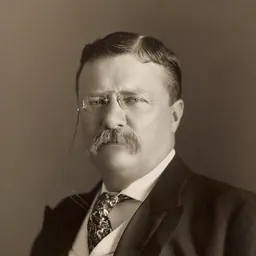

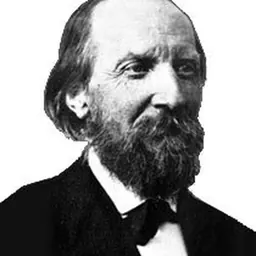

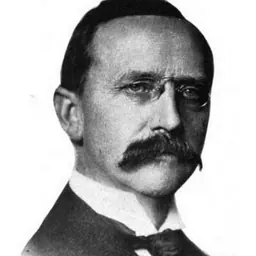

Related people
Same field, nearest in time


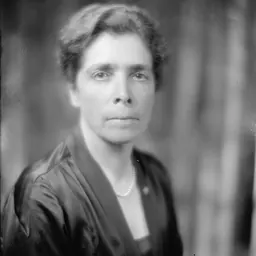
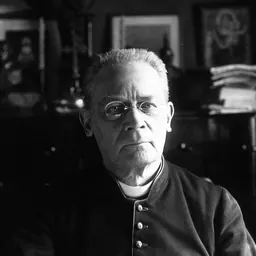
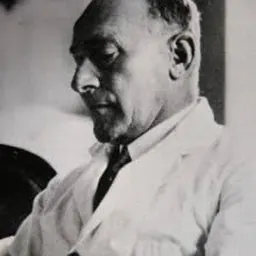
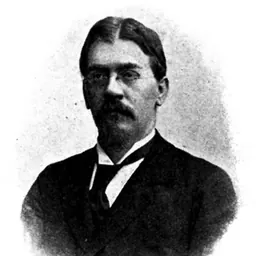
Contemporaries
People whose lives overlapped Carl A. Schenck's
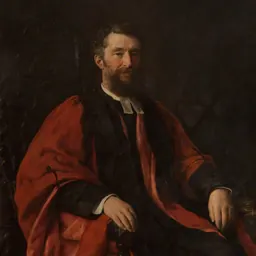


Frequently asked questions
Who was Carl A. Schenck?
German conservationist (1868–1955)
When was Carl A. Schenck born?
Carl A. Schenck was born on 25 March 1868 in Darmstadt.
When did Carl A. Schenck die?
Carl A. Schenck died on 17 May 1955 in Lindenfels.
What was Carl A. Schenck's occupation?
Carl A. Schenck was a university teacher, conservationist, botanist and forestry scientist.
What was Carl A. Schenck known for?
Carl A. Schenck was known for Biltmore Estate and Biltmore Forest School.
What nationality was Carl A. Schenck?
Carl A. Schenck was German.
Sources & further reading
Cite this page
APA: Biography.guide. (2026). Carl A. Schenck. https://biography.guide/carl-a-schenck/
MLA: "Carl A. Schenck." Biography.guide, https://biography.guide/carl-a-schenck/.
Chicago: "Carl A. Schenck." Biography.guide. https://biography.guide/carl-a-schenck/.
Data last updated: 2026-09-20 · Spot an error? Report a correction.
Page generated 2026-09-27 05:16 UTC