
About Camilo José Cela
Lived 1916 – 2002 (aged 85). Camilo José Cela was a Spanish writer, poet, novelist, politician, journalist and essayist.
Camilo José Cela y Trulock, 1st Marquess of Iria Flavia (; 11 May 1916 – 17 January 2002) was a Spanish novelist, poet, story writer and essayist associated with the Generation of '36 movement.
He was awarded the 1989 Nobel Prize in Literature "for a rich and intensive prose, which with restrained compassion forms a challenging vision of man's vulnerability".
Childhood and early career Camilo José Cela was born in the rural parish of Iria Flavia, in Padrón, A Coruña, Spain, on 11 May 1916. He was the oldest child of nine. His father, Camilo Crisanto Cela y Fernández, was Galician. His mother, Camila Emanuela Trulock y Bertorini, was a Galician of English and Italian ancestry. The family was upper-middle-class and Cela described his childhood as being "so happy it was hard to grow up." Perhaps his best-known work was produced during a period where his own writing came under scrutiny from his fellow censors, including (The Hive) which was published in Buenos Aires in 1951. It was banned in Spain because of the perceived immorality of its erotic themes, and his name could no longer appear in the printed media. The novel portrays more than 300 characters in a style showing the influence of both Spanish realism and contemporary English- and French-language authors. Cela's signature style—a sarcastic, often grotesque, form of realism—is epitomized in . Cela remained loyal to Francoist Spain, even working as an informer for the Spanish secret police by reporting on the activities of dissident groups and betraying fellow intellectuals.
From the late 1960s, with the publication of San Camilo, 1936, Cela's work became increasingly experimental. In 1988 he wrote Christ Versus Arizona , which tells the story of the Gunfight at the O.K. Corral in a single sentence that is more than one hundred pages long.
In his later years Cela became known for his scandalous outbursts; in an interview with Mercedes Milá for Spanish state television he boasted of his ability to absorb litres of water via his anus while offering to demonstrate. Cela had already scandalized Spanish society with his (Secret Dictionary, 1969–1971), a dictionary of slang and taboo words. In 1998, Cela expressed discomfort towards the presence of homosexual groups at the commemoration of Federico García Lorca's centenary, stating that, "For me, I would prefer a more straightforward and less anecdotal commemoration without the support of gay groups. I have nothing against gays, I just do not take it up the ass".
Distinctions On 26 May 1957, Cela was appointed a member of the Royal Spanish Academy and given Seat Q. He was appointed Royal Senator in the Constituent Cortes, where he exerted some influence in the wording of the Spanish Constitution of 1978. In 1987, he was awarded the Prince of Asturias Award for Literature.
Cela was awarded the Nobel Prize in Literature in 1989 "for a rich and intensive prose, which with restrained compassion forms a challenging vision of man's vulnerability". although some question the objectivity of the awards, and winners on occasion have refused to accept it. Two years later, in recognition of his contributions to literature, Cela was ennobled on 17 May 1996 by King Juan Carlos I, who gave Cela the hereditary title of Marquess of Iria Flavia in the nobility of Spain. On his death the title passed to his son Camilo José Cela Conde.
After winning the Nobel Prize Cela described the Spanish Cervantes Prize for lifetime achievement as a writer as being "covered with shit". In 1995 he was offered the prize, which he accepted.
Death Cela died from heart disease on 17 January 2002 at the Hospital Centro in Madrid, aged 85. He was buried in his hometown at the parish cemetery of Santa María de Adina.
Cela's will was contested because he favoured his widow and second younger wife, Marina Castaño, over his son Camilo José Cela Conde from his first marriage to Rosario Conde; Conde was awarded two-thirds of his father's estate.
Selected works Spanish Novels
(Also published under the title Historias de Venezuela.)
Short-story collections
Drama and poetry collections
Travel writing
Essays
Criticism
Reference works
(Updated since initial publication.) (4 volumes.)
Memoirs
Correspondence
(Cela's correspondence with 13 exiled Spanish writers: María Zambrano, Rafael Alberti, Américo Castro, Fernando Arrabal, Jorge Guillén, Max Aub, Emilio Prados, Luis Cernuda, Manuel Altolaguirre, León Felipe, Corpus Barga, Francisco Ayala, Ramón J. Sender.)
Collected works
(Volumes published as completed since 1962.) Volume 1: Las tres primeras novelas (1942—44); Volume 2: Cuentos (1941—53); Volume 3: Apuntes carpetovetonicos. Novelas cortas (1941–56); Volume 4: Viajes por España, 1 (1948—52); Volume 5: Viajes por España, 2 (1952—58); Volume 6: Viajes por España, 3 (1959—64)l Volume 7: Tres novelas más (1951—55); Volume 8: Los amigos y otra novela (1960—62); Volume 9: Glosa del mundo en torno. Articulos, 1. (1940—53). Mesa revuelta. 5. ed.; Volume 10: Glosa del mundo en torno. Articulos, 2. (1944—59). Cajón de sastre. 4. ed; Paginas de geografía errabunda. 3. ed.; Volume 1:. Glosa del mundo en torno. Artʹiculos, 3 (1945-1954). Las compañías convenientes y otros fingimientos y cegueras. 3a ed. Garito de hospicianos o Guirigay de imposturas y bambollas. 4a ed.; Volume 12: Glosa del mundo en torno. Artículos, 4 (1943—61). La rueda de los ocios. 4a ed. Cuatro figuras del 98. 2a ed.; Volume 14: Enciclopedia del erotismo, 1. Aachen—Cirene; Volume 15: Enciclopedia del erotismo, 1. Cirial—Futrʹosofo; Volume 16: Enciclopedia del erotismo, 3. Gabacho—Óvulo; Volume 17: Enciclopedia del erotismo, 4. Pabst—Zurrucarse.
English translations
(Reprinted: New York: New York: Noonday Press, 1990.) Translation of La colmena.
Translation of Viaje a la Alcarria.
Authorized translation of Mrs. Caldwell habla con su hijo. Translation of Visperas, festividad y octava de San Camilo del año 1936 en Madrid. Translation of Mazurca para dos muertos. Translation of Madera de boj.
The Hive. Translated by Womack, James. New York Review Books. 2023.
Don’t just read it —
keep it.
Full-length biographies made to live with: read them, listen on the way to work, watch them tonight.
- E-book
- Audio
- Video
Instant download · yours to keep · every purchase keeps this site free
Important facts
Family & relationships
People in Camilo José Cela's life
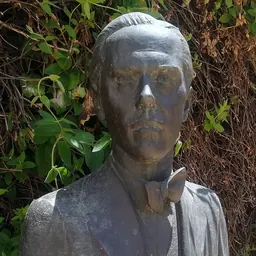
Named in this biography and alive at the same time


Related people
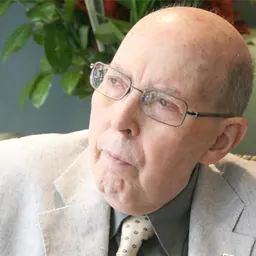
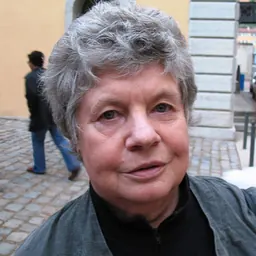
Same field, nearest in time


Contemporaries
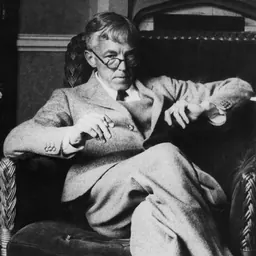
People whose lives overlapped Camilo José Cela's



Frequently asked questions
Who was Camilo José Cela?
Spanish writer (1916–2002)
When was Camilo José Cela born?
Camilo José Cela was born on 11 May 1916 in Iria Flavia.
When did Camilo José Cela die?
Camilo José Cela died on 17 January 2002 in Madrid.
What was Camilo José Cela's occupation?
Camilo José Cela was a writer, poet, novelist, politician, journalist and essayist.
What nationality was Camilo José Cela?
Camilo José Cela was Spanish.
Sources & further reading
Cite this page
APA: Biography.guide. (2026). Camilo José Cela. https://biography.guide/camilo-jose-cela/
MLA: "Camilo José Cela." Biography.guide, https://biography.guide/camilo-jose-cela/.
Chicago: "Camilo José Cela." Biography.guide. https://biography.guide/camilo-jose-cela/.
Data last updated: 2026-09-20 · Spot an error? Report a correction.
Page generated 2026-09-27 05:24 UTC